
Steve Curtis- Autopsy: Oklahoma’s Run Game Disappeared in Ann Arbor
Steve Curtis | September 12th
The Oklahoma Sooners walked into Ann Arbor and got clobbered in a 17-10 loss to Michigan on Saturday.
A critical part of the loss came in the run game, which was Oklahoma’s greatest point of emphasis throughout the offseason following its 34-24 loss to Alabama in the first round of the College Football Playoff.
The Sooners spent nine months rebuilding the running back room, reshaping the tight end position and stressing the need to become more physical at the line of scrimmage.
But against Michigan, that rebuilt rushing attack was largely absent.
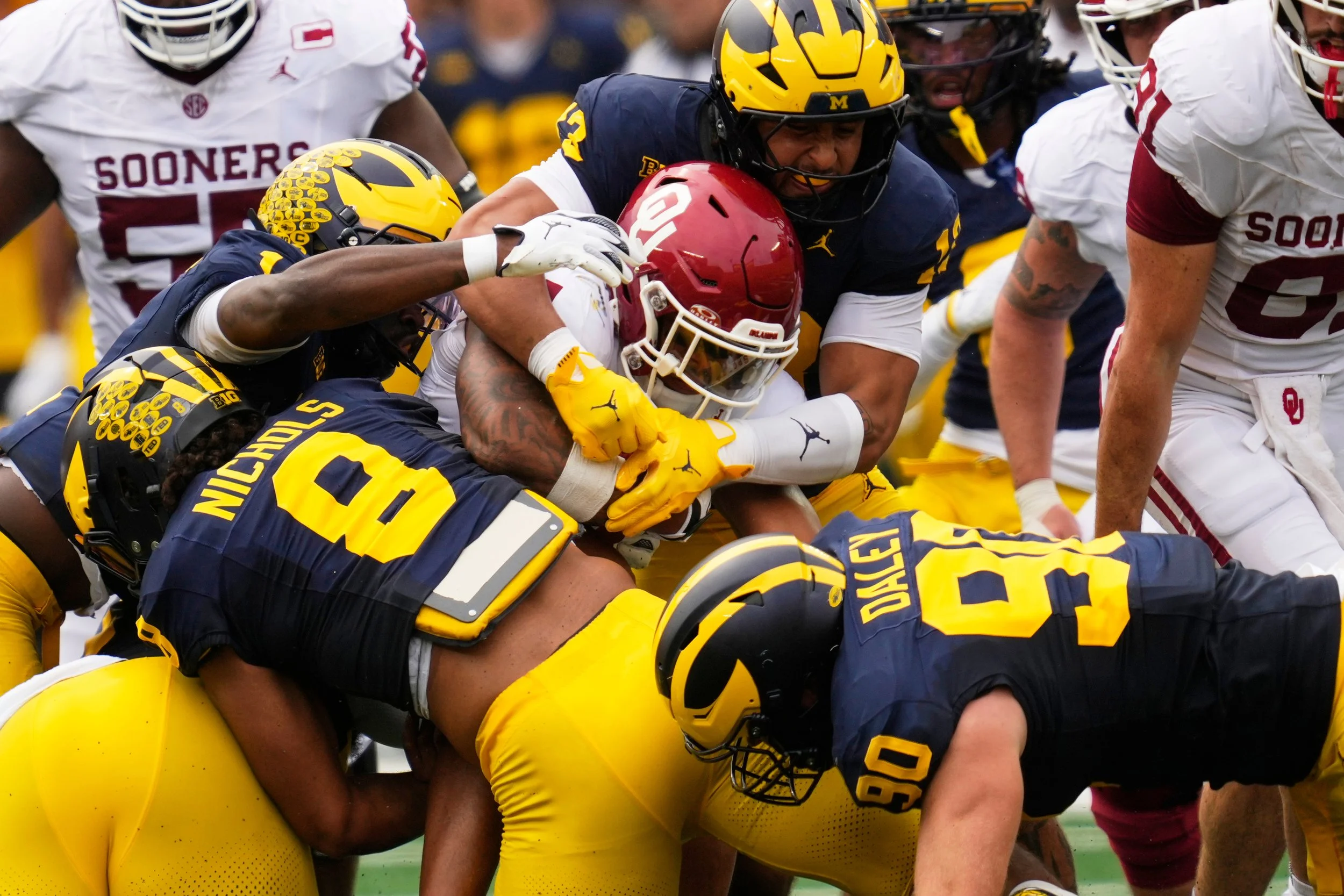
Oklahoma’s first offensive snap was a handoff to Lloyd Avant for an eight-yard gain. It was also the last backfield handoff called on the opening drive before the Sooners were forced to punt.
Avant gained another six yards on the first play of Oklahoma’s next possession. After back-to-back incompletions, Mateer scrambled twice for 18 yards before Xavier Robinson lost one yard on his first carry.
Despite Avant’s early production, the Sooners never attempted to establish the run game as they had against UTEP a week earlier.
After finishing the first half with 33 yards on five carries, Avant received only four carries in the second half, gaining two yards.
Robinson carried the ball three times for six yards, while Tory Blaylock gained three yards on his only attempt.
Altogether, Oklahoma’s three running backs combined for 44 yards on 13 carries.
The limited workload never afforded them to get into a rhythm.
Mateer matched that workload by himself, carrying the ball 13 times for 45 yards while attempting 33 passes.
It was a complete reversal from Oklahoma’s approach against UTEP, when Mateer attempted only 17 passes while the running backs combined for 33 carries.
Some of Mateer’s rushing attempts were designed. Others came when Michigan’s pressure forced him to flee the pocket.
Two turnovers from Mateer did not help, but both came in critical moments when the run game had disappeared and the entire burden of creating offense fell on his shoulders.
And instead of leaning on the run game that was supposed to ease his burden, Oklahoma moved away from the balanced approach it emphasized throughout the offseason and used just one week earlier.
The Sooners even moved away from the heavier personnel packages that played a significant role in their season-opening victory.
Against UTEP, Oklahoma consistently utilized 12 and 13 personnel, allowing Hayden Hansen and Rocky Beers to contribute as blockers, giving the running backs more support at the line of scrimmage.
Those looks were nearly nonexistent in Ann Arbor.
Oklahoma operated almost exclusively from the shotgun, placed Mateer under center just once and rarely used multiple tight ends.
That was a significant departure from the kind of rushing attack Oklahoma spent the offseason trying to build.
College football fans around the country may have written Michigan off after its narrow victory over Western Michigan, but the Wolverines’ problems that night came on offense, not defense.
Oklahoma knew Michigan would present a much more physical test at the line of scrimmage, which makes the abandonment of heavier personnel packages all the more baffling.
Looking back, one of two things happened.
Either Oklahoma could not consistently create enough movement up front and Arbuckle decided the run game was not going to work, or the coaching staff simply chose not to commit to it.
Avant’s early production makes the second possibility difficult to ignore.
Again, Avant averaged 6.6 yards per carry in the first half, yet received only four more attempts in the second, while Robinson and Blaylock combined for just four carries all afternoon.
After the Oklahoma staff spent the offseason discussing the need for greater balance and a more dependable rushing attack, that early success should have warranted more opportunities.
Instead, Oklahoma’s traditional run game was never fully established in Ann Arbor.
Whether that was an active choice by the coaching staff or a reflection of the offense’s limitations remains unclear. Either way, the Sooners left Michigan with the same question they spent the entire offseason trying to answer.
Can this offense consistently run the football when it matters?