
Steve Curtis | October 28th, 2026
Oklahoma’s win at Mississippi State gave the Sooners an opportunity to build some momentum.
South Carolina arrives in Norman having already found some of its own.
After three consecutive losses to open SEC play, the Gamecocks beat Florida 38-19 and Tennessee 27-24. They’ve reached the same 4-3 record as Oklahoma, but their last two games have shown different ways they can keep moving.
Against Florida, LaNorris Sellers threw four touchdown passes without an interception. Against Tennessee, his legs helped produce a tying touchdown before the defense created the opportunity for a winning field goal.
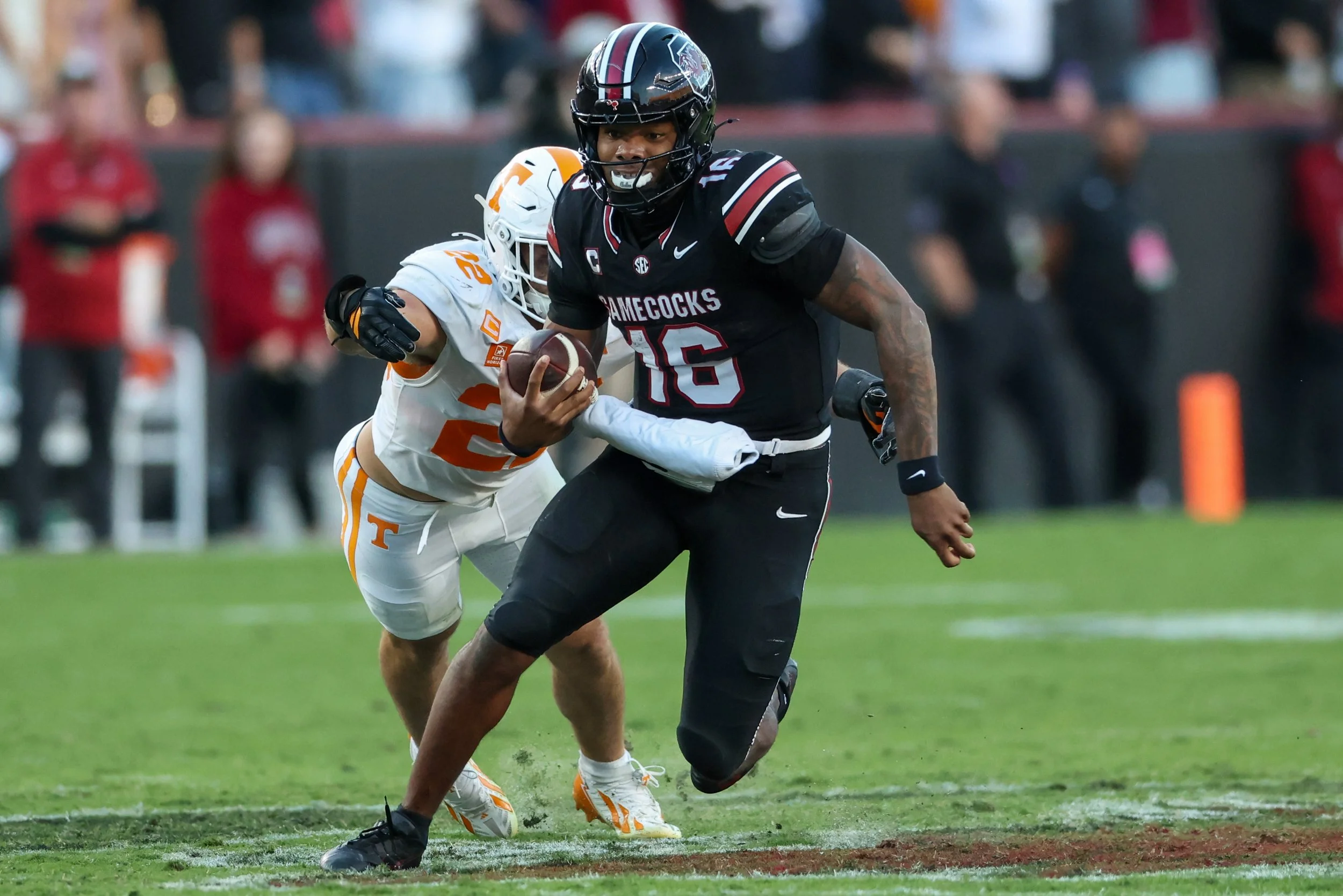
South Carolina quarterback LaNorris Sellers (16) runs away from Tennessee linebacker Jeremiah Telander (22) during the second half of an NCAA college football game Saturday, Oct. 24, 2026, in Columbia, S.C. (AP Photo/Artie Walker Jr.)
The Gamecocks haven’t needed the same performance from Sellers to win both games.
But they’ve continued to need him to create when the rest of the offense hasn’t been enough.
That starts with the help around him.
Matt Fuller has handled most of the work out of the backfield, rushing for 511 yards and five touchdowns on 90 carries.
According to Pro Football Focus (PFF), 383 of those yards have come after contact.
Fuller can keep a carry productive when the blocking doesn’t provide a clean opening. Defenders reaching him haven’t consistently finished the play.
But his season totals don’t mean South Carolina has repeatedly controlled opponents on the ground.
Fuller gained 197 yards against Kent State and Towson. Against Alabama, he rushed for 112 yards, gaining as much on one 56-yard run as he did on his other 18 carries combined.
The explosive threat is real. The dependable movement between those plays has been less consistent.
That distinction has remained through South Carolina’s recent wins.
Fuller rushed for 52 yards against Florida and 28 against Tennessee. Jabree Coleman provides another option, but the two combined for only 38 yards on 13 carries against the Volunteers.
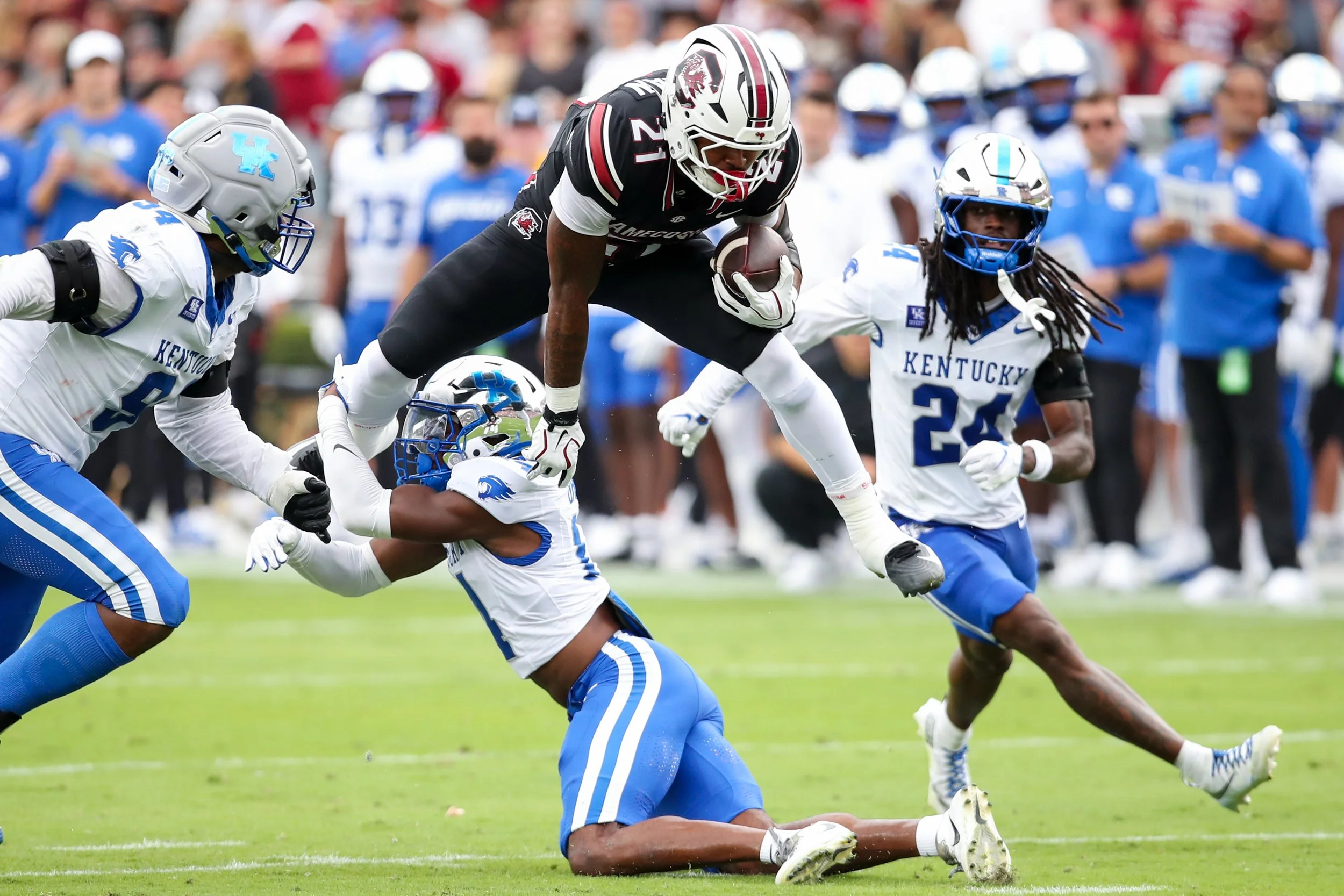
South Carolina running back Jabree Coleman (21) hurdles Kentucky defensive back Ty Bryant, center bottom, during the first half of an NCAA college football game Saturday, Oct. 3, 2026, in Columbia, S.C. (AP Photo/Artie Walker Jr.)
Sellers provided the difference.
He scored on a 31-yard run in the first half. With South Carolina trailing late, he added a 22-yard run before finishing the possession with a 4-yard touchdown.
The Gamecocks didn’t need to suddenly establish their running backs to find the end zone.
They could put the ball in their quarterback’s hands.
Sellers can keep it on a designed run or escape when the initial passing opportunity disappears. Against Alabama, PFF credited him with eight scrambles for 56 yards.
Reaching the pocket won’t finish Oklahoma’s assignment if the Sooners leave him somewhere to go. But keeping Sellers inside it doesn’t automatically solve the passing game.
He completed 23 of 35 passes for 279 yards and four touchdowns against Florida, showing what South Carolina can produce when he has time and his receivers capitalize on their opportunities.
All four of those touchdown passes came from clean pockets.
Under pressure, Sellers completed six of 11 attempts for 46 yards.
That difference carried into the Tennessee game.
Without pressure, Sellers completed 15 of 23 passes for 162 yards. When pressured, he completed four of 10 for 48 yards, threw an interception and took five sacks.
Oklahoma can end possessions by making him hold the ball. It must do that without turning a covered passing play into an open running lane.
Nor should every incomplete pass be treated as Sellers’ mistake.
Against Towson, he completed only 10 of 23 passes. PFF charged his receivers with eight drops.
South Carolina won comfortably, but similar missed opportunities against Oklahoma would make sustaining possessions harder without another run from Sellers.
Mazeo Bennett Jr. has provided a more dependable option.
Bennett leads South Carolina with 31 catches for 324 yards and three touchdowns, working primarily from the slot.
Against Florida, he caught seven passes for 35 yards. Against Tennessee, six catches produced 88 yards and a touchdown.
He can provide an immediate completion without being limited to small gains. Keeping him short requires Oklahoma to finish the tackle after taking away the deeper throw.
Nyck Harbor provides a different threat.
Harbor caught four passes for 83 yards and a touchdown against Florida, giving South Carolina an outside receiver capable of producing more from fewer completions.
But he caught two passes for 26 yards against Kentucky and went without a reception against Tennessee.
Oklahoma must respect Harbor’s ability to stretch coverage without allowing that threat to create easy movement for Bennett underneath.
DJ Black adds another option downfield. He produced 66 yards and a touchdown against Kentucky, then added 48 yards against Tennessee.
Fuller can contribute as a receiver, too.
He caught seven passes for 85 yards against Mississippi State, with most of that production coming after the catch.
South Carolina can involve its backs when the handoff isn’t providing enough. Oklahoma’s linebackers must account for those releases without losing Sellers.
The protection adds another distinction.
South Carolina’s offensive line has generally been more dependable protecting the quarterback than creating room for its running backs.
Jacarrius Peak has allowed six pressures without surrendering a sack across 184 pass-blocking snaps. Darius Gray has allowed eight pressures and one sack across 283.
Neither tackle was charged with a pressure against Tennessee.
Sellers still took five sacks.
Oklahoma can’t assume South Carolina’s passing struggles will come from repeatedly beating a tackle. Taking away the initial throw and preventing Sellers from escaping can disrupt a possession even when the first block holds.
The running game hasn’t received the same help.
Peak and Gray have each earned run-blocking grades below 60 in every SEC game they’ve played. South Carolina hasn’t consistently created enough movement to avoid depending on yards after contact or its quarterback.
While the offense has needed Sellers to create, the defense has shown it can change a result with one play.
Dylan Stewart provided that moment against Tennessee.
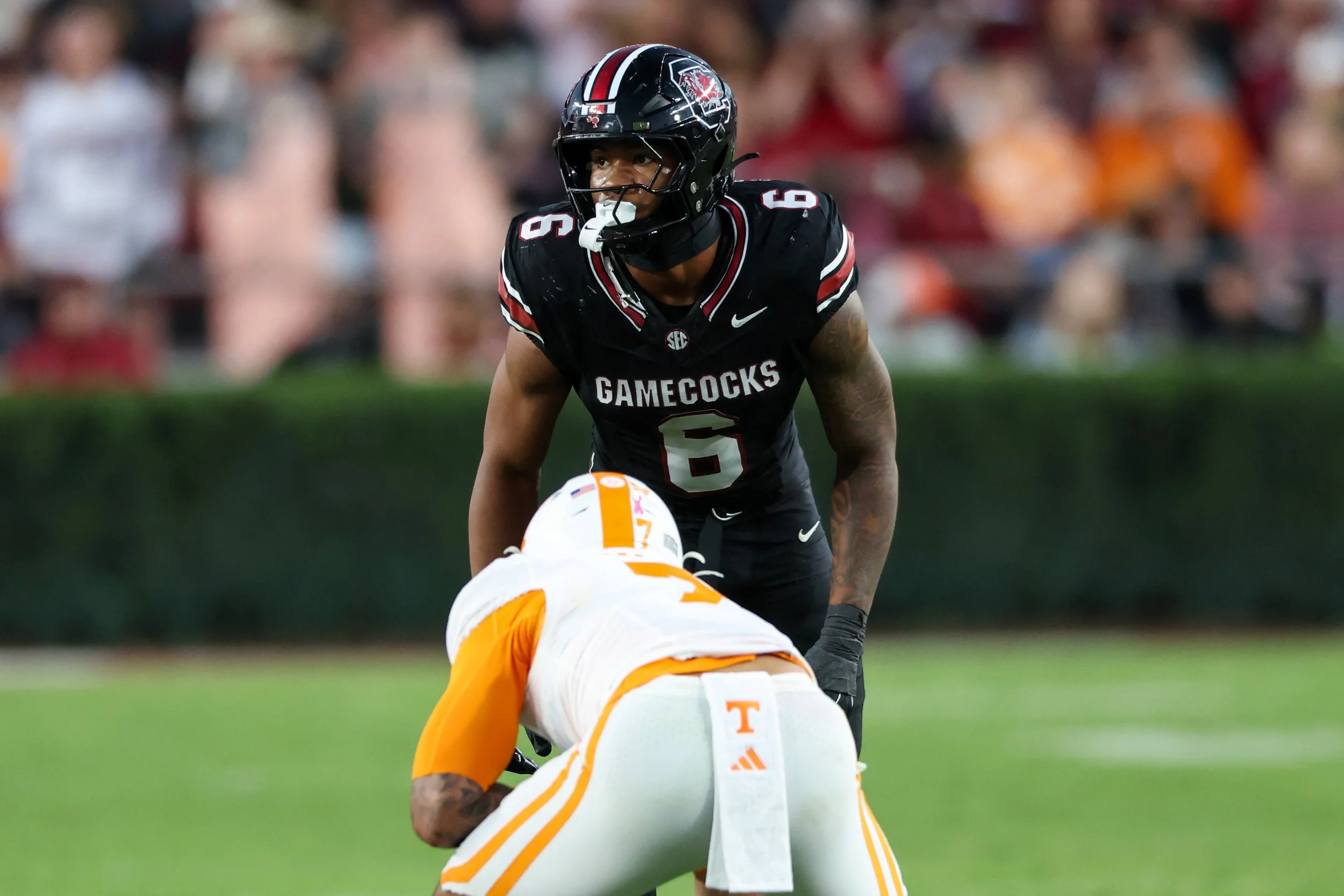
South Carolina defensive end Dylan Stewart (6) lines up against Tennessee tight end Dasaahn Brame (7) during an NCAA college football game Saturday, Oct. 24, 2026, in Columbia, S.C. South Carolina won 27-24. (AP Photo/Artie Walker Jr.)
With the score tied late, Stewart sacked the quarterback and forced a fumble. Tomiwa Durojaiye recovered, providing the field position for South Carolina’s walk-off field goal.
The Gamecocks didn’t need another full-length scoring drive.
Their defensive front had already done enough.
Stewart gives South Carolina its most dangerous individual threat off the edge. PFF graded his pass rushing above 89 against both Florida and Tennessee.
But the disruption doesn’t belong to him alone.
Anthony Addison has generated 18 pressures through seven games. Durojaiye provides another threat inside, where a guard losing his assignment can disrupt the pocket before a tackle has been beaten.
Still, South Carolina hasn’t consistently overwhelmed opponents with pressure.
The Gamecocks produced only five pressures against Tennessee, according to PFF. Three became sacks.
South Carolina hasn’t required constant disruption to make its pass rush matter. Oklahoma can sustain possessions if it prevents those individual losses from becoming sacks or turnovers.
The run defense presents another challenge.
Against Tennessee, linebackers Justin Okoronkwo and Fred Johnson combined for 14 solo tackles on running plays without missing one. Noah Clark added four stops against the run.
Oklahoma won’t establish its rushing attack simply by keeping the ball away from Stewart. Its blockers must sustain assignments against the interior and the linebackers behind it.
Those linebackers have been more vulnerable in coverage.
Johnson has allowed 22 catches on 24 targets for 192 yards. Against Tennessee, all five throws into his coverage were completed, with 37 of the resulting 43 yards coming after the catch.
Okoronkwo has also allowed productive completions. Alabama gained 101 yards on four catches into his coverage, while Kentucky completed all five targets against him.
That gives Oklahoma opportunities to involve Rocky Beers and its running backs without repeatedly challenging the outside cornerbacks.
Vicari Swain has generally limited the damage there, allowing 13 catches for 101 yards across five SEC games.
Judge Collier has been more vulnerable, surrendering 66 yards and two touchdowns against Mississippi State before allowing another touchdown against Kentucky.
There are opportunities outside. Oklahoma doesn’t need to force every possession through them.
Getting Isaiah Sategna involved inside and finding Beers underneath would give John Mateer available throws before the rush reaches him.
Taken together, South Carolina’s first seven games have revealed a team whose improvement hasn’t removed its dependence on important individual plays.
Fuller creates after contact. Bennett provides an option inside. Harbor and Black threaten downfield.
Sellers remains capable of keeping the offense moving when those pieces aren’t enough.
Oklahoma must limit the backs without abandoning Sellers, cover his first throw without opening an escape route and take available completions before South Carolina’s front reaches Mateer.
The Gamecocks have shown they can win when their offense struggles.
Oklahoma must prevent the few plays that make those struggles stop mattering.