
Steve Curtis - Behind Enemy Lines: Kentucky
Steve Curtis | October 14th, 2026
Oklahoma’s win over Texas gave the Sooners a chance to change the direction of their season.
Kentucky arrives Saturday looking to continue the direction of its own.
Will Stein’s Wildcats have won four straight games since a 45-17 loss to Alabama, including a 31-21 victory at Texas A&M and consecutive 35-34 overtime wins over South Carolina and LSU.
Those results have brought Kentucky to 5-1. They’ve also revealed a team that has found different ways to win when its offense or defense hasn’t been enough by itself.
Against Texas A&M, Kentucky needed only 18 passing attempts to produce 252 yards and two touchdowns. Against South Carolina, Kenny Minchey threw 41 times as the Wildcats struggled to run. Against LSU, Kentucky got a 77-yard touchdown run from CJ Baxter and a punt-return touchdown from Brock Coffman.
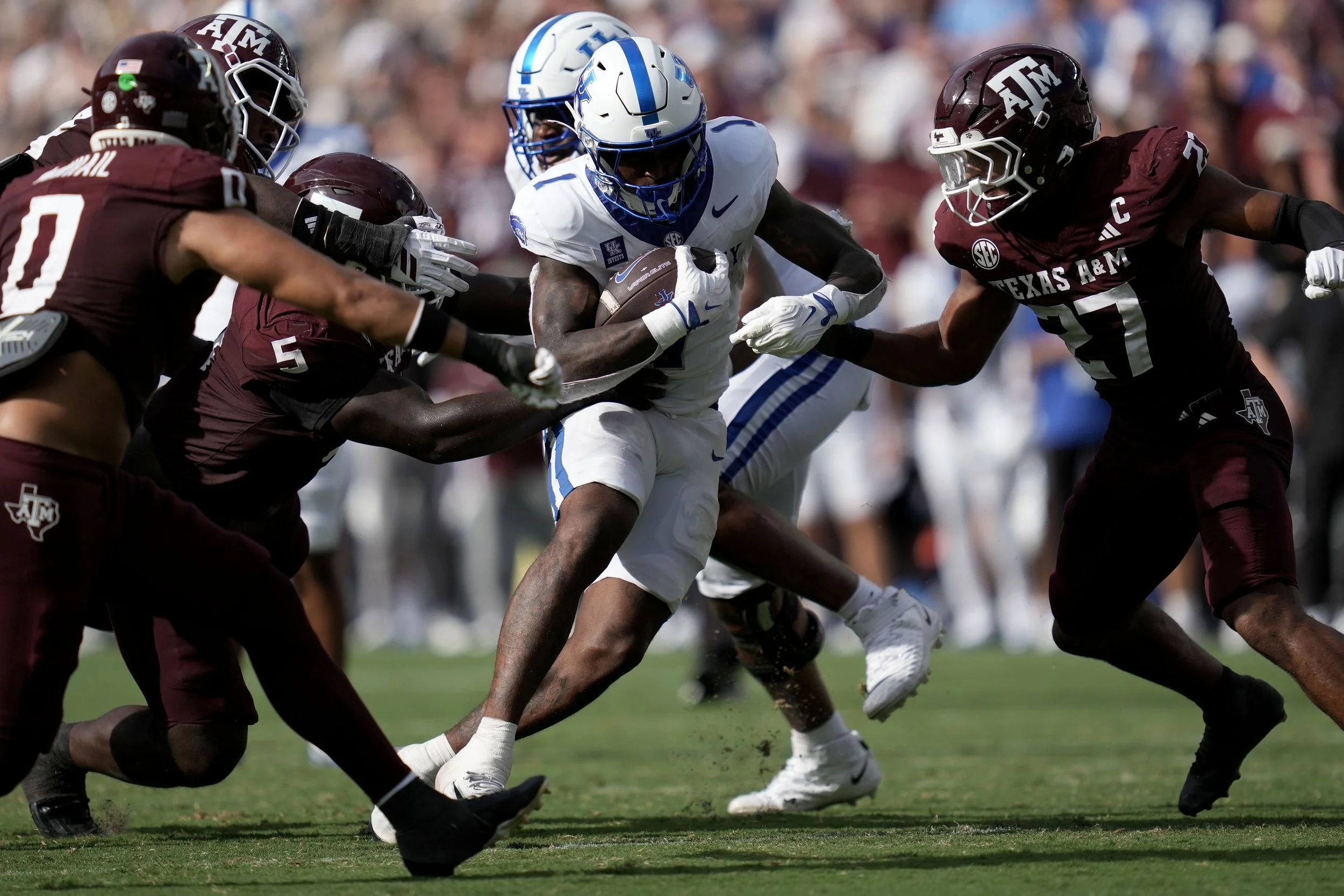
Kentucky has kept winning. But how it’s reached those results matters more than the winning streak alone.
That starts in the backfield.
Baxter has handled the largest share of the workload, rushing for 494 yards and eight touchdowns on 87 carries.
According to Pro Football Focus (PFF), Baxter has 13 carries of 10 or more yards, along with 19 forced missed tackles.
He gives Kentucky a back who can finish a scoring possession or change one before it reaches the red zone.
But his performance against LSU shows why the total needs context.
Baxter finished with 123 yards and two touchdowns on 19 carries. His 77-yard touchdown accounted for nearly two-thirds of that yardage. His other 18 attempts produced 46 yards.
Kentucky didn’t consistently move LSU out of the way. Baxter made one opening count.
He had been more productive throughout the game at Texas A&M, gaining 87 yards and scoring twice on 19 carries. Against Alabama and South Carolina, however, he combined for 77 yards on 24 attempts.
The explosive threat is real. But the Wildcats haven’t been equally effective sustaining it against every opponent.
Nor is Baxter carrying the ground game alone.
Jason Patterson has gained 359 yards and scored three touchdowns on 47 carries. More than half of his yardage has come after contact, with 13 forced missed tackles.
Patterson has been particularly dangerous outside the left end, gaining 149 yards on 10 attempts.
One 75-yard run accounts for half of that production. Still, four of those carries gained at least 10 yards, showing that Kentucky’s success there extends beyond one opening.
Former Sooner Jovantae Barnes provides another option, with 140 yards on 23 carries.
But the distribution of their production matters, too.
Patterson scored all three of his touchdowns against South Alabama, rushing for 137 yards. Barnes added 100 yards in that game. Kentucky finished with 390 rushing yards, more than twice its total in any of its four SEC games.
Those backs give Kentucky options. Their season totals don’t mean the Wildcats have repeatedly overwhelmed conference opponents.
Oklahoma must prevent the explosive runs without assuming every carry will require extra defenders near the line of scrimmage.
Kentucky’s offensive line has given those backs opportunities.
Center Coleton Price, left tackle Lance Heard and right guard Tegra Tshabola have been among the Wildcats’ more dependable run blockers. Tight end Willie Rodriguez adds another capable blocker beside them.
Kentucky can threaten the perimeter without relying on it for every productive carry. Baxter has also found explosive gains through the interior.
That forces defenders to respect more than the outside run.
It also gives Minchey the foundation for his passing game.
The Notre Dame transfer has completed 120 of 179 passes for 1,395 yards, 11 touchdowns and one interception.
But he hasn’t been equally effective in every situation.
Minchey has completed 79.5% of his play-action attempts for 786 yards and nine touchdowns. Without play action, his completion percentage falls to 58.5%, with two touchdowns and one interception.
When defenders step toward Baxter or Patterson, Minchey can attack the space behind them. Without that advantage, Kentucky’s passing game becomes much less efficient.
That difference becomes even larger under pressure.
Minchey has completed 72.5% of his passes from clean pockets, compared to 45.9% when pressured. He has been sacked on roughly a quarter of his pressured dropbacks, taking 14 sacks through six games.
Alabama showed what Kentucky’s offense can look like when the running game and protection don’t provide enough help.
The Wildcats rushed for 63 yards. Minchey took four sacks and finished with 146 passing yards on 31 attempts.
But stopping the run doesn’t automatically stop Minchey.
South Carolina held Kentucky to 122 rushing yards on 37 attempts. Minchey still threw for 272 yards and three touchdowns without an interception.
Kentucky prefers to build its passing game around the run. It has also shown it can win when Minchey has to handle more of the offense.
Oklahoma must take away the help around him and the available throws that remain.
Kenny Darby provides the most dangerous of those options.
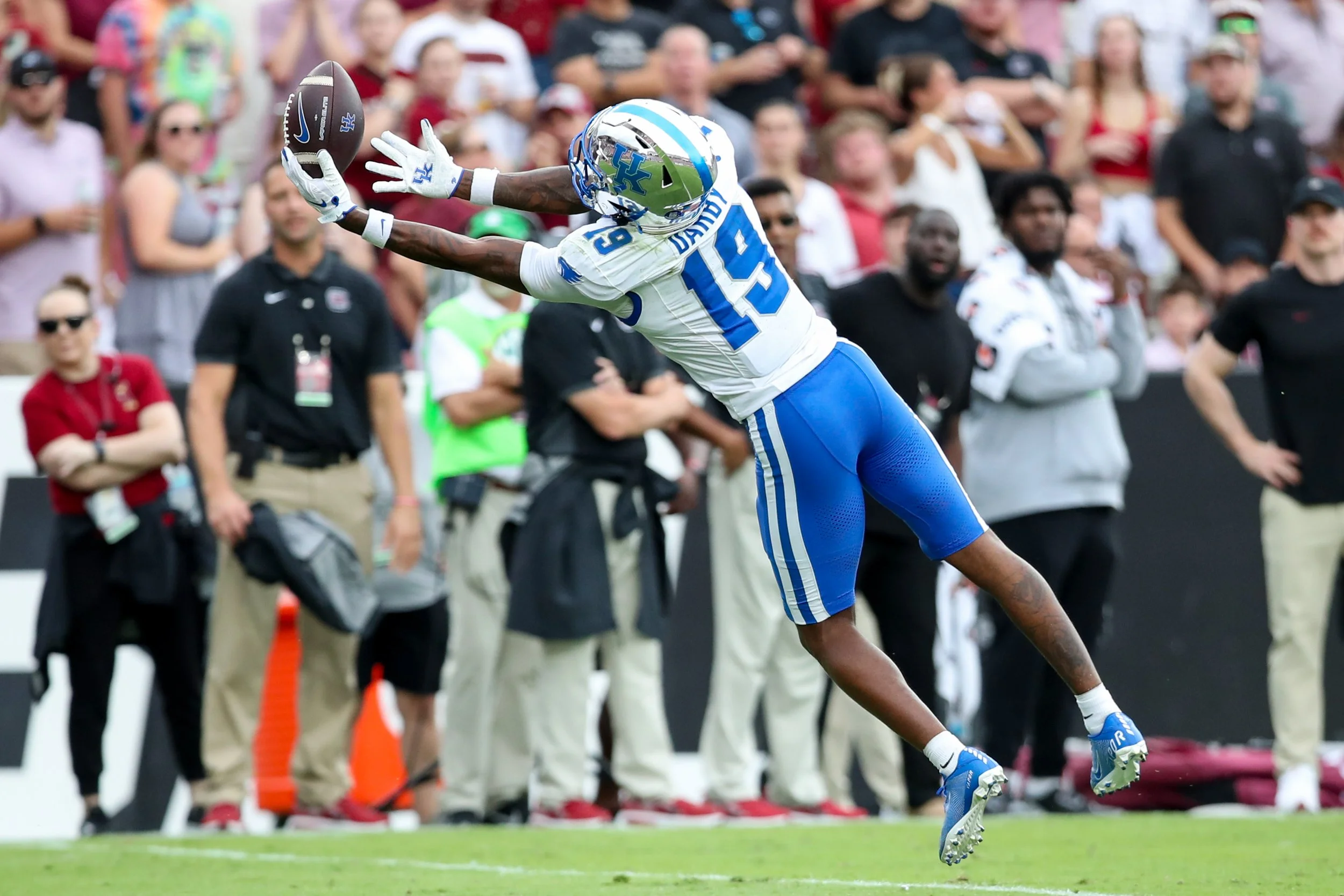
Darby leads the Wildcats with 29 catches for 401 yards and three touchdowns, working primarily from the slot.
His last two games show the different ways Kentucky uses him.
Against South Carolina, Darby caught 12 passes for 96 yards and a touchdown. Against LSU, four catches produced 79 yards.
He can help Kentucky move through repeated completions or produce more yardage from fewer opportunities.
Darby has also caught five of seven deep targets for 174 yards and two touchdowns. Treating him only as an underneath receiver would leave a defense vulnerable.
Tight end Willie Rodriguez provides a different kind of help.
He has caught 28 passes for 219 yards, giving Minchey a dependable target without requiring a difficult throw downfield.
But those completions don’t always create much movement.
Rodriguez caught eight passes for 49 yards against Alabama and six for 25 against LSU. Kentucky can find him repeatedly without those catches becoming enough to carry a possession.
Henry Boyer has added nine catches for 120 yards and three touchdowns. Mikkel Skinner gives Kentucky another tight end capable of producing after a short completion.
On the outside, Nic Anderson and DJ Miller have contributed 149 and 151 receiving yards, respectively. Anderson produced 80 yards and a touchdown against South Carolina, while Miller added 54 yards against LSU.
Darby is the leading threat. But Kentucky has other receivers capable of contributing when the matchup gives them an opportunity.
The protection presents another distinction.
Heard has allowed seven pressures without surrendering a sack. Tshabola and Price have allowed only two and three pressures, respectively.
Right tackle Malachi Wood has been more vulnerable, allowing 10 pressures and earning a 36.3 pass-blocking grade on true pass sets, when quick throws, screens and play action aren’t simplifying the assignment.
Minchey has taken 14 sacks, but Kentucky’s blockers have been charged with only four of them.
Oklahoma can’t assume pressure will come simply from overpowering the entire line. Covering Minchey’s initial options and making him hold the ball will be another part of the challenge.
While Kentucky’s offense uses the running game to create opportunities, its defense brings disruption from several positions.
Mi’Quise Humphrey-Grace leads the Wildcats with 18 pressures and three sacks. Sam Greene has added 10 pressures and three sacks, while Lorenzo Cowan has produced 11 pressures.
The pressure also comes from behind them.
Linebacker Elijah Barnes has generated 11 pressures on only 27 pass rushes. Grant Godfrey has added nine pressures and a sack on 21 rushes.
Protecting John Mateer will require Oklahoma to identify those additional threats before the snap.
But Kentucky hasn’t consistently turned that pressure into sacks.
The Wildcats recorded four against Alabama, none against Texas A&M and one against South Carolina. Against LSU, Greene and defensive tackle Jamarrion Harkless each contributed 1.5 sacks.
Kentucky can disrupt a passing game, but it hasn’t controlled every one it has faced.
The defensive front is dependable against the run, too.
Humphrey-Grace and Greene have each recorded eight stops against the run. Safety Jordan Castell has provided support behind them, missing only one tackle on run plays.
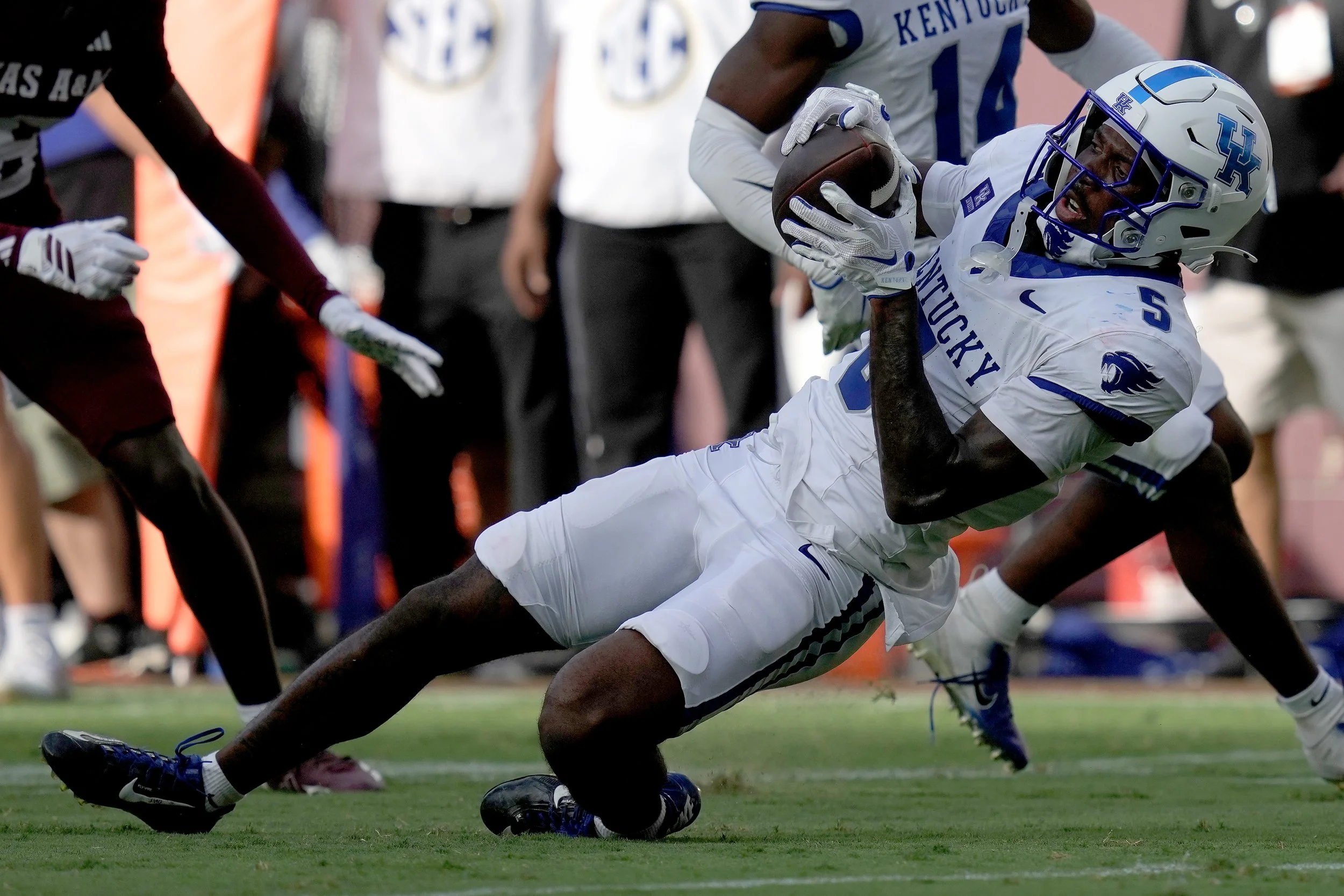
That group helped hold LSU to 94 rushing yards on 36 attempts.
Yet the same defense allowed South Carolina to rush for 232 yards a week earlier. LaNorris Sellers accounted for 147, including a 74-yard run.
Kentucky’s tackling grade also fell to its lowest point of the season against South Carolina before improving against LSU.
The Wildcats have shown they can limit a running game. They’ve also shown how much damage a mobile quarterback can create.
Mateer’s ability to extend plays gives Oklahoma another way to test that inconsistency.
There are openings in coverage as well.
Cornerback Terhyon Nichols has allowed nine catches on 18 targets for 112 yards. Castell has intercepted two passes, giving Kentucky a defender capable of punishing a careless throw.
The linebackers have been more vulnerable.
Elijah Barnes has allowed 16 catches on 20 targets for 223 yards, including 125 after the catch. Godfrey has surrendered 15 receptions for 173 yards.
Aaron Gates has allowed 19 catches for 203 yards and three touchdowns.
LSU found plenty of production through the air despite struggling to run. The Tigers finished with 316 passing yards, including seven catches for 84 yards from running back Dilin Jones.
That gives Oklahoma reason to involve its backs and tight ends rather than repeatedly forcing the ball outside.
Rocky Beers and Isaiah Sategna have been the Sooners’ leading receivers. Kentucky’s coverage provides opportunities to involve them in space and make its underneath defenders finish the play.
Kentucky has also shown that its offense and defense aren’t the only units capable of changing the result.
Coffman returned a punt 55 yards for a touchdown against LSU. The Wildcats won despite Minchey throwing no touchdown passes and kicker Adam Zouagui missing two of his four field-goal attempts.
Oklahoma just benefited from its own special teams against Texas. Kentucky arrives with recent evidence that it can find points there, too.
Taken together, Kentucky’s first six games have revealed a team with a preferred formula and enough alternatives to survive when it breaks down.
Baxter and Patterson make defenders respect the run. Play action gives Minchey better passing opportunities. Darby threatens multiple levels, while the tight ends provide answers underneath.
But the Wildcats haven’t consistently run through SEC opponents or kept those opponents from scoring. Their last two wins required overtime, and their latest included touchdowns from an explosive run and a punt return.
Oklahoma must make Kentucky earn its possessions without giving it those shortcuts.
Limit the backs without abandoning coverage behind them. Make Minchey operate in obvious passing situations. Then take the available completions against a defense that has left room underneath.
Kentucky has already shown it can survive a close game.
Oklahoma must keep the Wildcats from turning a few game-changing plays into another one.