
Steve Curtis - Oklahoma’s Defense Has To Disrupt Lebby’s Formula
Steve Curtis | October 22nd, 2026
Mississippi State’s uncertainty at quarterback changes what Oklahoma must prepare for Saturday.
It doesn’t change what the Sooners need to take away.
With Kamario Taylor, the Bulldogs have shown they can use the run to create opportunities downfield. In his absence, they’ve leaned on shorter throws that get the ball out of backup Parker Puckett’s hands before the pressure arrives.
Both versions give Oklahoma the same initial responsibility.
Oklahoma’s defense must control the run game without making the next throw easier.
Mississippi State head coach Jeff Lebby built enough production around that relationship to open the season 4-0, using a formula Oklahoma fans will remember from his time calling plays in Norman. But consecutive losses to Alabama and LSU have since exposed what happens when protection breaks down and the passing game can’t consistently move beyond its first opportunity.
Oklahoma has the personnel to create those problems again.
That starts with handling Fluff Bothwell if he returns.
Bothwell rushed for more than 100 yards against Minnesota, South Carolina and Missouri before suffering an injury late in the Missouri game. His availability remains uncertain, but those performances show why Oklahoma can’t treat reaching him as the end of its assignment.
Against Missouri, 99 of his 122 rushing yards came after contact, according to Pro Football Focus (PFF).
Mississippi State didn’t need to clear an untouched path for Bothwell to keep possessions moving. He repeatedly supplied the yards its blocking hadn’t created.
David Stone and Jayden Jackson must prevent those runs from beginning with an advantage.
The Bulldogs found productive room to the right of center during Bothwell’s three consecutive 100-yard performances. Oklahoma’s interior must hold that space, keep blockers from reaching the linebackers and make Bothwell change direction before he builds momentum.
Then the linebackers have to finish.
Owen Heinecke gave Oklahoma dependable work against Kentucky, earning an 81.3 run-defense grade without missing a tackle on a running play. Kip Lewis missed two.
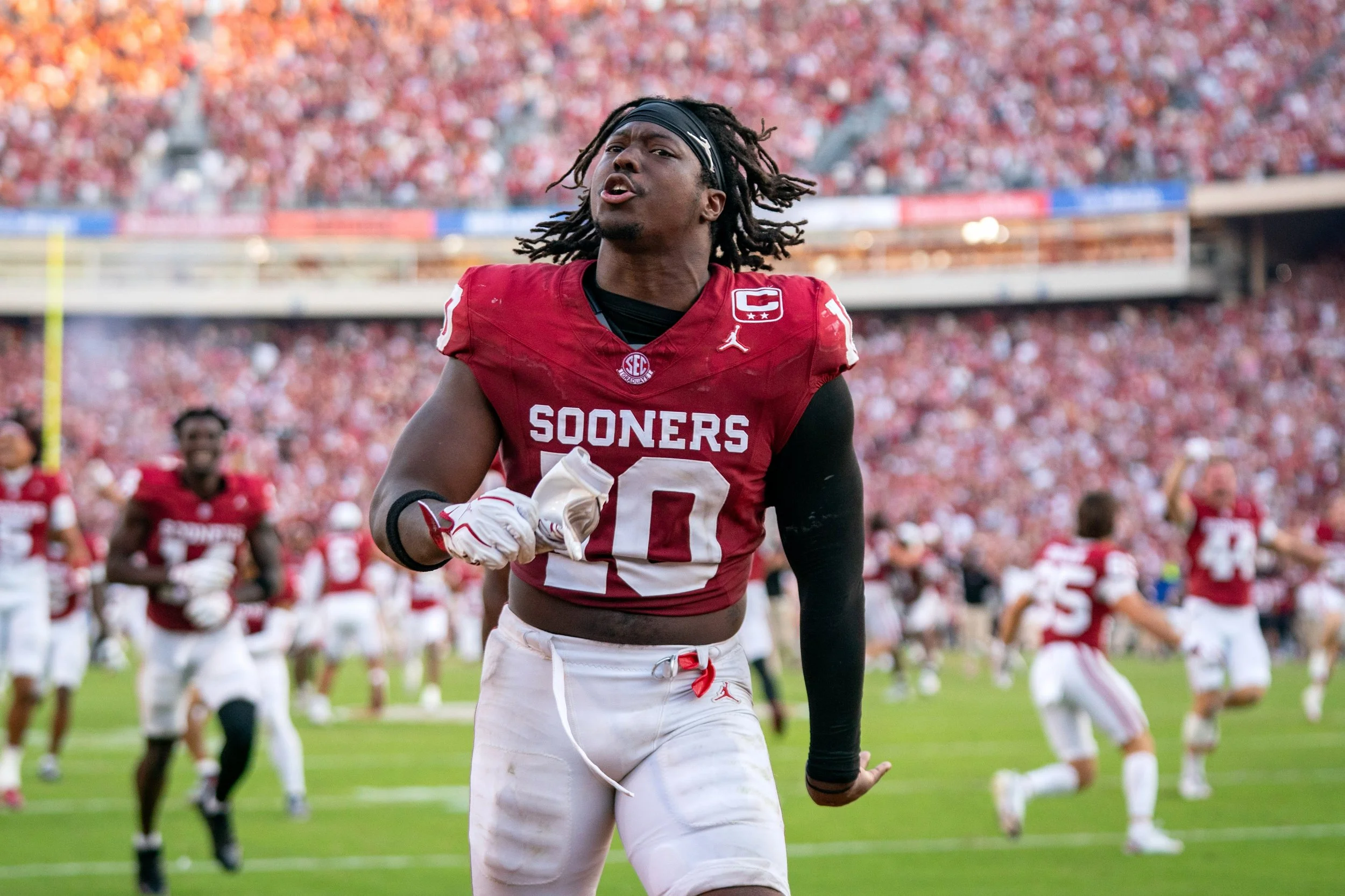
Oklahoma linebacker Kip Lewis celebrates his team's 27-24 victory over Texas during the second half of an NCAA college football game, Saturday, Oct. 10, 2026, in Dallas. (AP Photo/Jeffrey McWhorter)
Against a back who has repeatedly run through contact, that difference can determine whether Oklahoma earns a passing down or faces another manageable handoff.
Bothwell’s absence would change the challenge without removing it.
Kolin Wilson, Xavier Gayten and J.J. Hill combined for 130 rushing yards against LSU. They haven’t established Bothwell’s consistency, but Oklahoma can’t assume Mississippi State will stop handing off simply because its preferred back isn’t available.
Nor can the Sooners account only for the backs.
Puckett gained 55 yards on six rushing attempts against LSU. Taylor rushed for 91 against Minnesota.
Taylor Wein, Adepoju “PJ” Adebawore, Danny Okoye and Jake Kreul must recognize when the quarterback keeps the football and close their rush lanes when he begins to escape.
A covered receiver won’t help Oklahoma if the quarterback can run through the space its defensive ends leave behind.
Controlling those runs would allow the secondary to stay patient.
That patience will matter most against Anthony Evans III.
Evans has caught 47 passes for 614 yards and five touchdowns, providing Mississippi State with a receiver it can involve repeatedly from the slot. His role gives either quarterback an established place to go when the play begins.
Oklahoma must make that connection less comfortable.
Reggie Powers III needs to close the available throwing lane without allowing Evans to run through the coverage behind him. Heinecke and Lewis must account for routes crossing their areas, while Peyton Bowen and the other safeties stay positioned to help when Evans continues downfield.
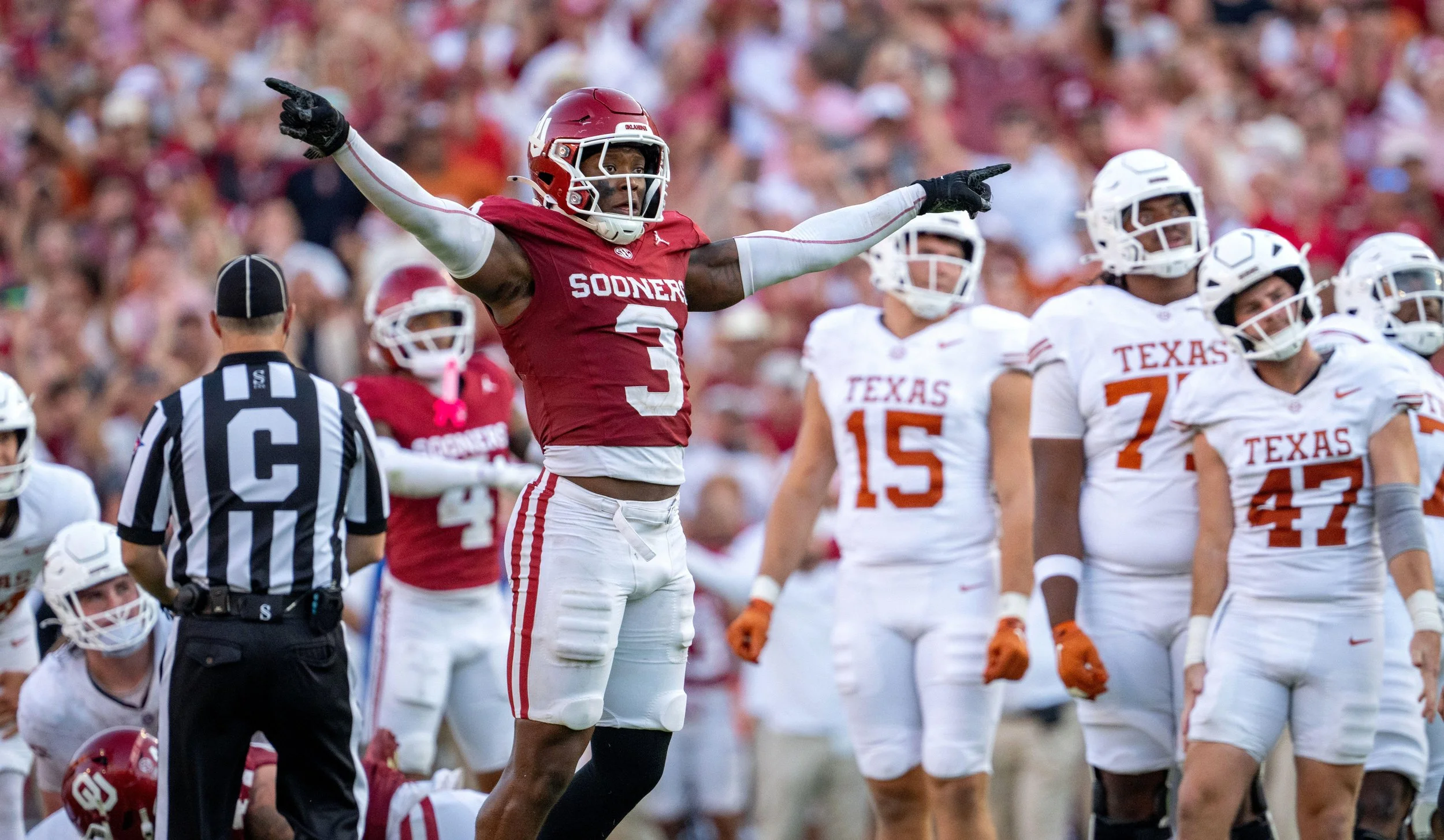
Oklahoma defensive back Reggie Powers III celebrates a missed Texas field goal during the second half of an NCAA college football game, Saturday, Oct. 10, 2026, in Dallas. Oklahoma won 27-24 on a last-second field goal. (AP Photo/Jeffrey McWhorter)
The Bulldogs’ last two games show why the assignment requires both restraint and urgency.
Evans caught 12 passes for 166 yards and two touchdowns against Alabama. Against LSU, seven receptions produced only 40 yards.
The catches remained available. Their value changed.
Oklahoma can live with some underneath completions if the first defender closes and finishes. It can’t allow those throws to become the easiest way for Mississippi State to avoid difficult passing situations.
Puckett’s performance against LSU makes that especially important.
He completed eight of nine play-action attempts but gained only 65 yards. Without the run fake, he completed eight of 17 for 56 yards and an interception.
Lebby gave him throws he could complete before the defense forced a more difficult decision.
The Sooners must recognize those opportunities without overreacting to them. Charging toward every short route could create the downfield opening Mississippi State hasn’t consistently found with Puckett.
Taylor’s return would make that danger greater.
Against Missouri, he produced 227 passing yards and two touchdowns off play action. Sanfrisco Magee caught two touchdown passes in that game, showing why Oklahoma can’t devote its entire secondary to Evans.
Courtland Guillory and Trystan Haynes must handle the outside receivers without repeatedly pulling the safeties away from the middle.
If Oklahoma can protect those areas while containing the run, the pass rush should receive a more favorable assignment.
Mississippi State’s recent protection has given opponents opportunities from multiple directions. Left tackle Miles McVay struggled against LSU, while center Canon Boone allowed three hurries.
Wein and the defensive end rotation must challenge McVay without allowing the quarterback to step away from pressure. Stone and Jackson need to close the pocket from inside.
Brent Venables can also bring pressure with his linebackers.
Lewis generated six pressures against Kentucky, and Heinecke added three. Their ability to threaten the line before rushing or dropping can complicate the quarterback’s first decision.
But the coverage must support whichever pressure Venables chooses.
Taylor threw both of his Alabama interceptions under pressure. Puckett took five sacks against LSU.
Taking away the first read would give Oklahoma’s pass rush time to end the possession.
Control the backs. Account for the quarterback’s legs. Finish against Evans and protect the space behind defenders reacting to the handoff.
Mississippi State’s injuries may change who carries out its offense Saturday.
Oklahoma’s responsibility is to make either version sustain drives without the easy plays that keep everything connected.