
Steve Curtis | October 29th, 2026
South Carolina doesn’t need its offense to work perfectly for LaNorris Sellers to keep a possession alive.
The Gamecocks’ running backs combined for only 38 yards against Tennessee. Sellers still produced two rushing touchdowns, including the score that tied the game late before South Carolina’s defense helped create a game winning field goal.
That presents Oklahoma with a different responsibility than simply stopping the run or pressuring the quarterback.
The Sooners must prevent Sellers from supplying the offense they’ve already taken away.
Oklahoma has the personnel to make South Carolina struggle through possessions. But winning the initial assignment won’t be enough if the next defender leaves Sellers an opening.
That starts with controlling the backs without committing unnecessary help.
Matt Fuller has gained 383 of his 511 rushing yards after contact, according to Pro Football Focus (PFF). He can keep a carry productive when South Carolina’s blocking hasn’t provided much room.
Oklahoma must make that work more difficult from the beginning.
David Stone and Jayden Jackson need to prevent the interior from creating movement, forcing Fuller to slow down or change direction before reaching the linebackers.
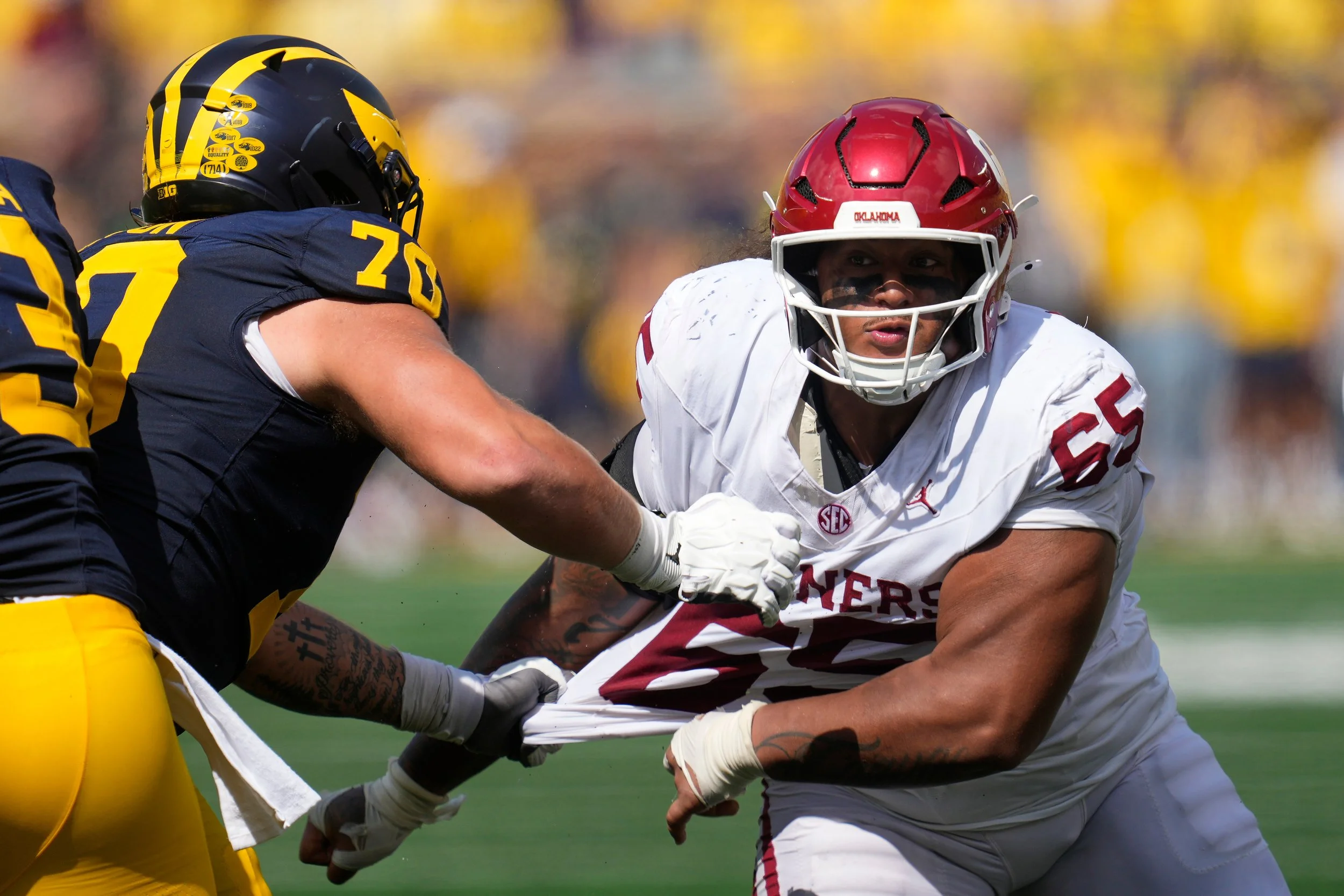
Oklahoma defensive lineman Jayden Jackson (65) plays against Michigan in the second half of an NCAA college football game Saturday, Sept. 12, 2026, in Ann Arbor, Mich. (AP Photo/Paul Sancya)
Stone provided that resistance against Mississippi State.
He recorded three stops against the run without missing a tackle on a running play. His performance helped give Oklahoma a stronger presence inside after a less productive evening against Kentucky.
The Sooners need that work to continue.
South Carolina’s offensive tackles have been more dependable protecting Sellers than opening lanes for Fuller. Oklahoma shouldn’t need to repeatedly pull a safety toward the line of scrimmage to handle a running game that hasn’t consistently moved defenders.
But the front must earn that patience behind it.
Taylor Wein, PJ Adebawore, Danny Okoye and Jake Kreul must hold the edges, keep Fuller from escaping outside and recognize when Sellers keeps the football.
Owen Heinecke must finish when either reaches him.
Despite playing through the flu, Heinecke gave Oklahoma its most dependable run defense in Starkville, recording eight solo tackles and six stops on running plays without a miss.
That performance matters beyond the grade attached to it.
He repeatedly ended plays before the runner could create something more. Against South Carolina, Oklahoma needs the same certainty when its front forces the football toward him.
Kip Lewis has an equally important responsibility.
The linebackers can’t both chase Fuller and leave an open lane for Sellers. Nor can they become so concerned with the quarterback that an ordinary handoff repeatedly produces a manageable next down.
South Carolina’s latest win showed why that balance matters.
Sellers scored on a 31-yard run in the first half against Tennessee. During the tying possession, he added a 22-yard gain before finishing with a 4-yard touchdown.
The Gamecocks didn’t suddenly establish their backs.
Their quarterback created the movement himself.
That threat follows Oklahoma into passing situations.
Sellers can escape after the coverage removes his initial throw, turning a successful defensive snap into another first down. Racing beyond him would give South Carolina a way out of the difficult situations Oklahoma wants to create.
The Sooners must close the pocket together.
The edges can’t widen their rushes without someone accounting for the space inside. Stone, Jackson and the rest of the defensive tackles must push the middle without opening a lane beside them.
A sack is useful. Keeping Sellers from rescuing the possession is the larger assignment.
South Carolina’s protection makes that distinction especially important.
Tackles Jacarrius Peak and Darius Gray weren’t charged with a single pressure against Tennessee. Sellers still took five sacks.
Oklahoma can’t expect every opportunity to begin with an immediate win off the edge.
The coverage must make Sellers hold the football long enough for the rush to reach him.
That begins with Mazeo Bennett Jr.
Bennett works primarily from the slot and has provided Sellers with a dependable connection inside. His six catches against Tennessee produced 88 yards and a touchdown.
The Sooners must challenge that connection without treating Bennett as a receiver who only threatens underneath.
Heinecke and Lewis need to account for routes crossing their areas. Peyton Bowen and the other safeties must remain positioned when Bennett continues beyond them.
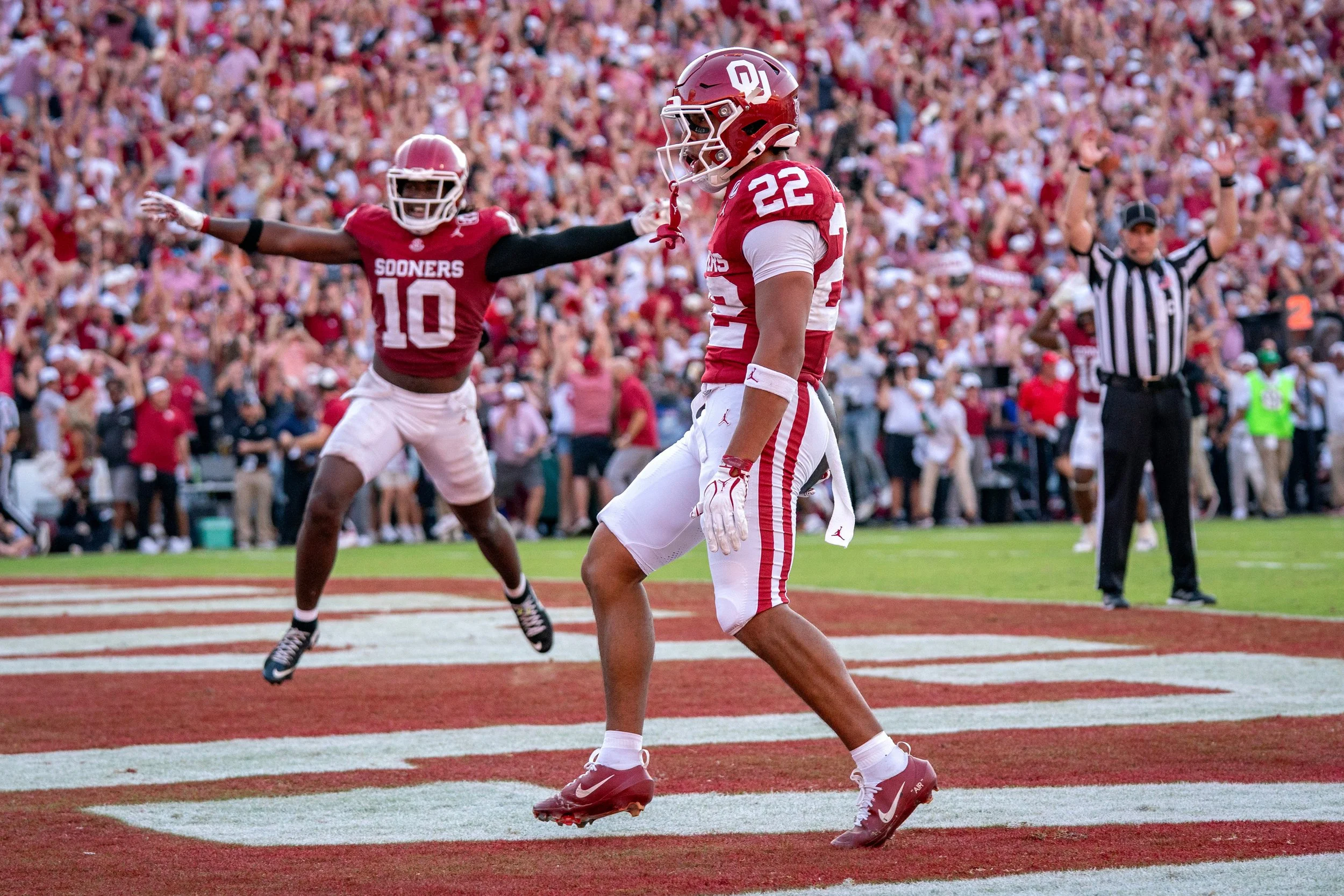
Oklahoma Sooners defensive back Peyton Bowen (22) returns an interception for a touchdown as linebacker Kip Lewis (10) celebrates during the second half of an NCAA college football game against Texas, Saturday, Oct. 10, 2026, in Dallas. (AP Photo/Jeffrey McWhorter)
Oklahoma has recent evidence that it can limit the value of completed passes.
Bowen allowed four catches for only 20 yards against Mississippi State while recording an interception. Reggie Powers III surrendered one completion for a loss.
Those are the kinds of results that allow Oklahoma to concede a throw without surrendering control of the possession.
But the secondary didn’t protect every area equally well.
PFF charged Michael Boganowski with two touchdowns allowed in coverage against the Bulldogs.
South Carolina has receivers capable of making another lost assignment costly.
Nyck Harbor caught four passes for 83 yards and a touchdown against Florida. DJ Black has produced useful gains in each of the Gamecocks’ last two games.
Courtland Guillory and Trystan Haynes must handle those outside threats without repeatedly requiring the safeties to abandon Bennett.
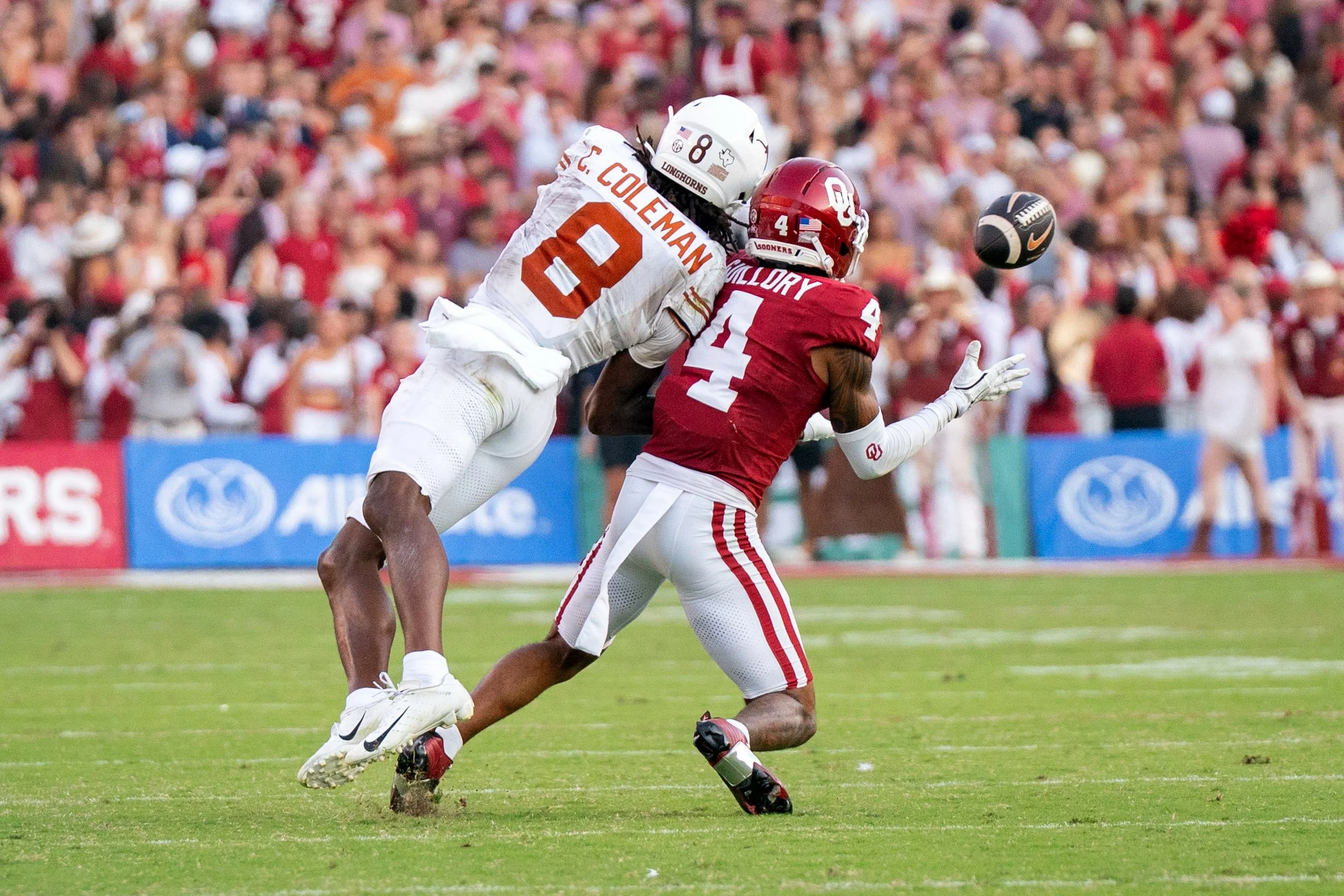
Oklahoma Sooners defensive back Courtland Guillory intercepts a pass intended for Texas Longhorns wide receiver Cam Coleman during the second half of an NCAA college football game, Saturday, Oct. 10, 2026, in Dallas. (AP Photo/Jeffrey McWhorter)
Guillory didn’t allow a completion on two targets against Mississippi State. Carrying that dependability forward would give Oklahoma more freedom to defend the middle.
The backs complicate those responsibilities.
Fuller caught seven passes for 85 yards against Mississippi State, with most of that production coming after the catch.
Heinecke and Lewis can’t lose him while watching Sellers. An available back gives the quarterback a way to move the offense without challenging the deeper coverage.
Brent Venables must make those first options less comfortable.
He can disguise which linebacker rushes, change the defender occupying Bennett’s passing lane and force Sellers to reconsider the throw he expected before the snap.
But additional pressure must remain connected to the coverage behind it.
Sellers threw all four of his Florida touchdown passes from clean pockets. Against Tennessee, his completion percentage fell to 40% under pressure.
Oklahoma can make the passing game considerably less productive.
It can also undo that advantage by leaving Sellers an escape route.
Control Fuller without overreacting to the handoff. Close Bennett’s initial window. Protect against Harbor and Black, then finish when Sellers has nowhere left to throw.
South Carolina has won consecutive games because its quarterback has found different ways to keep the offense moving.
Saturday, Oklahoma must make him operate without the next opening.