
Steve Curtis | October 30th, 2026
Oklahoma left Starkville with an offensive performance worth carrying forward.
John Mateer completed 22 of 29 passes for 283 yards and two touchdowns without a turnover. Isaiah Sategna supplied explosive plays, the protection improved in several places and the run game finally produced another long gain.
The Sooners have reached this point before.
Red River provided encouraging pieces. Kentucky showed how quickly they could disappear.
South Carolina gives Oklahoma another opportunity to turn the progress from a win into something it can sustain.
It also brings a defensive front capable of making that progress disappear again.
That starts with Dylan Stewart.
With South Carolina and Tennessee tied late, Stewart sacked the quarterback and forced a fumble. The recovery provided the field position for the Gamecocks’ walk-off field goal.
South Carolina didn’t need another full-length scoring drive.
One protection breakdown had already given it enough.
Oklahoma must keep Stewart from creating the same opportunity Saturday.
The Sooners have reason to feel better about part of that assignment.
Michael Fasusi wasn’t charged with a pressure across 39 pass-blocking snaps against Mississippi State. E’Marion Harris allowed two hurries, while Noah Best surrendered one pressure after allowing none against Kentucky.
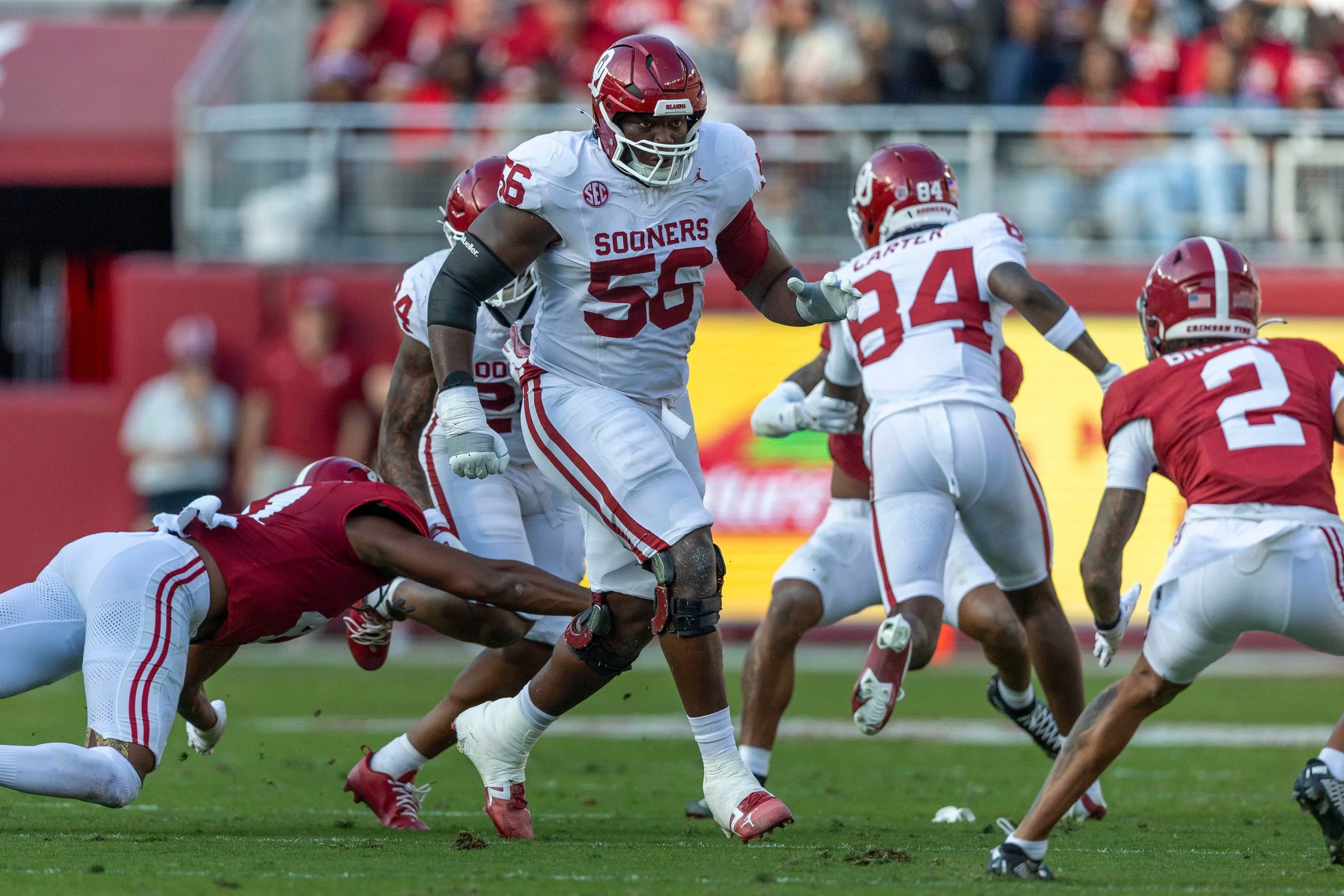
Oklahoma offensive lineman Machael Fasusi (56) looks for a blocking opportunity against Alabama during the first half of an NCAA college football game, Saturday, Nov. 15, 2025, in Tuscaloosa, Ala. (AP Photo/Vasha Hunt)
Those performances gave Mateer more opportunities to operate without immediately escaping the pocket.
But the improvement wasn’t uniform.
Peyton Joseph allowed five pressures against Mississippi State, all on true pass sets, when quick throws, screens and play action weren’t simplifying the protection.
With Ryan Fodje out because of the ankle injury he suffered against Kentucky, Oklahoma must find improvement from the blockers available.
But regardless of who plays, Ben Arbuckle can’t repeatedly ask every blocker to hold up through a long-developing passing play.
Oklahoma must identify where Stewart lines up and account for him in its protection. Adding another blocker won’t be enough by itself.
Arbuckle must give John Mateer an available throw before Stewart reaches him. South Carolina’s linebackers provide opportunities underneath, but those routes need to be available early rather than becoming a fallback after something deeper breaks down.
The timing of the throw must support those decisions.
Giving a tackle help means little if Mateer holds the football until that help no longer matters.
Nor can Stewart become the entire protection plan.
Anthony Addison has generated 18 pressures through seven games. Tomiwa Durojaiye provides another threat inside.
With Jake Maikkula likely out, Caleb Nitta and the guards must prevent South Carolina from finding a shorter path through the middle while Oklahoma sends support outside.
Fasusi didn’t allow a pressure against Mississippi State, while Nitta surrendered one hurry across 12 pass-blocking snaps. Oklahoma needs Nitta to carry that work into a larger role against South Carolina.
Mateer must use the time it creates.
His performance in Starkville provided a more encouraging answer than the final completion percentage alone.
PFF didn’t credit him with a turnover-worthy play. When the pocket was clean, he completed 18 of 21 attempts for 217 yards.
Oklahoma didn’t need him to manufacture every gain after the original play broke down.
It gave him opportunities, and he repeatedly completed them.
South Carolina offers places to continue that approach.
Linebacker Fred Johnson has allowed 22 catches on 24 targets for 192 yards. Against Tennessee, all five passes into his coverage were completed, with most of the resulting yardage coming after the catch.
The opportunity is to make him defend a receiver in space before the pass rush arrives.
Rocky Beers should be central to that plan.
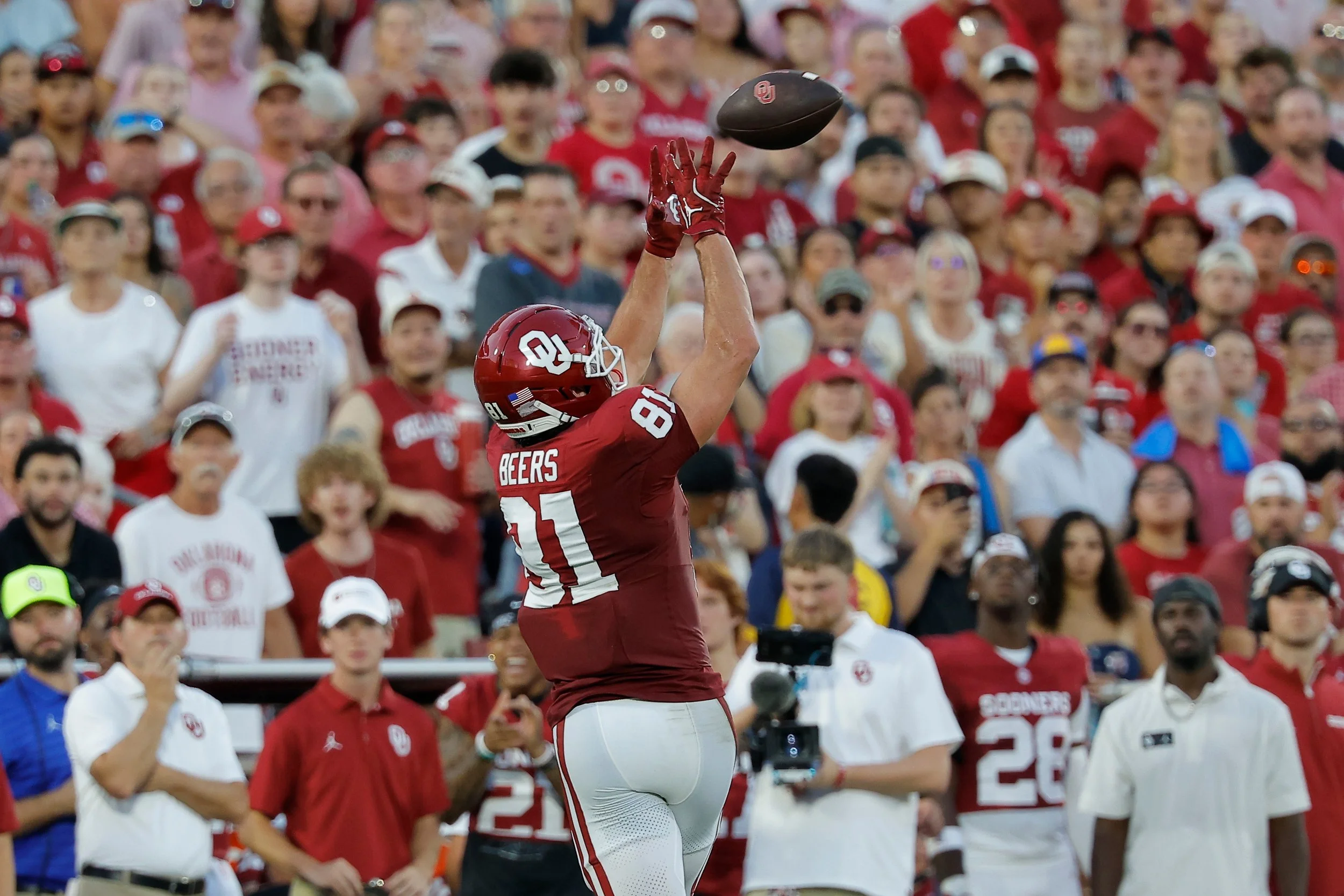
Oklahoma tight end Rocky Beers (81) makes a catch for a first down against UTEP during the first half of an NCAA college football game in Norman, Okla., Friday, Sept. 4, 2026. (AP Photo/Alonzo Adams)
He caught four passes for 66 yards and a touchdown against Mississippi State. Oklahoma can release him from beside a tackle or align him inside, making Johnson account for more than another blocker.
Justin Okoronkwo has also allowed productive completions, including all five targets against him when South Carolina faced Kentucky.
Arbuckle should make those linebackers handle repeated passing assignments.
The backs can contribute to the same approach.
Jonathan Hatton Jr. caught all three of his targets for 19 yards against Mississippi State. Lloyd Avant added another completion for nine.
Those throws can provide useful movement without requiring an outside receiver to beat a cornerback downfield.
They also give Oklahoma a way to involve the backfield when the handoff isn’t creating enough room.
That problem hasn’t disappeared.
Tory Blaylock rushed for 71 yards against Mississippi State, but 47 came on one carry. Oklahoma’s three backs combined for 125 yards on 27 attempts. Remove the long run, and the other 26 produced 78.
The explosive gain helped, but the Sooners still need more dependable movement around it.
South Carolina has defenders capable of keeping that difficult.
Johnson and Okoronkwo combined for 14 solo tackles on running plays against Tennessee without missing one. Noah Clark added four stops against the run.
Oklahoma can’t expect its backs to repeatedly create after a defender reaches them near the line of scrimmage.
The line and tight ends must provide the opening.
Hayden Hansen supplied better run blocking against Mississippi State, earning a 66.2 grade from PFF. Beers remained less dependable in that role.
Heavier personnel can support the protection and keep the handoff available. But adding another tight end only helps the running game if the additional block holds.
Oklahoma needs enough productive carries to prevent South Carolina from treating every snap as an opportunity to attack Mateer.
That would also help keep Sategna involved without making every possession depend on him.
His eight catches for 164 yards and a touchdown drove the passing game in Starkville. Coupled with Beers’ 66 yards, the pair was responsible for most of Oklahoma’s receiving production.
Their success matters.
So does using another receiver when South Carolina shifts its attention toward them.
Manny Choice caught five passes for 98 yards against Kentucky but received only one target against Mississippi State.
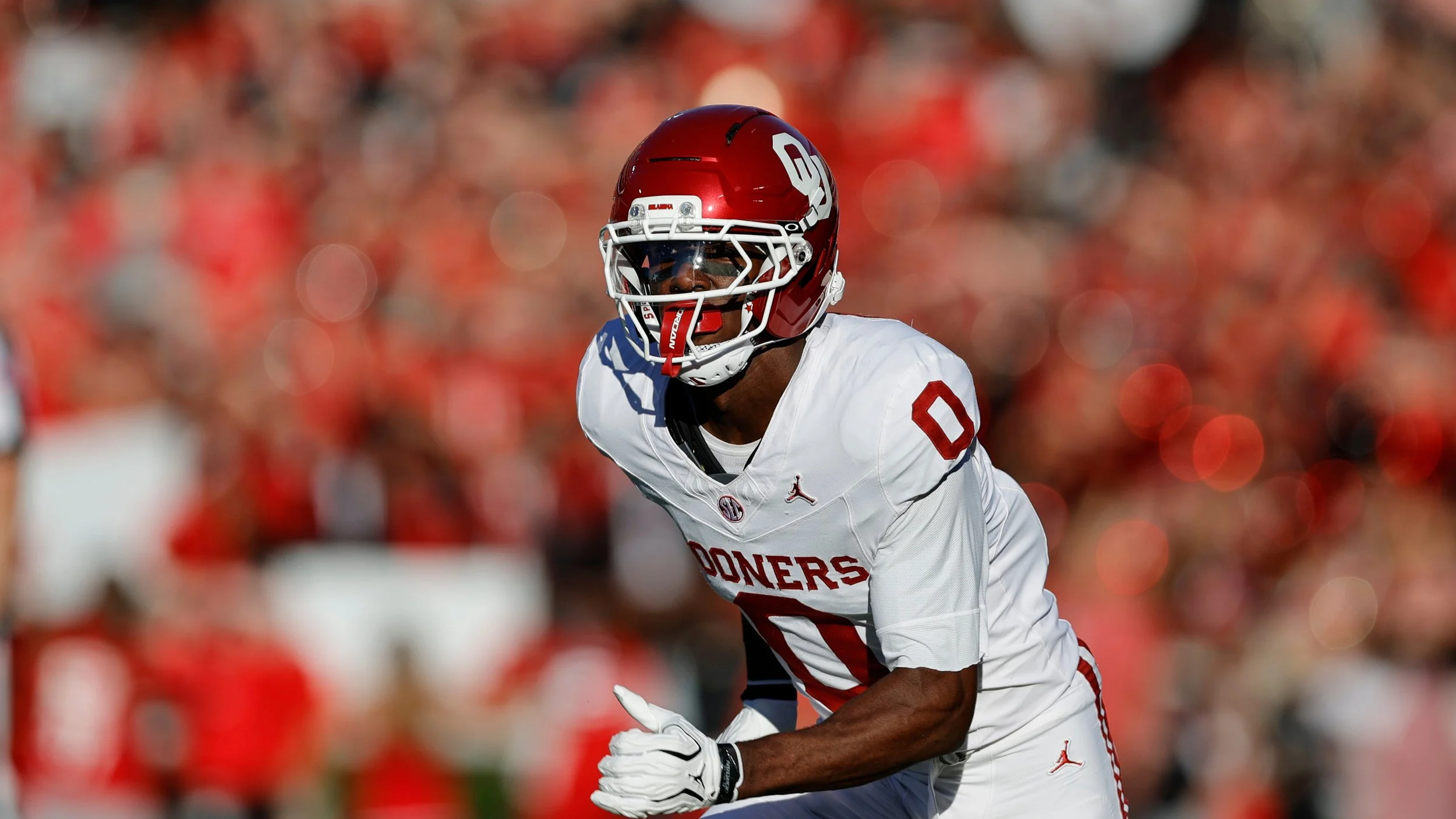
Oklahoma wide receiver Manny Choice (0) runs a route during the second half of an NCAA football game against Georgia in Athens, Ga., Saturday, Sept. 26, 2026. (AP Photo/Stew Milne)
Mateer doesn’t need to force him the ball. He must recognize when the coverage gives Choice or another outside receiver the available opportunity.
The matchup requires judgment.
Vicari Swain has limited opponents to 101 receiving yards across five SEC games. Judge Collier has been more vulnerable to larger gains and touchdowns.
Oklahoma can challenge the outside without making every passing down a search for that matchup.
Moving Sategna inside, releasing Beers against the linebackers and involving the backs would force South Carolina to defend more of the formation.
Then the deeper opportunities can become part of the possession rather than its only purpose.
That is the progress Oklahoma must preserve.
Protect long enough for Mateer to deliver the available throw. Give the backs room before contact. Make South Carolina’s linebackers defend in space and keep Stewart from turning one lost block into free points.
Starkville showed that Oklahoma can play more efficiently without removing its ability to attack downfield.
Saturday requires the Sooners to do it again.