
Steve Curtis - Three Changes Ben Arbuckle and John Mateer Must Make to Fix Oklahoma’s Offense
Steve Curtis | September 16th
Oklahoma’s offensive performance at Michigan left plenty to be desired.
The Sooners finished with 100 rushing yards, 189 passing yards, 10 points, two costly turnovers and a 3-of-13 mark on third down.
Much of the responsibility falls on two people: quarterback John Mateer and offensive coordinator Ben Arbuckle.
Mateer delivered his worst performance in an Oklahoma uniform since the 2025 Red River Shootout. He completed 17 of 33 passes, was sacked three times and threw a fourth-quarter interception that gave Michigan the ball at Oklahoma’s 6-yard line.
The Wolverines scored the deciding touchdown two plays later.
Against Michigan, Mateer produced a missed-pass rate of 42%, the third-worst mark among Power Four quarterbacks in Week 2.
But the problems in Ann Arbor didn’t belong to Mateer alone.
Arbuckle asked his quarterback to throw 33 times against one of the most talented defensive fronts Oklahoma will face this season. With no consistent commitment to the running backs, Michigan could direct nearly all of its attention toward pressuring Mateer and forcing him to repeatedly make plays.
That’s not a winning formula for this quarterback.
If Oklahoma wants to get its offense back on track, Arbuckle must build his game plans around making Mateer’s job easier. Three changes can help him do it.
1. Commit to the Running Backs
Oklahoma’s early attempts to establish a traditional running game were successful.
Lloyd Avant received five carries in the first half and gained 33 yards, averaging 6.6 yards per attempt. Four of those carries went for 6 yards or more.
Instead of building around that success, Oklahoma moved away from it.
Avant received four more carries in the second half and added only 2 yards to his total. Xavier Robinson and Tory Blaylock combined for four carries and nine yards.
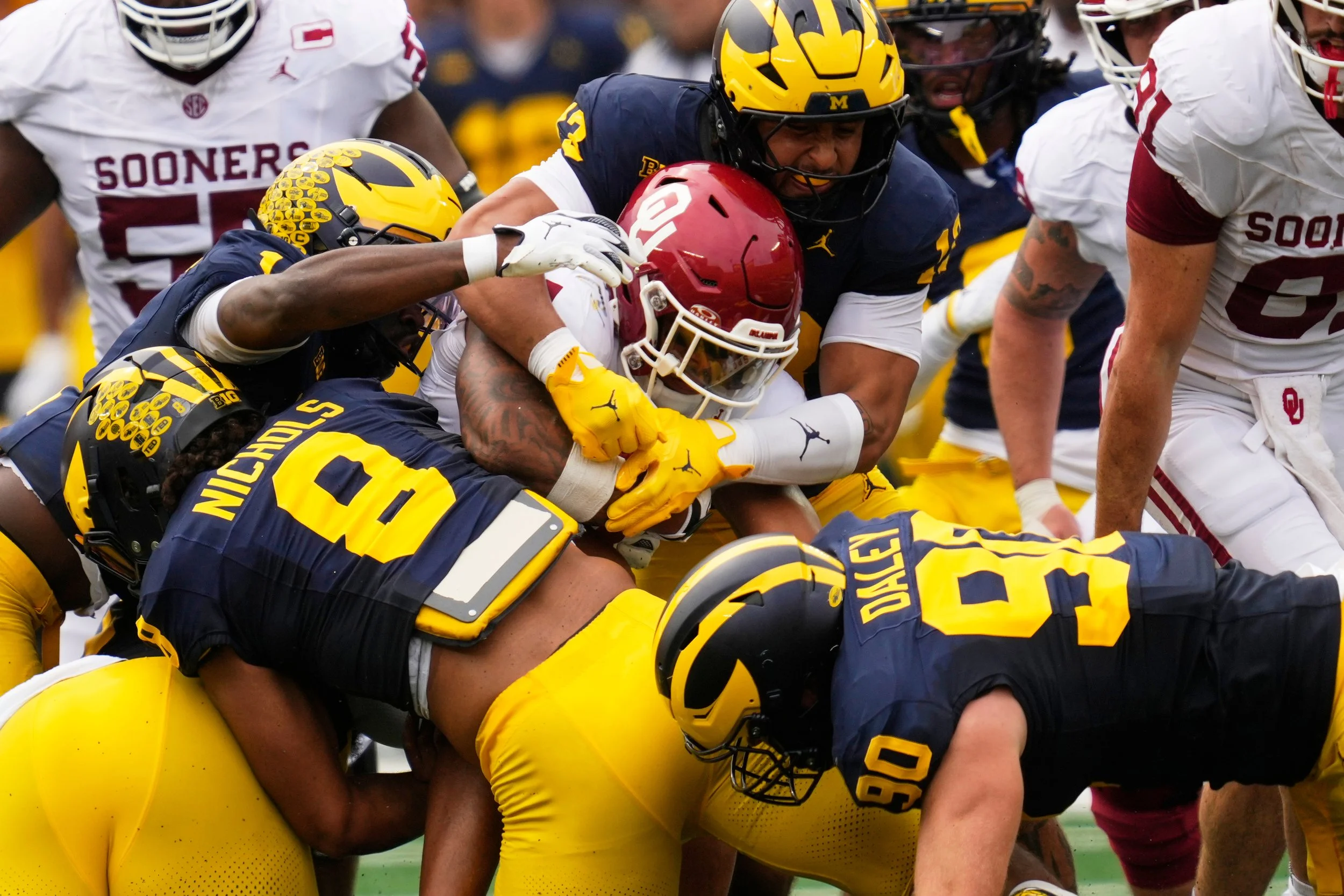
Outside of those three running backs, Oklahoma’s rushing production was entirely dependent on Mateer, who ran 13 times for 45 yards.
The lack of commitment also placed the offensive line in a difficult position. Instead of allowing the Sooners to come off the ball, move defenders and establish their physicality, Oklahoma repeatedly asked the group to drop into pass protection against Michigan’s defensive front.
That allowed the Wolverines’ pass rushers to find a rhythm before Oklahoma’s offensive line ever had an opportunity to establish one of its own.
The Sooners also moved away from the heavy personnel packages they used against UTEP.
Oklahoma regularly placed multiple tight ends along the line of scrimmage in the opener, helping anchor the offensive tackles and create running lanes. Against Michigan, those packages appeared only a handful of times as the Sooners operated almost exclusively from the shotgun.
Hayden Hansen and Rocky Beers were brought to Oklahoma in part because of what they could add as blockers. Arbuckle must use them.
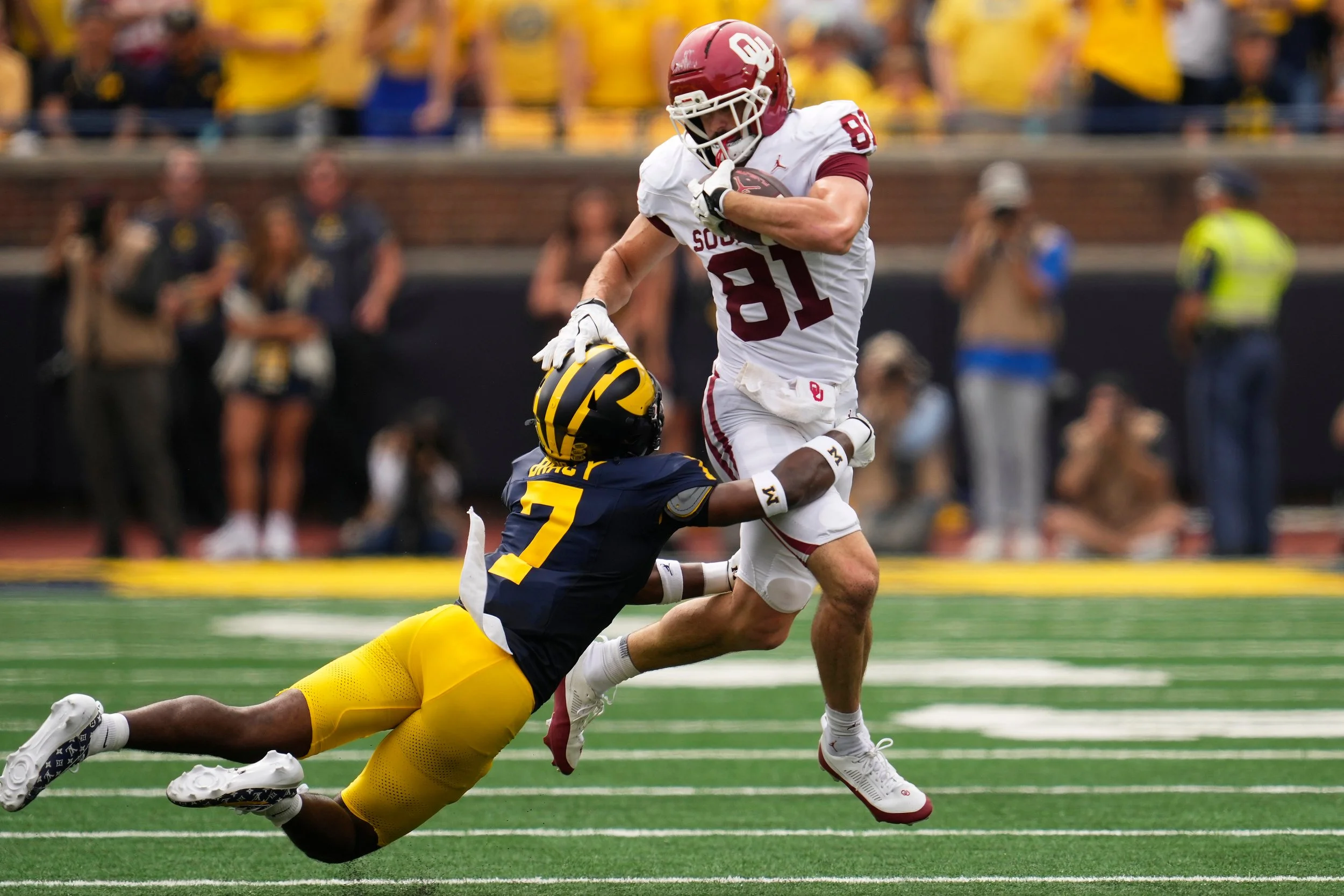
Adding larger bodies near the line of scrimmage would not only help the running game. It would force defenses to account for the possibility of a handoff, draw more defenders toward the box and create more favorable matchups for Oklahoma’s receivers.
For nine months, this staff emphasized the need to run the football more effectively.
That commitment never arrived in Ann Arbor.
The problem wasn’t that Oklahoma proved incapable of running against Michigan. It was that Arbuckle never gave the Sooners enough opportunities to find out.
2. Simplify Mateer’s Decisions
Committing to the running backs would also help Oklahoma address another problem: how much the offense asks Mateer to process after the snap.
Arbuckle’s offense relies heavily on run-pass options and read-options, placing the final decision in the quarterback’s hands based on how the defense reacts.
At his best, Mateer is an instinctive playmaker capable of turning a broken play into an explosive one. However, his 14 games in an Oklahoma uniform have also shown that consistently making fast, correct decisions remains one of his biggest weaknesses.
Oklahoma needs to remove as many of those decisions as possible.
That means moving away from RPOs and read-options. Call a true running play and hand the ball to a running back, or call a true passing play and allow Mateer to focus on delivering the football.
Asking Mateer to repeatedly make quick, correct choices after the snap is like asking a kindergartener to do his taxes before he can complete simple addition.
Arbuckle can’t continue placing the full burden of the offense on Mateer and expecting him to consistently identify the correct answer while defenders collapse around him.
More traditional handoffs would allow the running backs to carry a larger share of the offense. Removing extra post-snap reads would allow Mateer to play faster instead of hesitating while the defense closes around him.
The objective should be simple: Reduce hesitation.
Mateer is not at his best when he’s standing inside the pocket, working through a crowded field and waiting for something to open. He’s at his best when the picture is as clear as physically possible and he can play freely rather than feeling boxed in.
Arbuckle’s job is to create more of those situations.
3. Build the Passing Game Around Mateer’s Mobility
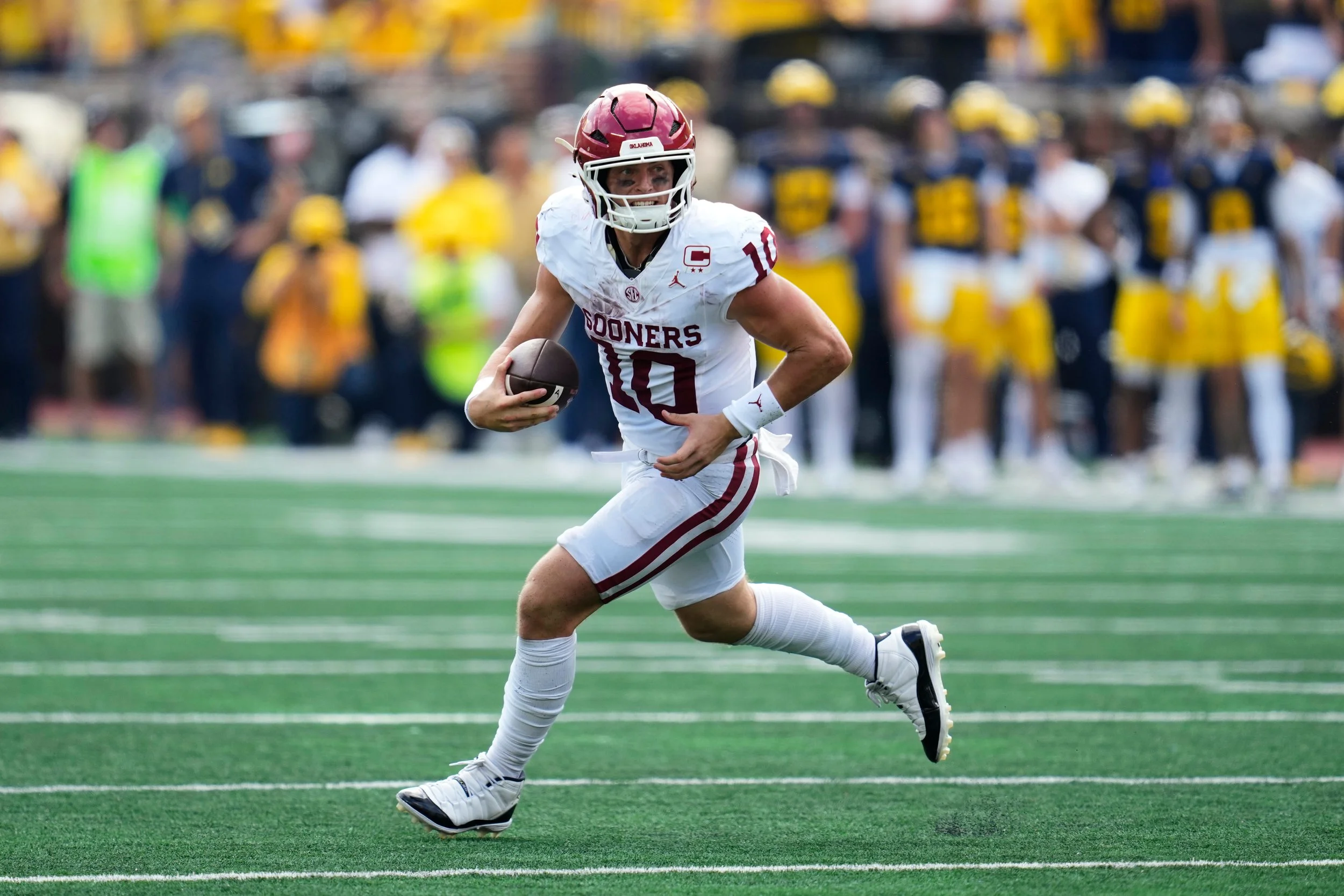
Mateer is first and foremost a mobile quarterback.
He’s at his most dangerous when he can escape the pocket, change his launch point and attack a defense without standing directly behind the offensive line.
Play action provides Oklahoma with a way to create those opportunities.
The Sooners didn’t use play action often last season because opposing defenses had little reason to respect their running game. But if Oklahoma establishes a legitimate threat through traditional handoffs, Arbuckle can use that threat to pull defenders toward the line of scrimmage and create open space behind them.
The difference between Oklahoma’s first two games shows what that can do for Mateer.
Against UTEP, 61% of his 17 pass attempts came from play action. He completed 11 passes for 225 yards and three touchdowns without committing a turnover, delivering one of his most efficient performances at Oklahoma.
Against Michigan, play action accounted for just 17% of his pass attempts.
Instead of moving Mateer outside the pocket and allowing him to deliver the football from open space, Oklahoma repeatedly asked him to operate as a traditional dropback passer against an established pass rush.
That played directly into Michigan’s strengths and away from Mateer’s.
There are players capable of completely changing how they play. Expecting that transformation from Mateer in the middle of his final college season is not practical.
Arbuckle must recognize the quarterback he has and call the offense accordingly.
Oklahoma spent the offseason retooling the running back room, reshaping the tight end position and adding more experience around Mateer. Each move was designed to give the quarterback what he needed to lead the Sooners back to the College Football Playoff.
That does not mean asking him to carry the offense by himself.
Oklahoma does not need Mateer to be Superman. It needs him to make the necessary plays when his number is called, protect the football and use his athleticism without becoming the entire offense.
The Sooners weren’t good enough offensively in Ann Arbor. The inconsistencies were familiar, but the explanations that followed them last season no longer apply.
Mateer is healthy. The running back room is deeper. The tight ends are better. The offensive line is more experienced.
Now Arbuckle must use those pieces to take pressure off his quarterback, and Mateer must play more efficiently within the offense built around him.
Run the football. Simplify the decisions. Move the pocket.
If Arbuckle and Mateer make those changes, Oklahoma’s offense can still become what the Sooners spent the offseason building toward.
If they do not, Ann Arbor will not be the last time the same problems decide a game.