
Steve Curtis - Oklahoma’s Defense Has to Butcher New Mexico’s Offense
Steve Curtis | September 18th, 2026
New Mexico’s offense has produced 108 points through two games.
That total does not make the Lobos one of the nation’s best offenses. Central Michigan and Mercyhurst provided neither the talent nor resistance New Mexico will face Saturday night in Norman.
But the first two games made the Lobos’ identity clear.
New Mexico wants to reach the perimeter in the running game, force defenders toward the line of scrimmage and attack the space created behind them.
Everything begins with the run.
The Lobos have carried the ball 92 times and attempted only 45 passes. Those rushing attempts have produced 522 yards, 10 touchdowns and an average of 5.7 yards per carry.
More than half of that production has come after contact.
New Mexico’s runners have gained 336 yards after the first defender reached them while forcing 17 missed tackles.
That places the first responsibility on Oklahoma’s ability to finish.
The Sooners missed 13 tackles against UTEP and continued to struggle at times in the open field against Michigan. Those mistakes did not cost Oklahoma in the opener, but they allowed manageable gains to become extended possessions.
New Mexico is better equipped to punish them.
Scottre Humphrey has rushed for 169 yards and three touchdowns on 28 carries. Kiefer Sibley has added 93 yards on only 12 attempts.
Humphrey has been the foundation of the backfield, but New Mexico does not depend on one runner.
Quarterback Toa Fa’avae has gained another 86 yards on eight carries while forcing six missed tackles. James Laubstein has handled short-yardage situations, rushing seven times for 18 yards and two touchdowns.
The Lobos can change the player carrying the football without changing what they want to accomplish.
Oklahoma must change where they are allowed to accomplish it.
New Mexico has been far more dangerous outside the tackles than directly through the middle.
Eight carries around the left end have produced 85 yards. Seventeen attempts around the right have gained another 94.
Runs between the tackles have been much less consistent.
That gives Oklahoma’s defensive front a clear assignment.
Taylor Wein, Adepoju “PJ” Adebawore and Danny Okoye must set firm edges and prevent New Mexico’s backs from reaching open space. If the Lobos are forced to repeatedly turn inside, David Stone, Jayden Jackson and Oklahoma’s linebackers should control the matchup.
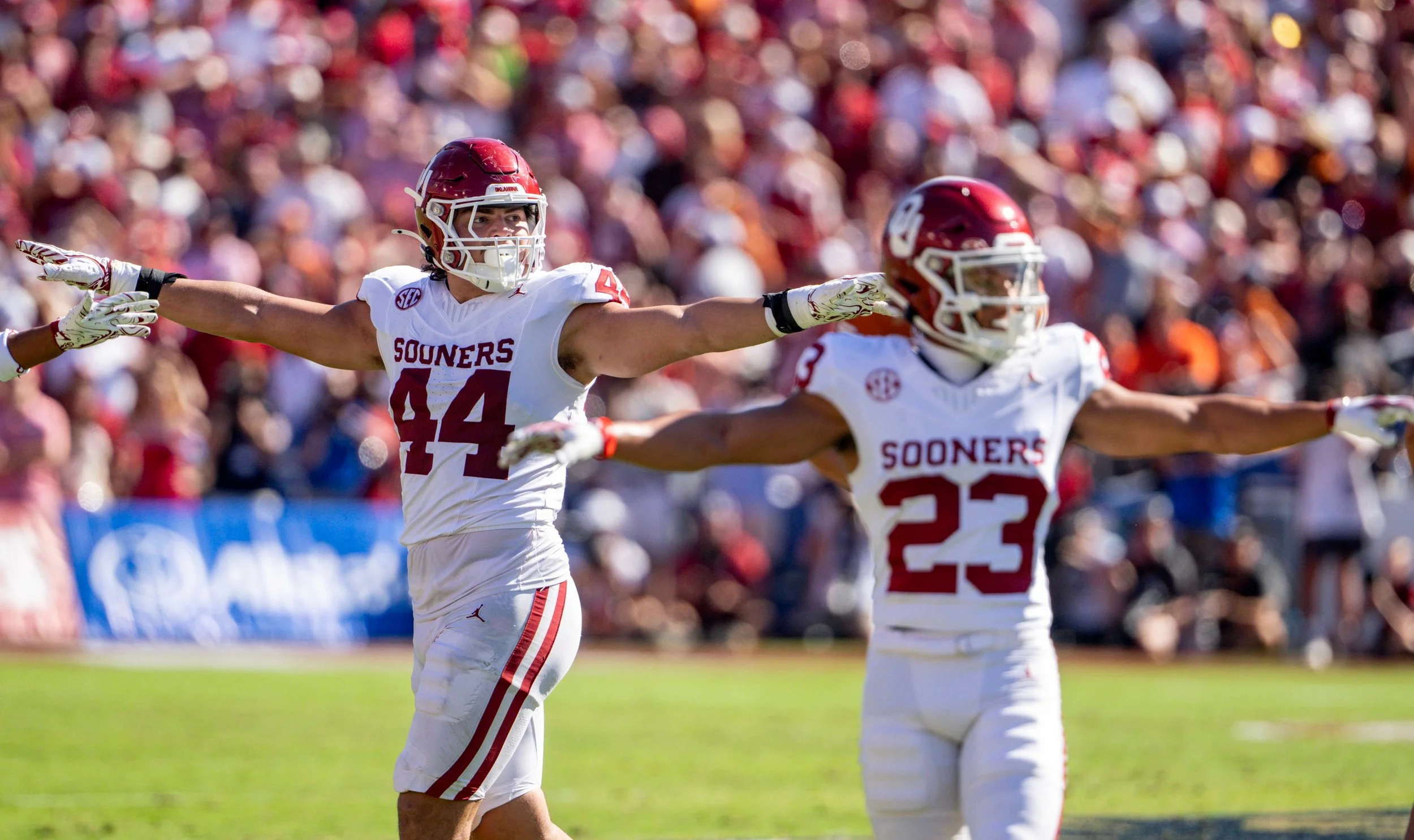
Wein has already been Oklahoma’s most dependable run defender.
He has recorded a team-high 11 tackles and earned an 83.5 run-defense grade through two games, according to Pro Football Focus (PFF).
His value Saturday will not be measured exclusively through sacks or pressures.
New Mexico wants Oklahoma’s defensive ends to race upfield, opening lanes underneath or allowing its backs to escape outside. Wein must prevent those lanes from developing while forcing the football back toward the strength of the defense.
Stone must provide that strength inside.
He earned an 81.0 run-defense grade last season, but that number has fallen to 54.7 through Oklahoma’s first two games.
A run-first opponent gives Stone an opportunity to reestablish himself.
New Mexico has been particularly effective running between the center and left guard, producing 89 yards on 14 attempts in that direction.
That creates the most important interior matchup.
If Stone and Jackson prevent New Mexico from creating movement on the left side and keep Oklahoma’s linebackers clean, the Lobos will struggle to consistently run between the tackles.
If the Lobos can’t win inside or reach the perimeter, the foundation of their offense disappears.
That would place the game on New Mexico’s other quarterback Luke Moga.
Moga has completed 17 of 27 passes for 198 yards and three touchdowns. Fa’avae has added 139 yards and another score while completing seven of 18 attempts.
Neither has thrown an interception.
The lack of turnovers doesn’t mean New Mexico has established a dependable passing game.
Together, the Lobos’ quarterbacks have completed just 53.3% of their attempts. Their average throw has traveled more than 12 yards downfield, showing a passing attack designed around creating a handful of larger plays rather than repeatedly completing short throws.
The run game makes those opportunities possible.
Moga has completed eight of 10 play-action attempts for 88 yards and two touchdowns. When New Mexico removes the run fake, his efficiency drops.
The distinction is the story of the offense.
New Mexico doesn’t run the football simply to remain balanced. The Lobos run it to move linebackers, create hesitation and open the middle of the field.
Oklahoma must defend the run without allowing that movement to compromise its coverage.
Owen Heinecke and James Nesta will be responsible for much of that balance with Kip Lewis and Cole Sullivan being held out this week.
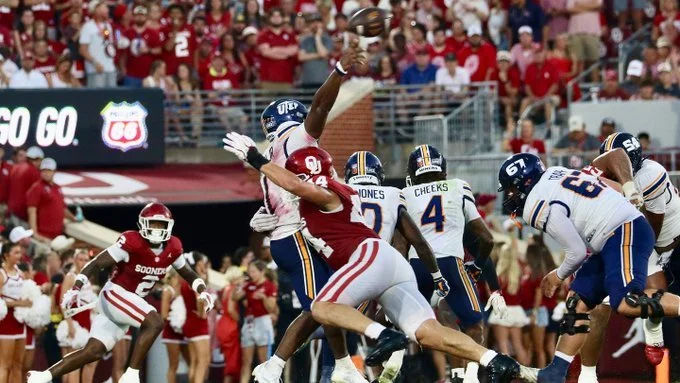
They must trigger quickly enough to prevent New Mexico’s backs from turning the corner, but can’t become so aggressive that Moga can pull the football and deliver it into the space behind them.
Heinecke has allowed two completions for 43 yards in coverage, with 35 coming after the catch.
New Mexico will test that area again.
Tight end Cade Keith leads the Lobos with 96 receiving yards and a touchdown despite catching only five passes. He has aligned next to the offensive line, in the slot and out wide, allowing New Mexico to move him into favorable matchups before attacking the middle.
That places Reggie Powers III under a brighter spotlight.
Powers has allowed three receptions for only 16 yards through two games. Saturday will provide his first significant test against an offense determined to involve its tight end downfield.
Keeping Keith under control would take away Moga’s most productive target and allow Oklahoma’s safeties to focus on preventing explosive plays behind the linebackers.
Peyton Bowen has already excelled in that role.
Opponents have targeted him twice this season, and he has broken up both passes.
Both of Moga’s touchdown passes traveling at least 20 yards downfield attacked the middle third of the field.
That is where Bowen plays.
New Mexico will also look outside to receivers Troy Omeire and DJ Darling.
Omeire has caught four passes for 90 yards and a touchdown. Darling has turned two receptions into 44 yards and another score.
Neither requires a large target share to affect the game.
New Mexico does not have one receiver Oklahoma can remove and expect the passing attack to disappear. Instead, the Lobos have several options capable of turning one lost assignment into an explosive play.
That makes Courtland Guillory’s discipline especially important.
Guillory has drawn three penalties through two games, including one that was accepted, while posting a 51.1 coverage grade after earning a 74.0 last season.
His talent has not changed.
But the penalties and inconsistencies have given opponents opportunities that were not created by the structure of Oklahoma’s defense.
New Mexico will need those opportunities to remain competitive.
The Lobos have not allowed a sack this season, but their offensive line has not been impenetrable.
Cole Millward has surrendered four of the six pressures allowed by the group. Whichever defensive end lines up across from him will have Oklahoma’s best opportunity to reach the quarterback.
Adebawore has produced four pressures on 25 pass rushes, giving Oklahoma a more consistent threat opposite Wein. Jackson has added five pressures from the interior, while Trent Wilson has produced three on only eight pass rushes.
The Sooners do not need to overwhelm Moga with constant blitzes.
But additional pressure has affected him.
Moga completed 81.8% of his attempts when opponents rushed only their defensive linemen. That number fell to 50% when an extra defender joined the rush, while his PFF passing grade dropped from 80.3 to 59.3.
Brent Venables can use that difference without recklessly selling out.
Oklahoma can disguise where the additional rusher is coming from, force Moga to reset his protection and still keep enough defenders in coverage to close the middle of the field.
The objective is not simply to record sacks.
It is to make New Mexico’s quarterbacks play without the comfort created by the run game and play-action passing.
That is also where Oklahoma’s first interception of the season should emerge.
The Sooners have gone two games without one. New Mexico has attempted 45 passes without throwing one.
If Oklahoma stops the run and forces the Lobos beyond their preferred passing volume, Moga and Fa’avae will have to challenge a secondary that holds the advantage at nearly every position.
Taken together, New Mexico’s offensive plan is straightforward.
Reach the perimeter. Break tackles. Pull Oklahoma’s linebackers toward the line of scrimmage and throw into the space behind them.
The answer must be just as clear.
Set the edge. Finish tackles. Force New Mexico to run between the tackles and make its quarterbacks sustain drives through the air.
If Oklahoma does those things, the Lobos will lose the offense that carried them through their first two games.
New Mexico has shown it can punish defenses that lose contain, miss tackles or become too aggressive against play action.
It hasn’t shown that it can consistently move the football without those mistakes.
Oklahoma’s defense should not give it the opportunity to start Saturday.