
Steve Curtis | November 19th, 2026
Oklahoma’s defense has allowed 24 points over its last two games, giving the Sooners consecutive wins over Florida and Ole Miss.
Texas A&M arrives with an offense that has struggled to produce that much in an afternoon.
The Aggies have scored a combined 16 points in consecutive losses to South Carolina and Tennessee. But those results revealed different problems. Rueben Owens II at running back gave them productive carries against the Gamecocks. Against the Volunteers, quarterback Marcel Reed struggled to complete anything beyond the underneath coverage.
Oklahoma must make those problems continue without providing the plays that let Texas A&M escape them.
1. Control Owens without treating every handoff as a reason to abandon coverage.
Owens rushed for 137 yards on 19 carries against South Carolina. According to Pro Football Focus (PFF), 83 came after contact.
His longest run gained 44 yards. His other 18 attempts still produced 93.
Texas A&M could keep handing him the ball because the carries between explosive plays remained useful.
Oklahoma needs David Stone, Jayden Jackson and Bishop Thomas to change where those carries begin to break down.
Meeting Owens before he gets through the line gives Owen Heinecke and Kip Lewis a chance to finish on the short gains. Reaching him after he gets downhill gives the broken tackles more value.
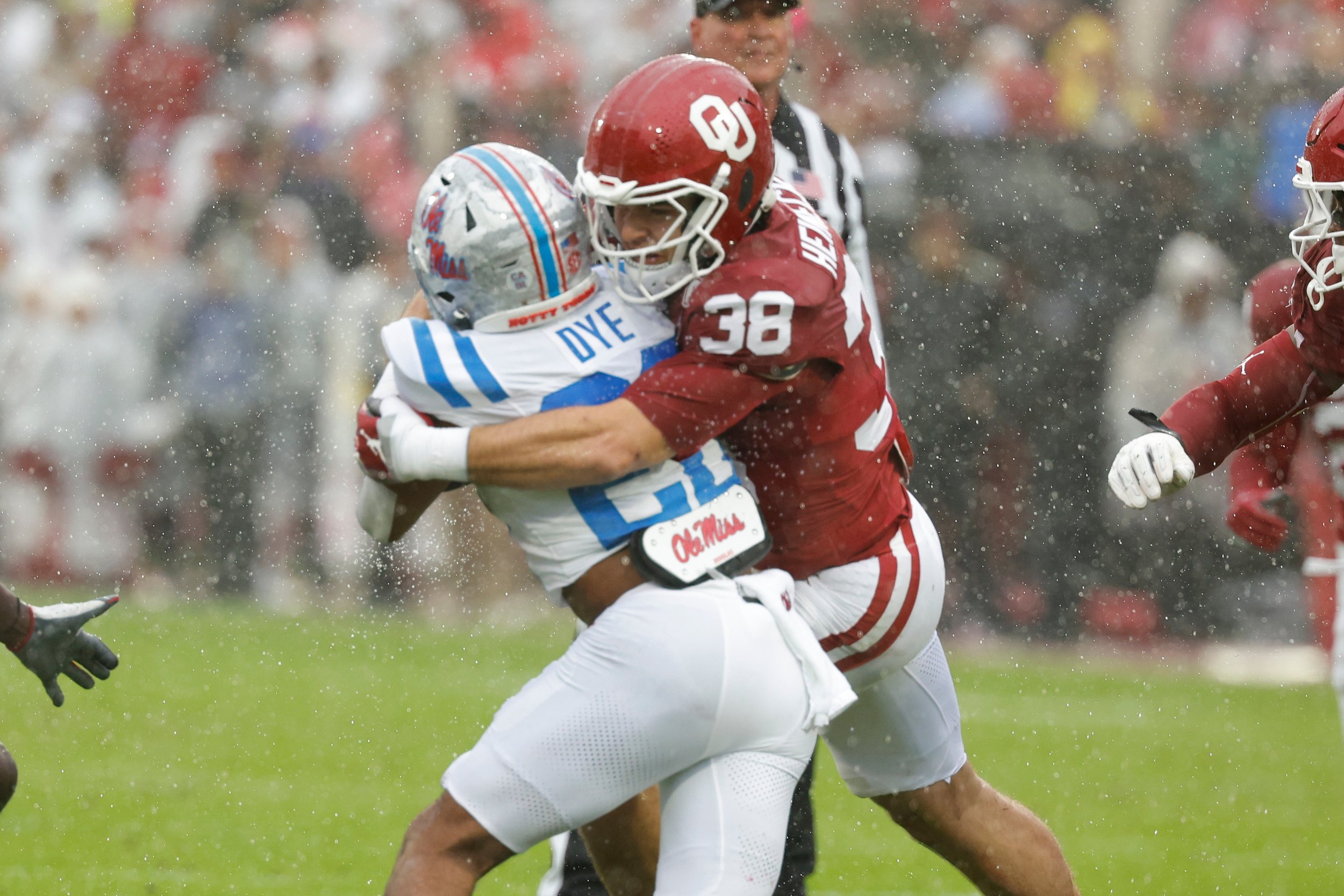
Oklahoma linebacker Owen Heinecke (38) tackles Mississippi running back Joshua Dye (28) during the first half of an NCAA college football game in Norman, Okla., Sunday, Nov. 15, 2026. (AP Photo/Alonzo Adams)
Jackson provided that resistance against Ole Miss, recording three stops against the run without a missed tackle on a running play. Lewis also went without a miss against the run.
That work must carry forward without repeatedly pulling the safeties toward the handoff.
KJ Edwards gives Texas A&M another back capable of making an opening count. His 25-yard touchdown against Tennessee produced the Aggies’ only score. His other six carries gained 19 yards.
Oklahoma can make running the football difficult without allowing one missed assignment to undo several successful downs.
2. Keep Reed from replacing the production his backs aren’t providing.
Reed’s running threat changes what a successful coverage snap requires.
Against Kentucky, PFF credited him with seven scrambles for 79 yards. Three scrambles produced 54 against Arkansas.
A covered receiver doesn’t finish the play if Reed can step through the pocket.
Taylor Wein, Danny Okoye, PJ Adebawore and Jake Kreul must threaten the tackles without overpursuing and opening rushing lanes, a recurring problem against mobile quarterbacks. Stone, Jackson and Thomas must close the middle so Reed can’t step up and escape pressure off the edges.
The linebackers have to account for him after his preferred read disappears.
That doesn’t mean leaving a receiver uncovered to watch the quarterback. The rush and coverage must work together to take away Reed’s options.
Oklahoma has already faced that responsibility against LaNorris Sellers and Trinidad Chambliss.
Texas A&M hasn’t consistently sustained its passing game. The Sooners can’t allow Reed’s legs to make that inconsistency irrelevant.
3. Make Reed find another receiver without giving him an easier completion.
Mario Craver provides Texas A&M’s most established answer inside.
He caught 11 passes for 119 yards against Kentucky, giving Reed somewhere to return when other opportunities weren’t available.
Reggie Powers III must account for Craver’s alignment without assuming every route from the slot will stop underneath. Peyton Bowen and Michael Boganowski must remain positioned to handle him continuing through the coverage.
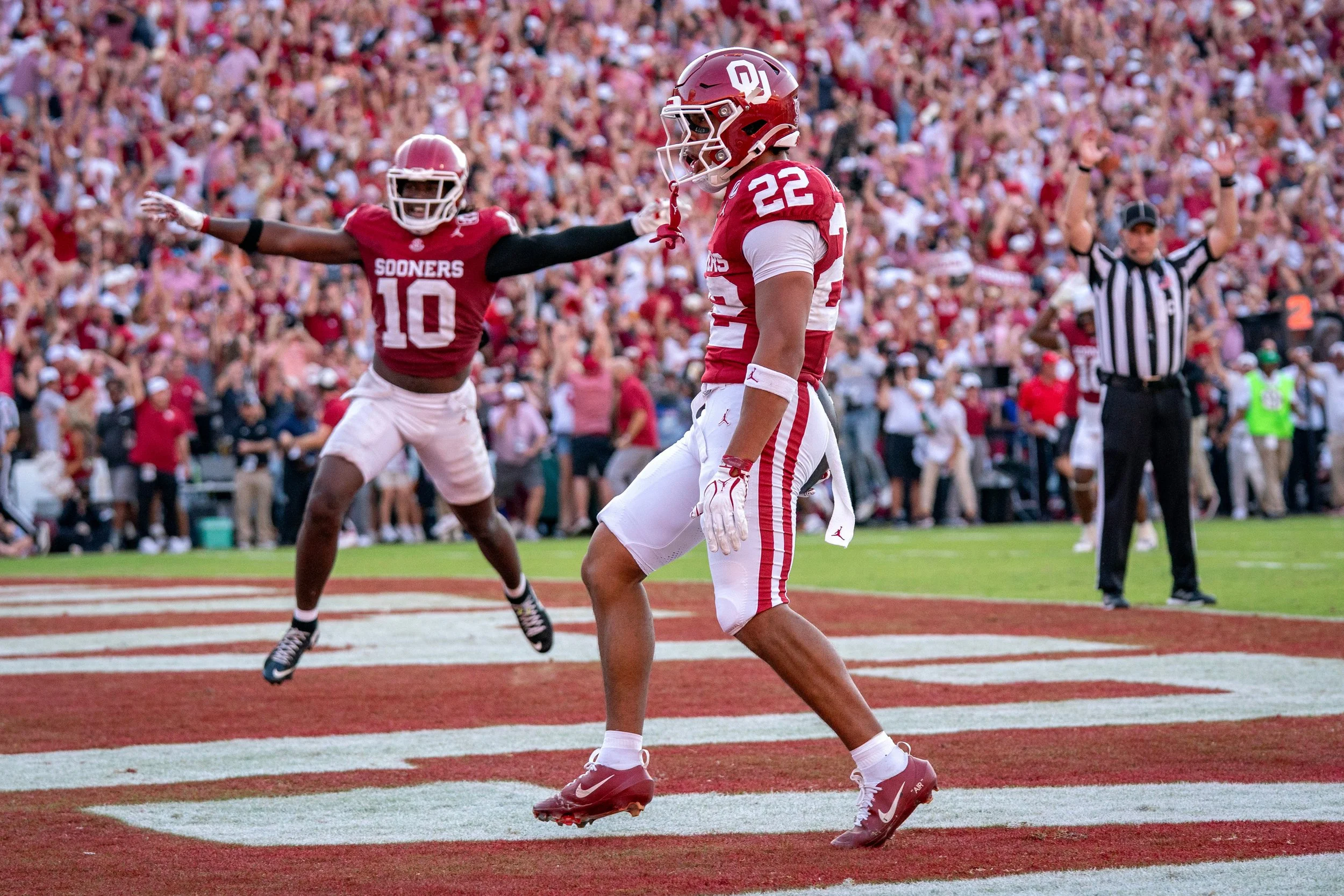
Oklahoma Sooners defensive back Peyton Bowen (22) returns an interception for a touchdown as linebacker Kip Lewis (10) celebrates during the second half of an NCAA college football game against Texas, Saturday, Oct. 10, 2026, in Dallas. (AP Photo/Jeffrey McWhorter)
Taking away Craver won’t remove every alternative.
TK Norman caught all three targets for 57 yards against Missouri, when Craver and Isaiah Horton combined for 28. Houston Thomas provides an underneath option at tight end, while Kiotti Armstrong gained 54 yards on one catch against Arkansas.
Outside, Horton caught two touchdown passes against Arizona State.
Courtland Guillory and Eli Bowen give Oklahoma encouraging work to carry forward. Against Ole Miss, they combined to allow five catches for 29 yards. Both broke up two passes.
Holding those matchups would let Oklahoma protect the middle of the field without repeatedly sending help outside.
That should force Reed to find the next receiver against coverage that remains intact.
4. Attack the protection around its most dependable blocker.
Center Mark Nabou Jr. allowed no pressures against Tennessee.
The protection beside him offered more opportunities.
Right tackle Lamont Rogers surrendered four pressures, while left tackle Tyree Adams allowed two. Rogers also surrendered three pressures against both LSU and Missouri.
Oklahoma can test those tackles without needing Nabou to lose his assignment.
But the Sooners need more consistent disruption from their defensive ends than they produced against Ole Miss. PFF credited Wein, Okoye and Adebawore with no pressures in that game.
Brent Venables can complicate the assignments with Heinecke, Lewis and Powers threatening the line before rushing or dropping.
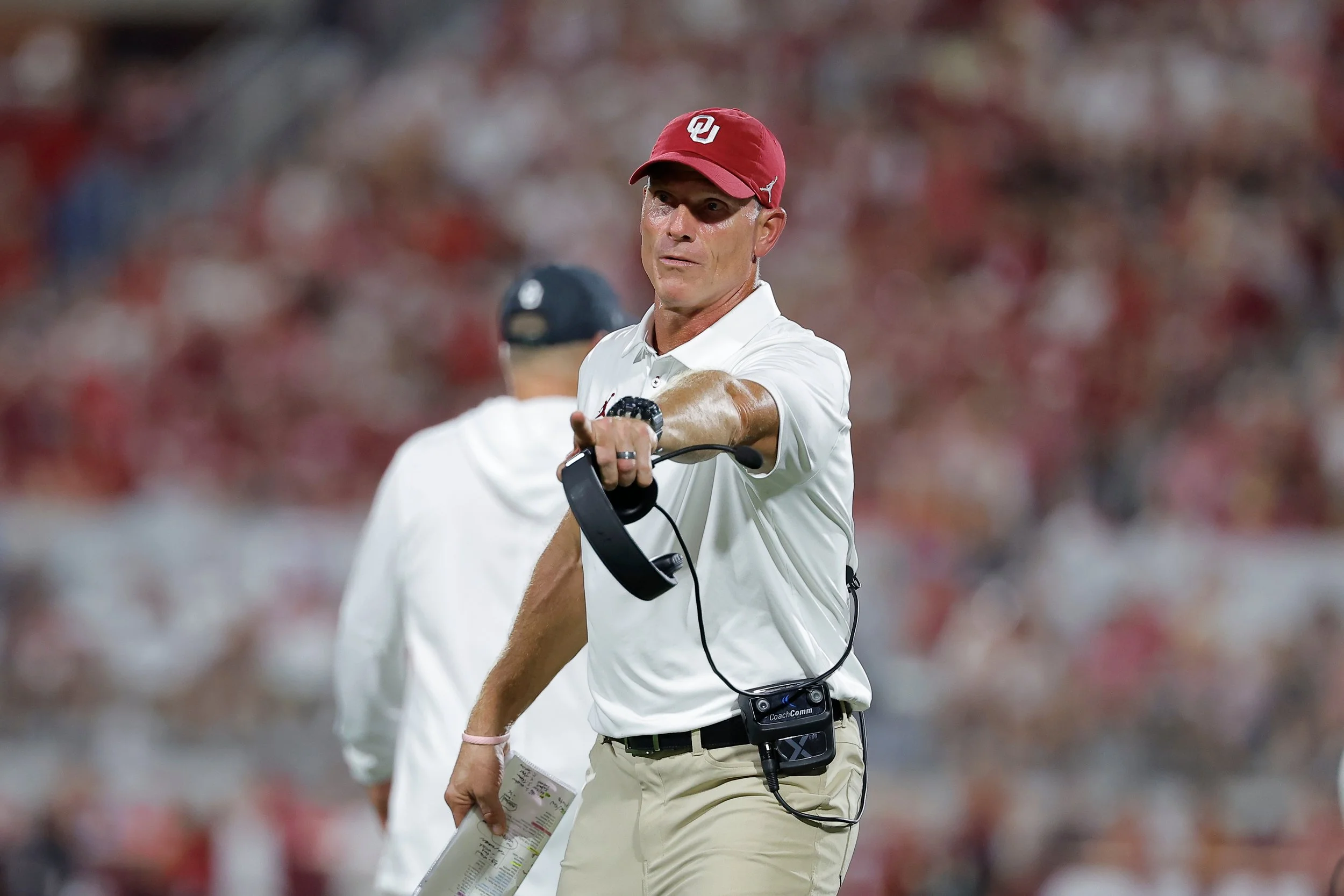
Oklahoma head coach Brent Venables gestures after a play against UTEP during the first half of an NCAA college football game in Norman, Okla., Friday, Sept. 4, 2026. (AP Photo/Alonzo Adams)
The purpose is to make Reed identify where pressure is coming from while reconsidering the throw he expected behind it.
Tennessee showed how much that can affect him. Reed completed one of 10 pressured attempts for 3 yards and an interception.
Reed did that without being sacked, even by the nation’s second-ranked pass rush.
Oklahoma doesn’t need every successful rush to put Reed on the ground. It needs the pressure to leave him without a comfortable throw or an open running lane.
5. Make short completions lead to another difficult down.
Reed went without a completion on seven attempts at least 10 yards downfield against Tennessee.
Oklahoma should make Texas A&M prove it can sustain possessions when those throws remain unavailable.
That requires finishing the underneath tackles.
Against Florida, Heinecke allowed three catches for 42 yards, with 36 coming after the catch. Against Ole Miss, his two allowed completions produced 12 yards.
The difference is what happens after the ball arrives.
Heinecke, Lewis and Powers must close under control against Craver, the tight ends and backs releasing underneath. The corners must prevent Horton from turning a short throw into an open-field opportunity.
Texas A&M went without a touchdown against South Carolina despite Owens’ production and Reed throwing for 251 yards without an interception.
Oklahoma doesn’t need to chase a takeaway to make that offense struggle again.
Control the backs. Contain Reed. Protect the next receiver and finish the available throw.
The Aggies have spent two weeks struggling to finish possessions.
The Sooners must keep them from finding an easier way through one.