
Steve Curtis | November 5th, 2026
Oklahoma’s defense took the ball away three times against South Carolina and still allowed 42 points.
One of those interceptions went back for a touchdown. But the Gamecocks gained 307 yards before halftime, giving Oklahoma a reminder of how much can happen between the plays that end up on a highlight reel.
Florida gives the Sooners a chance to correct what happened in between.
The Gators have thrown plenty of interceptions and changed quarterbacks over the course of the 2026 season. But Oklahoma can’t spend Saturday waiting for another mistake. It has to create the downs that make Florida’s offense more likely to make one.
That starts with Jadan Baugh.
Baugh has been able to give Florida useful carries when its offensive line hasn’t moved defenders. Against Ole Miss, he gained 103 of his 142 rushing yards after contact, according to Pro Football Focus (PFF). Duke Clark added 126 yards, giving the Gators a second back who could keep a defender from ending the play at first contact.
Missouri and Georgia showed where that ability has limits.
Both held Baugh below 40 yards. In both games, PFF credited him with more yards after contact than total rushing yards. He could still gain ground once defenders reached him. They were reaching him early enough that the extra effort rarely put Florida in a better position.
Oklahoma needs David Stone and Jayden Jackson to make Baugh slow down before he gets to Owen Heinecke or Kip Lewis.
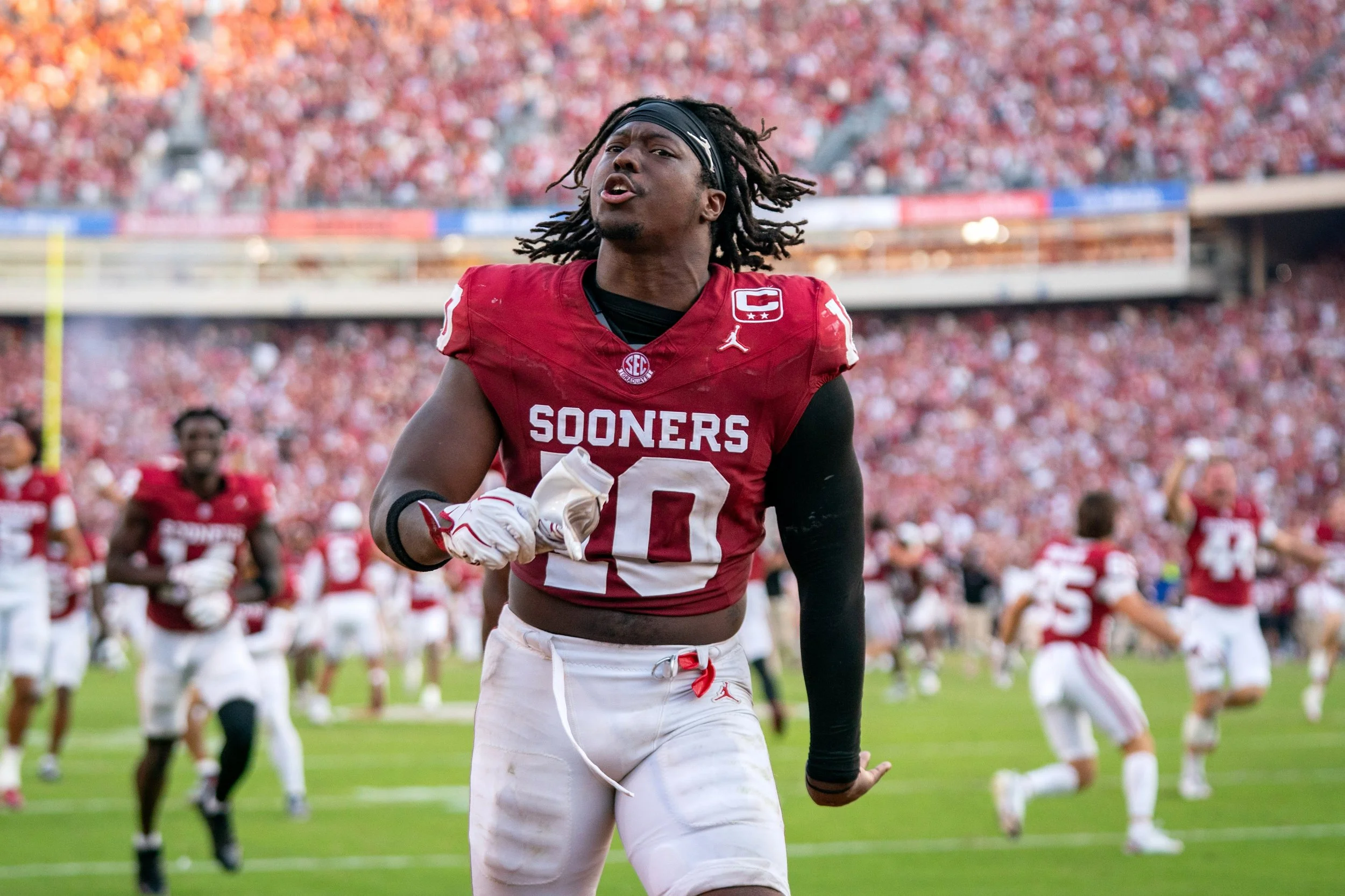
Oklahoma linebacker Kip Lewis celebrates his team's 27-24 victory over Texas during the second half of an NCAA college football game, Saturday, Oct. 10, 2026, in Dallas. (AP Photo/Jeffrey McWhorter)
Stone gave Oklahoma that kind of resistance against Mississippi State. He recorded three stops against the run without missing a tackle on a running play. Heinecke added six run stops of his own. The front made the back declare where he was going, and Oklahoma had a linebacker there to finish.
That work has to happen without pulling help out of coverage every time Florida hands the ball off.
Baugh can make a linebacker miss. But giving up an occasional gain to him is easier to recover from than letting him dictate where Oklahoma’s safeties have to line up. If the Sooners can control the run with their front, they can keep help over Dallas Wilson and make Florida take the shorter throws.
But Baugh isn’t the only runner Oklahoma has to account for.
Quarterback Aaron Philo rushed for 56 yards against South Carolina, nearly matching Baugh’s production. True freshman quarterback Tramell Jones Jr. gained 50 against Texas in his first start. Both have shown they can give Florida back some of the yards its backs couldn’t find.
That makes the relationship between Oklahoma’s tackles and edge rushers important.
Taylor Wein and Danny Okoye can threaten the tackles, but if they rush too wide and the middle stays open, either quarterback can step up and run. Stone and Jackson have to close that space while Wein and Okoye keep him from escaping outside.
LaNorris Sellers found room to run when those lanes opened last week. Oklahoma can’t give Florida’s quarterbacks the same way out.
Florida’s protection has offered places to attack.
Right guard TJ Shanahan Jr. went without allowing a pressure against Missouri or Georgia, according to PFF. Against Georgia, Bryce Lovett was charged with two sacks at right tackle, and Harrison Moore allowed one at left guard after going without a pressure at center against South Carolina.
Oklahoma can make Florida deal with pressure without repeatedly sending another defender. The Sooners have to win away from Shanahan and keep the pocket from opening where they’ve already won.
Philo’s game against South Carolina showed how much that can change a possession. He threw for 221 yards from a clean pocket. Under pressure, he threw for 6 yards and an interception.
Florida started Philo against Georgia and pulled him after his second interception early in the second quarter. Jones gave the Gators an answer underneath, completing more than 70% of his passes. He also threw an interception in the end zone.
Oklahoma should prepare for the things Jones did well after the change.
Bailey Stockton caught all eight of his targets against Georgia. He gave Jones a place to go inside while Baugh struggled to find room. Vernell Brown III can make the same area more dangerous. He turned five catches into 86 yards against Auburn, giving Florida more than an outlet from the slot.
That puts the next assignment on Oklahoma’s underneath defenders. Closing the first window can make either quarterback hold the ball. Closing on the catch can force Florida to play another down even when the pass gets through.
The distinction matters on third down. A short completion to Stockton can be a win if Oklahoma tackles him where he catches it. Give him room to turn upfield, and the Sooners have to defend Baugh on first down again.
Wilson makes it harder to crowd that space. He scored against Missouri even with Baugh held to 13 yards. Florida can lose the run and still get downfield on one throw if Courtland Guillory or Trystan Haynes loses Wilson or the safeties give up his depth.
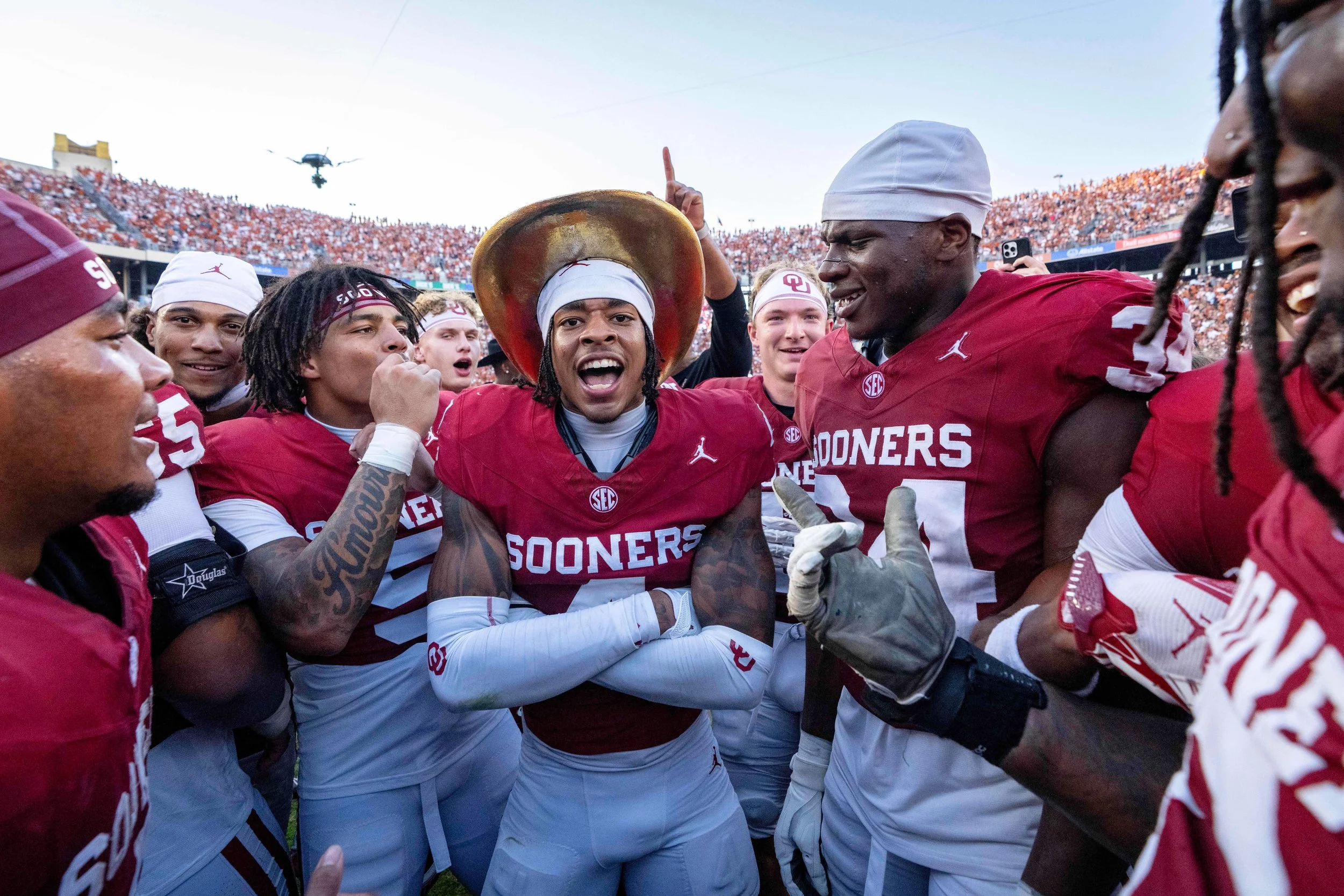
Oklahoma defensive back Courtland Guillory wears the Golden Hat trophy after his team's win over No. 1 Texas in an NCAA college football game, Saturday, Oct. 10, 2026, in Dallas. (AP Photo/Jeffrey McWhorter)
The Sooners have to protect against that play without making it easy for Brown or Stockton to move the chains. That starts up front. If Oklahoma needs an extra defender to stop Baugh or a fifth rusher to hurry the quarterback, Florida has more space to use behind them.
Three interceptions weren’t enough against South Carolina because Oklahoma gave up too much between them.
Florida can recover from a bad down with a broken tackle from Baugh, a scramble from Philo or Jones or a deep throw to Wilson.
Saturday, Oklahoma has to take those plays away and make Florida earn every first down.