
Steve Curtis - Oklahoma’s Offense Can't Waste Its Chances Against Texas
Steve Curtis | October 9th, 2026
The Sooners were able to move the football against Georgia, but they still left with a loss after scoring only 13 points.
John Mateer completed 25 of 34 passes for 231 yards and two touchdowns, but three catastrophic turnovers erased opportunities and handed the Bulldogs free points. The Sooners showed they could find space against a physical defense. They didn’t show they could turn that space into enough finished possessions.
That’s the problem Oklahoma’s offense will take into the Cotton Bowl against Texas on Saturday.
The Longhorns will give Mateer opportunities to complete passes. They also have a defensive front capable of ending drives when he holds the ball instead of taking the available throw.
Oklahoma’s first objective must be protecting the football while Mateer’s opportunities remain available.
The fifth-year quarterback has completed 71.4% of his throws from clean pockets this season. Under pressure, that figure falls to 50%, and Pro Football Focus (PFF) has credited him with five turnover-worthy plays on pressured dropbacks.
That difference explains why Saturday’s protection will matter beyond sacks allowed.
A hurried decision can give Texas more than a defensive stop. Oklahoma already saw what those mistakes could do in Ann Arbor and Athens.
Texas defensive end Colin Simmons is equipped to create that chaos.
PFF has credited Simmons with 18 pressures and eight sacks through four games. Seven sacks have come on true pass sets, when the offense can’t use screens, quick throws or play action to simplify the protection.
Texas wants Oklahoma in those situations.
The Sooners can’t repeatedly ask Mateer to stand behind a struggling line, wait for a downfield opening and escape when the protection breaks. Even when that opening appears, he hasn’t consistently shown he can recognize it and deliver an accurate throw.
At tackle, Ryan Fodje and E’Marion Harris have surrendered 18 pressures and three sacks between them. Both have earned season pass-blocking grades of 49.2.
Those performances give Texas an obvious place to attack.
Ben Arbuckle must help whichever tackle Texas chooses to attack with Simmons, whether through Hayden Hansen staying in protection, Rocky Beers chipping before releasing or a throw designed to get the ball out of Mateer’s hands quickly.
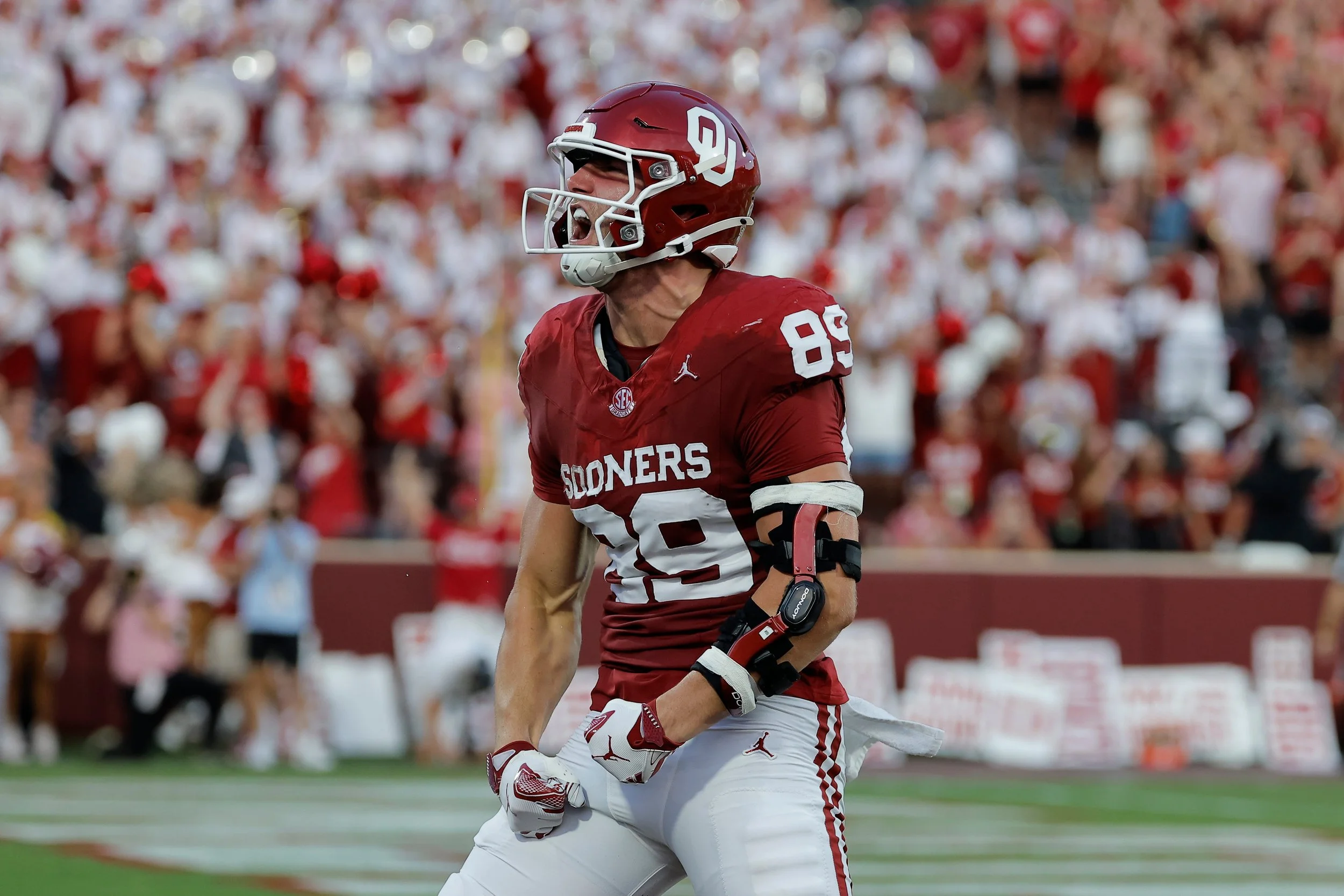
Oklahoma tight end Hayden Hansen (89) celebrates after running in for a touchdown against New Mexico during the first half of an NCAA college football game Saturday, Sept. 19, 2026, in Norman, Okla. (AP Photo/Alonzo Adams)
But merely holding on against Simmons can’t become the entire protection plan.
Lance Jackson has produced 14 pressures. Hero Kanu and Zina Umeozulu have added eight apiece, while Maraad Watson provides another threat inside.
Jake Maikkula and the guards must prevent Texas from finding an easier path through the middle when Oklahoma sends help outside.
That requires clear assignments and individual blocks that hold long enough for Mateer to make the available throw.
The run game must also give Texas something else to defend.
Oklahoma has already tried both versions of its problem. At Michigan, the backs didn’t receive enough carries. Against New Mexico and Georgia, additional attempts did not produce dependable room.
Simply calling more handoffs will not solve Saturday’s matchup.
Lloyd Avant has gained 163 yards on 42 carries, with 114 coming after contact. He has repeatedly needed to overcome a defender before the run could become productive.
Texas has players capable of finishing those tackles.
Umeozulu has recorded seven stops against the run without missing a tackle. Ian Geffrard and Kanu provide resistance inside, while Justin Cryer supports the front from linebacker.
Simmons has been much more effective rushing the passer than defending the run. Oklahoma should make him honor the handoff, but it can’t assume the rest of Texas’ front shares that weakness.
The line and tight ends must sustain their blocks.
Hansen has been the better run blocker of Oklahoma’s two primary tight ends, but his season grade has fallen to 62.9. Beers sits at 51.7.
Heavier personnel can help the tackles and give the backs additional support. But it can’t manufacture physicality if the extra blocker loses his assignment.
Oklahoma needs enough successful carries to keep Texas uncertain about the next snap.
That would make play action more useful.
Mateer has completed 24 of 32 play-action attempts for 380 yards and five touchdowns without an interception. Those throws have generally given him more productive opportunities than ordinary dropbacks.
But the formation and run fake can’t excuse another lost possession. Mateer still must recognize when the defense has taken the larger play away.
Texas has left room for a shorter answer.
Linebacker Rasheem Biles has allowed 15 receptions on 17 targets. Cryer has surrendered eight catches for 81 yards.
Beers can test those areas from the slot or beside the offensive line. He has caught 18 passes for 255 yards, with nearly half of that production coming after the catch.
Getting him the ball before the rush arrives gives Oklahoma a chance to make Texas tackle rather than letting Simmons finish the play in the backfield.
Isaiah Sategna provides another way to do that.
Sategna has gained 134 of his 267 receiving yards after the catch. Arbuckle should create opportunities for him to work in space, but Mateer can’t turn every passing down into a narrow search for Sategna or Beers.
Parker Livingstone has caught all five of his targets. Elijah Thomas has received only eight targets despite running 82 routes.
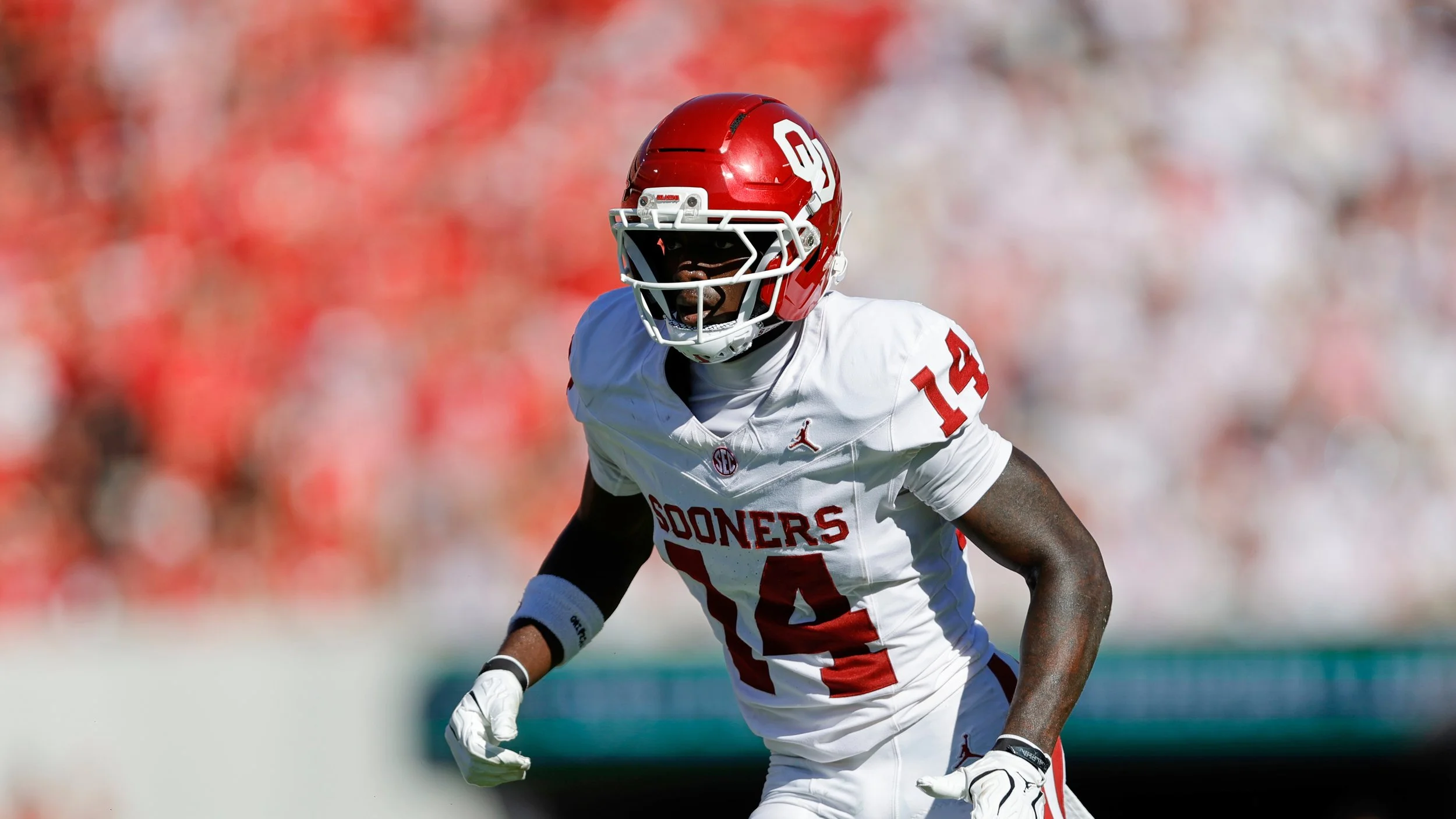
Oklahoma wide receiver Elijah Thomas (14) runs a route during the first half of an NCAA football game against Georgia in Athens, Ga., Saturday, Sept. 26, 2026. (AP Photo/Stew Milne)
When either gives Mateer an available completion, he must take it.
Texas’ secondary has generally limited damage after catches, so those throws may produce modest gains. Modest gains still matter if they prevent another third-and-long and keep Simmons from attacking without hesitation.
That brings Oklahoma back to the lesson from Georgia.
Moving the football is possible. Making those possessions count requires more than a respectable completion percentage.
The blockers must give the backs room and Mateer time. Arbuckle must help the tackles without removing every receiving option. Mateer must take the available throw, protect the football and accept when a play offers nothing more.
The Sooners have enough receiving talent to challenge Texas and enough evidence from Athens to believe opportunities will exist.
Saturday, they must turn those opportunities into finished drives before the Longhorns turn another mistake into the play that decides the game.