
Steve Curtis - Oklahoma’s Offense Has to Give Its Defense a Chance Versus Georgia
Steve Curtis | September 25th, 2026
Oklahoma spent the offseason building an offense that could hold up against physical defenses.
The Sooners wouldn’t establish the run at Michigan. A week later, they couldn’t establish it against New Mexico.
At Michigan, Ben Arbuckle moved away from the backs before they had much opportunity to find a rhythm. Lloyd Avant gained 33 yards on five first-half carries but received only four more attempts. Oklahoma’s backs finished with 13 carries between them.
Against New Mexico, the carries came. The blocking didn’t.
That is the problem Oklahoma takes to Georgia.
PFF gave Oklahoma’s run blocking a 54.0 grade against the Lobos, its lowest mark through three games. Too often, a defender reached the backfield before the play had a chance to develop.
That changes what “commit to the run” has to mean.
Giving Avant and the others more carries matters. Giving them room to do something with those carries matters more.
The difficulty is not confined to one side of the line.
Filling in for Michael Fasusi at left tackle, Ryan Fodje has earned a 50.8 run-blocking grade through two games. Right tackle E’Marion Harris sits at 53.0, while guards Eddy Pierre-Louis and Noah Best have earned grades of 52.8 and 54.4.
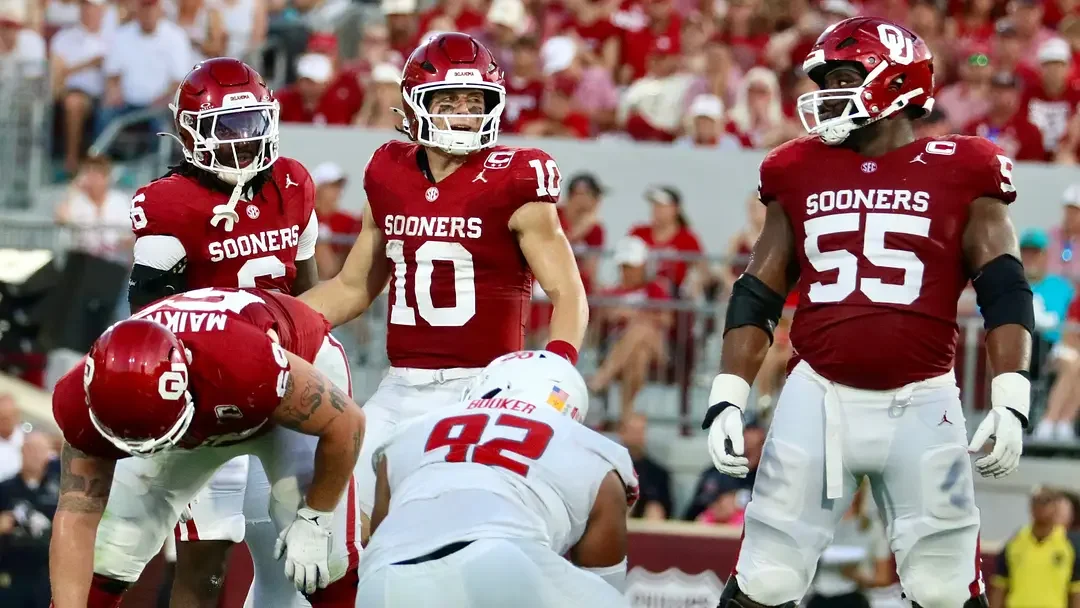
Center Jake Maikkula hasn’t provided a clear answer inside, either.
Those numbers describe what has been visible against Michigan and New Mexico: Oklahoma is having trouble moving defenders, regardless of where it tries to run.
The Sooners have found more room around the left end than anywhere else. Georgia will see that tendency. If Oklahoma can’t create a credible threat through the middle or to the right, the Bulldogs can concentrate on taking away the one direction that has worked.
Georgia is equipped to do it.
Linebackers Chris Cole and Justin Williams have consistently finished plays against the run, while defensive tackle JJ Hanne has been effective near the line of scrimmage. The Bulldogs have missed only 12 tackles as a team through three games.
Oklahoma can’t expect their backs to repeatedly turn defenders in the backfield into a positive gain.
That places more responsibility on the tight ends.
Hayden Hansen has been the group’s most dependable run blocker. His 74.1 grade reflects the kind of contribution Oklahoma hoped to get when it rebuilt the position in the offseason.
Rocky Beers has been far less consistent in that department, earning a 56.3 run-blocking grade. He has given John Mateer a productive receiving target, but lining him up beside a tackle does not automatically make Oklahoma stronger at the point of attack.
That distinction matters against Georgia.
Arbuckle should use heavier personnel to support the line and keep the Bulldogs from knowing whether a handoff or pass is coming. But the formation only works if the players in it can hold their blocks. Oklahoma can’t treat an additional tight end as a solution by itself.
The same problem follows the Sooners into pass protection.
Fodje and Harris have allowed 12 pressures and three sacks between them, according to PFF. Both have also struggled as run blockers, leaving Oklahoma unable to reliably relieve pressure on Mateer by handing the ball off behind either tackle.
Georgia has generated pressure from multiple positions. Its first three opponents haven’t tested it the way Oklahoma hoped to, but the Sooners’ recent protection problems give the Bulldogs an obvious way to control Saturday’s game.
Hansen can help a tackle. Beers can chip a defender before releasing into a route. Arbuckle can call throws that get the ball out of Mateer’s hands sooner.
All three would help.
None removes the need for Oklahoma’s linemen to win enough blocks to keep the offense on schedule.
Mateer also has to do his part when they do.
The Sooners’ receivers haven’t been charged with a drop on his pass attempts this season. Pressure has affected him, but it doesn’t account for every missed throw or every completion he has passed up.
Elijah Thomas shows why those misses matter.
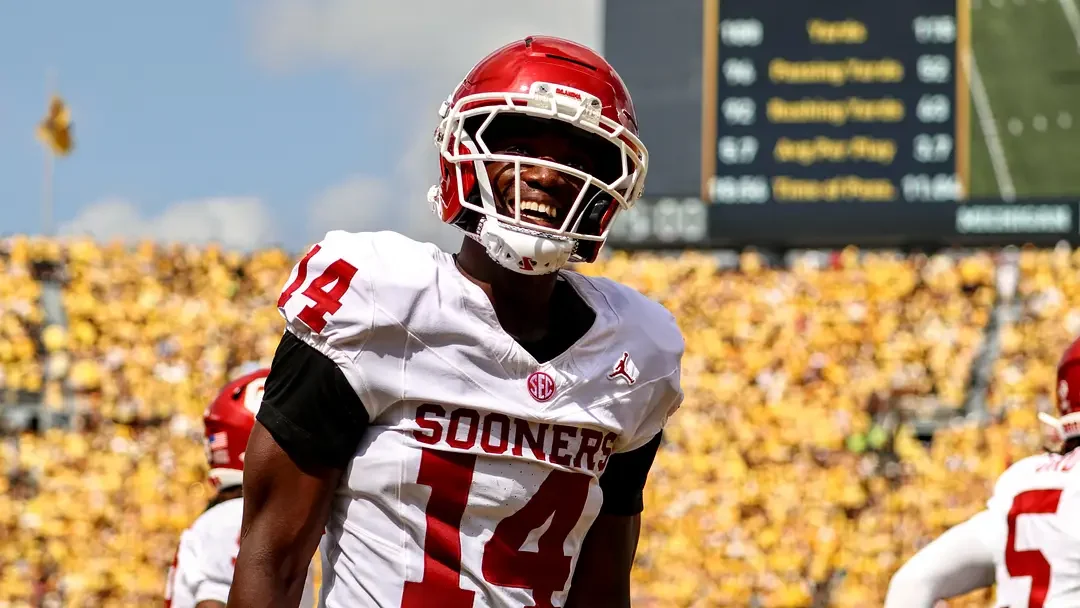
Thomas has run 52 routes through three games but has been targeted only six times, catching three passes for 33 yards. He has found room to work, particularly since Trell Harris became unavailable, yet that opportunity has rarely become a completed pass.
The issue isn’t simply whether Oklahoma has another receiver who can get into position.
It’s whether Mateer can find him and deliver the ball before the play breaks down.
Harris remains out with a lacerated liver, while Jer’Michael Carter was listed as questionable Wednesday. Mateer can’t afford to overlook a healthy option who is giving him a place to throw.
The Sooners don’t need Thomas to replace all of Harris’ production by himself. They need the passing game to use him when he gives it an available completion.
That would also take some of the burden off Isaiah Sategna and Beers.
Those two have been Oklahoma’s most productive healthy targets. They can create explosive plays, but Georgia can devote more attention to them if Mateer doesn’t involve anyone else.
Short completions to Thomas or another receiver would force the Bulldogs to defend more of the field.
Mateer must be willing to take them.
Georgia has allowed opposing quarterbacks to complete passes, then generally tackled before those throws became large gains. Oklahoma may have to accept several modest plays to build one successful drive.
That’s a difficult test for an offense that has repeatedly looked for someone to rescue it with one play.
If the running game can be developed, it should make those decisions easier. Mateer has been much more effective off play action this season, finding clearer throws when defenders have had to consider the handoff.
But Georgia won’t be drawn toward a running back Oklahoma can’t get past the line of scrimmage.
That brings the Sooners back to their central problem.
Arbuckle must commit to the backs, but commitment will only matter if the line and tight ends give them room. Mateer must protect the football and take the available throw, including the opportunities Thomas hasn’t been receiving. Sategna and Beers must remain involved without becoming the entire passing game.
Oklahoma hasn’t shown it can put all of those pieces together against a physical defense. It may not score enough Saturday even if it improves.
The Sooners still have a path into the game.
If their defense limits Georgia’s explosive runs, keeps Gunner Stockton contained and forces the Bulldogs to sustain longer drives, the offense can help by staying on the field, avoiding turnovers and finishing the opportunities it gets.
The defense did enough to win against New Mexico.
In Athens, Oklahoma’s blockers and playmakers have to give it a reason to believe that will be enough again.