
Steve Curtis | November 20th, 2026
Jason Witten’s first two games coordinating Oklahoma’s offense have produced consecutive wins through different approaches.
Against Florida, the Sooners sustained touchdown drives of 15 and 20 plays. Against Ole Miss, they leaned on the running game and protected the football in poor weather conditions.
The passing totals changed. The need to give John Mateer manageable decisions didn’t.
Texas A&M presents another test of that progress.
The Aggies rank sixth in the SEC in total defense and third against the pass, according to the supplied ESPN rankings. They rank 12th against the run.
Oklahoma has opportunities to keep building. It must create enough useful plays to make those opportunities last.
1. Make the running game productive without depending on Mateer to carry it.
Ole Miss provided a favorable rushing matchup. Oklahoma’s backs still had to work for their room.
Lloyd Avant, Tory Blaylock and Jonathan Hatton Jr. combined for 112 yards on 29 carries. Blaylock supplied 48 yards on nine attempts, while Avant gained 46 on 15.
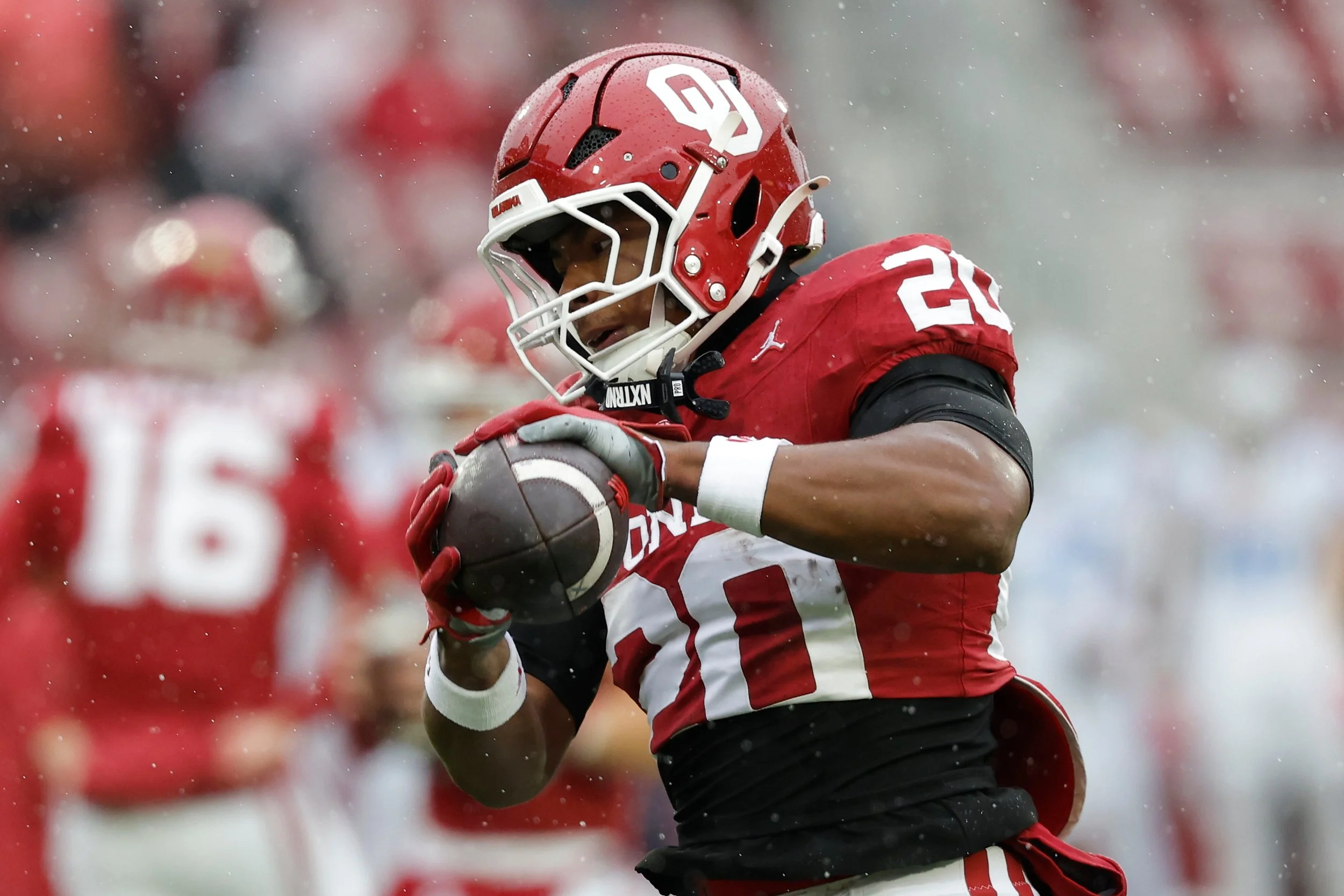
Oklahoma running back Jonathan Hatton Jr. (20) warms up before an NCAA college football game against Mississippi in Norman, Okla., Sunday, Nov. 15, 2026. (AP Photo/Alonzo Adams)
The Sooners stayed with the handoff. They didn’t consistently make it easy.
Texas A&M gives Witten reason to keep working at it, but the Aggies’ defensive ranking doesn’t mean Oklahoma can simply line up and run wherever it wants.
Daymion Sanford recorded four run stops without a missed tackle against South Carolina. Marcus Ratcliffe finished seven solo tackles on running plays without missing one against Tennessee.
The blockers must create room before those defenders can finish.
Michael Fasusi and Noah Best have provided Oklahoma’s more dependable run blocking over Witten’s first two games. Rocky Beers added his best run-blocking performance of the season against Ole Miss.
Witten can build behind that work while continuing to demand more from the right side.
The goal is to reach second down with another handoff still worth defending.
2. Use Mateer’s legs to complicate assignments rather than rescue every possession.
Mateer gained 56 rushing yards against Florida and 70 against Ole Miss.
Only one carry in each game was classified as a scramble.
Witten has made the quarterback part of the rushing attack rather than waiting for a passing play to break down.
That forces Texas A&M’s defenders to consider more than the back.
A defensive end following Avant too far inside can leave Mateer room outside. A linebacker stepping toward the quarterback can create space for a handoff or a tight end releasing behind him.
Oklahoma can present those possibilities without changing personnel.
But the backs must remain productive enough for the uncertainty to matter.
If Texas A&M can stop Avant or Blaylock without committing additional help, its linebackers can spend more attention on Mateer.
The quarterback run should make the rest of the offense easier. It can’t become the answer every time another part fails.
3. Preserve the protection improvement without confusing clean blocking with a finished play.
Fasusi and E’Marion Harris combined to allow two pressures against Florida. Neither was charged with one against Ole Miss.
Oklahoma has given Mateer more dependable work on the outside.
Texas A&M can challenge it.
Edge rusher Marco Jones generated five pressures against Arizona State and six against Arkansas. T.J. Searcy and Anto Saka provide other threats outside, while DJ Hicks can affect the pocket inside.
The additional rushers require equal attention.
Ratcliffe recorded a sack from safety against Alabama. Sanford added one from linebacker against Tennessee.
Jake Maikkula and the guards must identify those defenders without allowing Hicks a shorter route through the middle.
Mateer must use the protection when it holds.
Oklahoma’s blockers weren’t charged with Mateer’s three sacks against Ole Miss, but he still struggled under pressure, with all 10 of his completions coming from clean pockets.
The weather complicated the throwing conditions. But it didn’t remove the need to recognize when the available completion was enough.
Witten must connect the protection to a timely throw. Mateer must deliver it before the defense gets another opportunity.
4. Keep Beers involved while making Texas A&M defend the receivers around him.
Beers caught all four targets against Florida for 72 yards. Against Ole Miss, he caught all four again for 39.
The conditions and passing volume changed. His availability remained useful.
Texas A&M has left plenty of opportunities inside.
Against Alabama, Jordan Shaw allowed five catches for 101 yards, including 67 after the catch. Noah Mikhail surrendered two touchdowns in coverage.
Witten can make those defenders handle Beers releasing from beside a tackle, Isaiah Sategna moving through the slot or a back entering the space underneath.
Avant showed how a broken tackle can turn a short throw into a larger gain with his 22-yard reception against Ole Miss.
With that in mind, the passing game must remain open to other contributors, too.
Jacob Jordan supplied four third-down conversions against Florida. Parker Livingstone caught all three targets in that game.
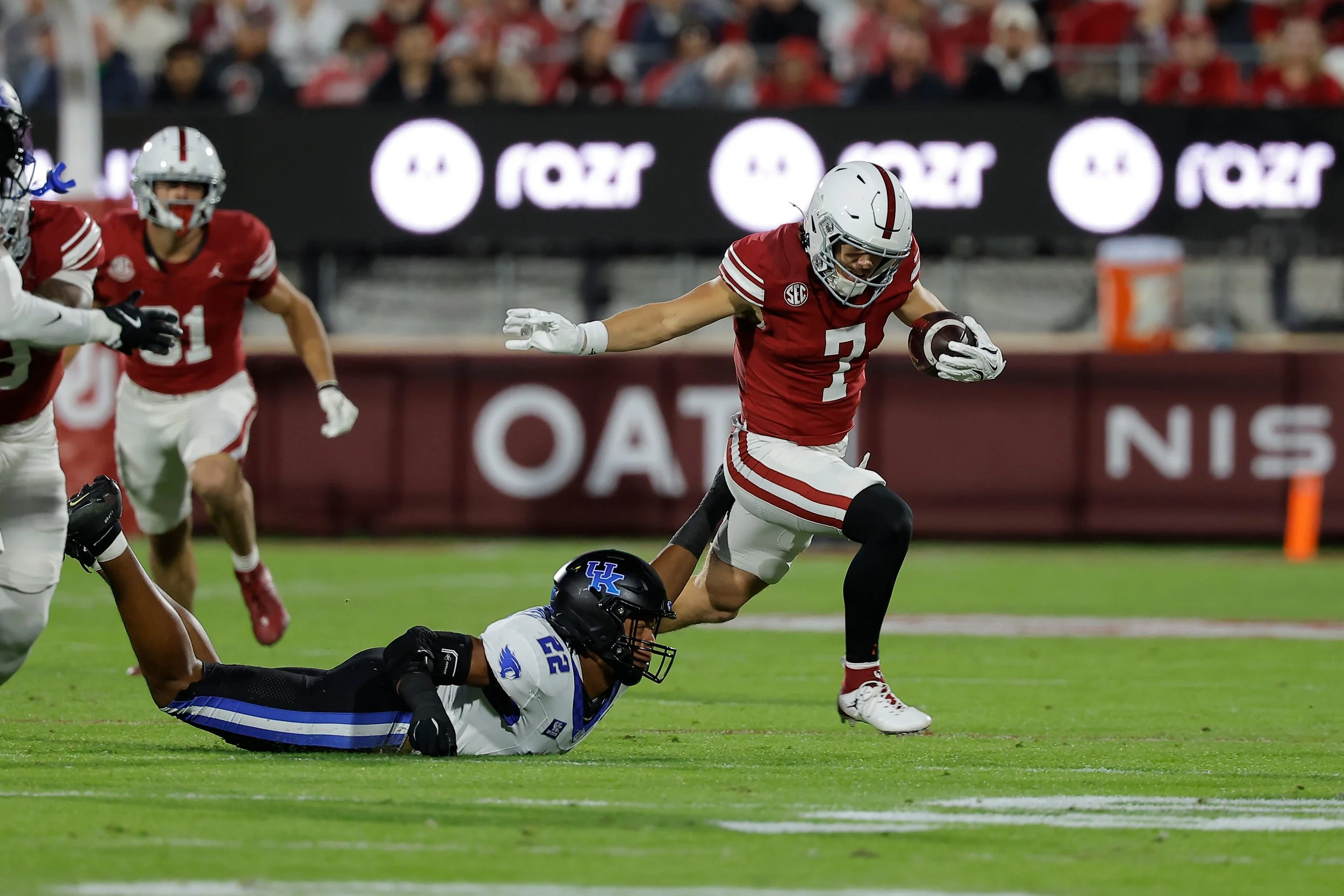
Oklahoma wide receiver Jacob Jordan (7) runs past Kentucky linebacker Grant Godfrey (22) during the first half of an NCCA college football game, Saturday, Oct. 17, 2026, in Norman, Okla. (AP Photo/Alonzo Adams)
Those completions made Oklahoma harder to defend because Mateer didn’t need the same receiver to win every down.
Texas A&M has capable outside coverage. Julio Humphrey allowed no completions on three targets against Alabama.
Oklahoma can respect that matchup while finding movement elsewhere.
5. Carry the ball security forward without making caution the entire offense.
Oklahoma went without a turnover in Witten’s first two games.
That mattered against Florida. It mattered again in the rain against Ole Miss.
It will matter against a Texas A&M defense that returned two interceptions for touchdowns against Arizona State.
Jones and Humphrey provided points the Aggies’ offense never had to create.
Mateer can’t give them another opportunity by forcing a throw after the first receiver is covered. But protecting the football must still leave Oklahoma willing to take an available gain.
The Sooners don’t need to reproduce the Ole Miss passing volume simply because the approach helped win in ugly weather.
They need to preserve what supported both wins.
Give the backs room. Make Mateer’s legs an additional threat. Protect long enough to take the available receiver and keep the next down manageable.
Witten has shown he can build a plan around the opponent and conditions.
Saturday requires Oklahoma to execute another one.