
Steve Curtis | November 13th, 2026
Jason Witten’s first game coordinating Oklahoma’s offense gave the Sooners something they had struggled to sustain: possessions that survived imperfect plays.
Oklahoma converted 10 of 18 third downs, went without a turnover and won 23-7 in The Swamp as a four point underdog. Its two touchdown drives lasted 15 and 20 plays respectively.
Witten didn’t suddenly fix every problem Ben Arbuckle left behind. He gave players specific roles in keeping the offense moving.
Ole Miss provides an opportunity to build on that approach, particularly where Oklahoma still needs the most improvement.
1. Make the SEC’s weakest run defense defend more than another passing down.
Ole Miss ranks last in the SEC in rushing defense, allowing 165.1 yards per game, according to ESPN. The Rebels are also next to last in total defense.
Oklahoma’s season totals don’t suggest it can automatically take advantage. The Sooners rank last in the conference in rushing offense and next to last in total offense.
But those averages mostly describe Arbuckle’s offense. Florida provides the first evidence of what Witten can build with the same players.
The backs still need more room.
Lloyd Avant, Tory Blaylock and Jonathan Hatton Jr. combined for 84 yards on 24 carries against the Gators. Blaylock supplied the only run longer than 10 yards among them.
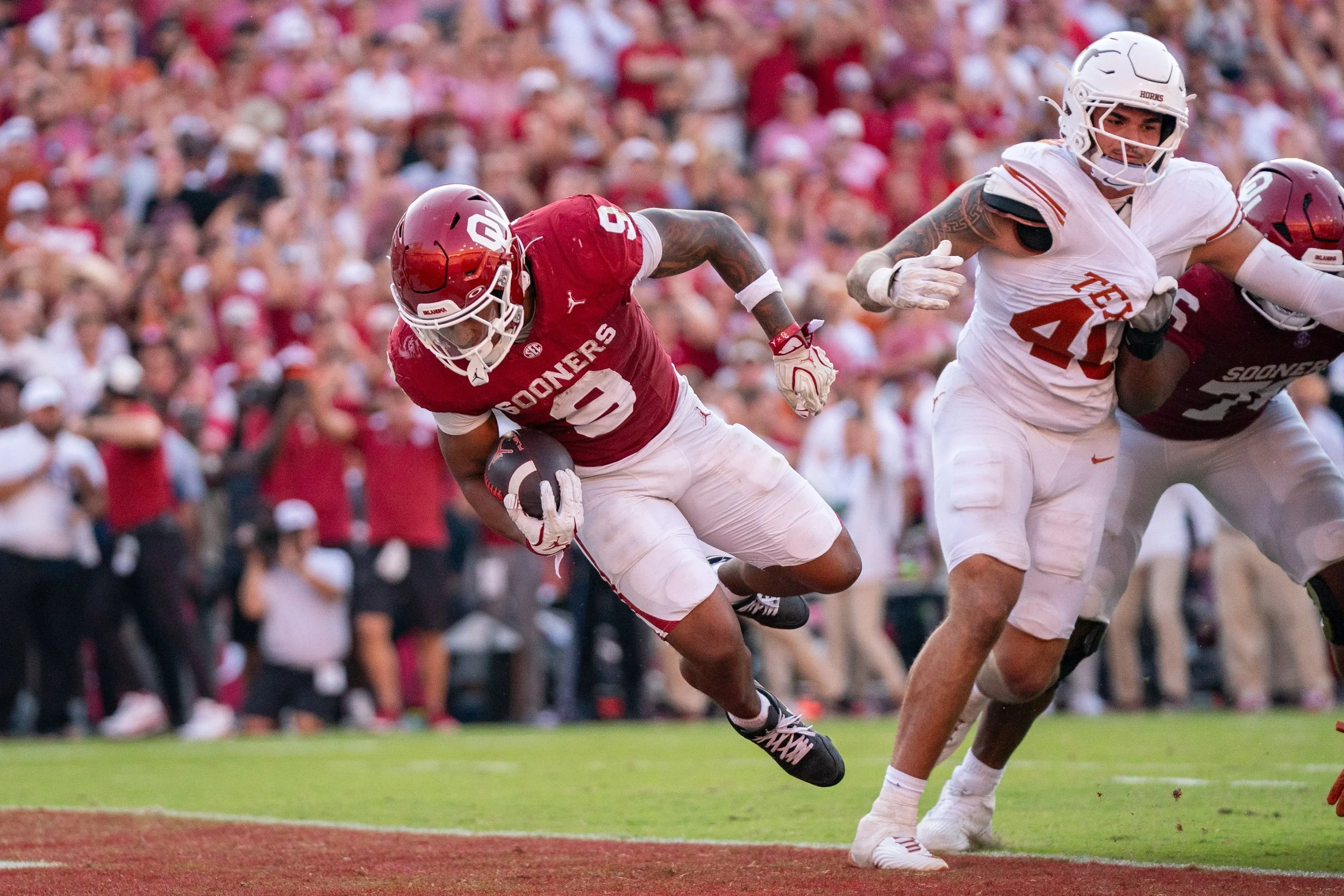
Oklahoma Sooners running back Lloyd Avant runs in for a touchdown during the second half of an NCAA college football game against Texas, Saturday, Oct. 10, 2026, in Dallas. (AP Photo/Jeffrey McWhorter)
Oklahoma stayed with the handoff without consistently making it productive.
Ole Miss gives Witten reason to keep working at it. Georgia found room through the middle and on the perimeter, preventing the Rebels from treating every snap as a chance to rush the quarterback.
Michael Fasusi and Noah Best provided Oklahoma’s better run blocking against Florida. Witten can build behind that left side, using Rocky Beers or Hayden Hansen to help secure the edge or reach a linebacker.
The opportunity isn’t simply to call more runs.
It’s to give Avant or Blaylock an opening before contact, then make Ole Miss defend another handoff on the next down.
2. Use Mateer’s legs to support the backs rather than replace them.
John Mateer supplied an important part of Oklahoma’s rushing production against Florida. PFF charted only one of his carries as a scramble.
Witten used the quarterback as part of the running game rather than waiting for him to escape a broken passing play.
That gives Oklahoma another way to challenge Ole Miss’ assignments.
Keaton Thomas recorded six stops against the run without a missed tackle against Auburn. Kam Franklin added five run stops against Texas. The Rebels have individual defenders capable of ending an ordinary handoff early.
Making them account for Mateer can create hesitation before they pursue the back.
Witten can also present a running formation and release a tight end behind a linebacker stepping forward. The same personnel should give Ole Miss more than one possibility to diagnose.
But Mateer can’t become the solution to every difficult down.
The backs need enough useful carries to keep the quarterback run an additional threat rather than Oklahoma’s only dependable one.
3. Protect the middle of the pocket while accounting for the extra rusher.
Florida gave Oklahoma encouraging protection outside. Fasusi and E’Marion Harris each allowed one pressure, according to Pro Football Focus (PFF).
The interior was less dependable. Best allowed two pressures, including a sack, while Heath Ozaeta surrendered two hurries.
That distinction matters against defensive tackle Will Echoles.
Echoles generated seven pressures and a sack against LSU. Blake Purchase and Franklin contributed off the edge, while Thomas and Luke Ferrelli each added a sack.
Two other Ole Miss defenders also recorded a sack against LSU, giving the Rebels five sacks from five different players.
Jake Maikkula and the guards must identify the linebacker joining the rush without allowing Echoles a shorter path through the middle. Helping a tackle won’t matter if Mateer has nowhere to step inside.
The backs have responsibilities, too. Avant went without allowing a pressure against Florida. Blaylock surrendered a hurry on five pass-blocking snaps.
Witten needs an available throw connected to those protection decisions. Keeping another player in to block only helps if the remaining receivers give Mateer somewhere to deliver the ball.
4. Keep the passing game open to the players Florida showed can sustain it.
Isaiah Sategna caught four passes for 34 yards and a touchdown against Florida.
Oklahoma didn’t need him to account for most of the receiving production to keep moving.
Beers caught all four targets for 72 yards. Jacob Jordan supplied four catches, all third-down conversions. Parker Livingstone caught all three targets for 26 yards, while Hansen caught the first touchdown.
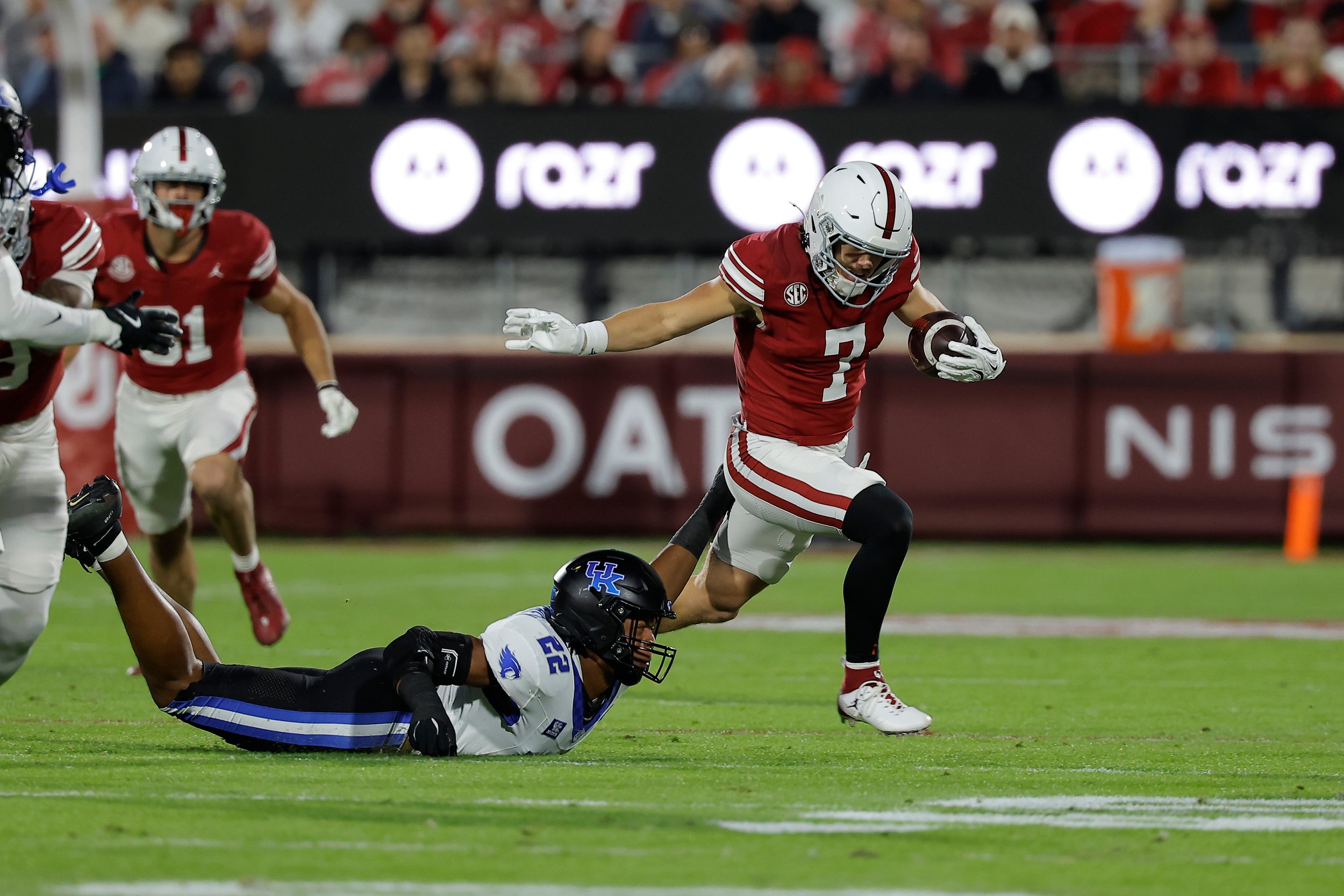
Oklahoma wide receiver Jacob Jordan (7) runs past Kentucky linebacker Grant Godfrey (22) during the first half of an NCCA college football game, Saturday, Oct. 17, 2026, in Norman, Okla. (AP Photo/Alonzo Adams)
That distribution is the progress worth carrying forward.
Ole Miss has left room for tight ends and receivers to create after short throws. Florida gained 48 yards on three catches against Ferrelli, with 46 coming after the catch. Tah’j Butler allowed a 43-yard reception against Texas that began behind the line of scrimmage.
Witten can release Beers into that space, move Sategna inside and give Jordan another opportunity when the coverage follows Oklahoma’s leading threats.
Mateer must take the player who is available rather than decide the possession belongs to one receiver.
The outside still requires judgment. Jalyn Crawford intercepted Arch Manning twice against Texas. But Missouri completed six of seven targets against him for 70 yards.
Oklahoma can challenge that matchup when it appears without making every passing down a search for it.
5. Give Witten manageable downs instead of requiring another long escape from penalties.
Oklahoma’s 20-play, 89-yard touchdown drive at Florida took 12:45 off the clock and overcame 20 penalty yards.
Finishing it showed the offense could recover. Requiring that recovery again would make sustaining the improvement harder.
A false start can remove the handoff. A late throw can give the rush time to arrive. Mateer completed four of 10 pressured attempts against Florida, compared with 17 of 23 from clean pockets.
Ole Miss hasn’t controlled every pocket, producing only three pressures against Georgia. Oklahoma can keep it from finding a rhythm by avoiding the downs that give its rushers the advantage.
Witten’s debut showed the Sooners could sustain drives without one player rescuing every possession.
Saturday gives them a chance to make those possessions easier to sustain.