
Steve Curtis | November 12th, 2026
Ole Miss will arrive in Norman after an embarrassing 42-7 loss to the Georgia Bulldogs, but the Rebels still rank fourth in the SEC in total offense, according to ESPN.
On the other side, Oklahoma ranks fourth in total defense and first against the pass. The Sooners have the personnel to challenge Ole Miss, but they must take away more than one part of offensive coordinator John David Baker's game plan.
The Rebels’ win over LSU showed why.
LSU held running backs Kewan Lacy and JT Lindsey to a combined 49 rushing yards. Trinidad Chambliss still threw for 364 yards and two touchdowns in a 32-24 win.
Stopping a back won’t be enough if a receiver is open behind the linebackers. Covering that receiver won’t be enough if Chambliss can run through the space the rush leaves behind.
Each part of Oklahoma’s assignment must support the next.
1. Control the backs without giving Chambliss easier throws behind the linebackers.
Lacy was listed as out on Wednesday’s SEC availability report, leaving Shekai Mills-Knight and Makhi Frazier to carry the running game.
Lacy also missed Ole Miss’ last two games against Auburn and Georgia, giving Oklahoma recent examples of how the Rebels operate without him.
Mills-Knight gained 71 yards against Auburn before rushing for 52 against Georgia. Frazier managed only 8 yards against the Bulldogs, but his 101-yard performance against Missouri a month ago showed he can provide more when the blocking gives him room.
Lacy’s absence removes a back capable of creating after contact. It doesn’t remove Oklahoma’s responsibility to control the handoff.
David Stone and Jayden Jackson must make those carries difficult before the backs reach Owen Heinecke and Kip Lewis. Hold the interior, prevent a clean opening and force the runner toward help.
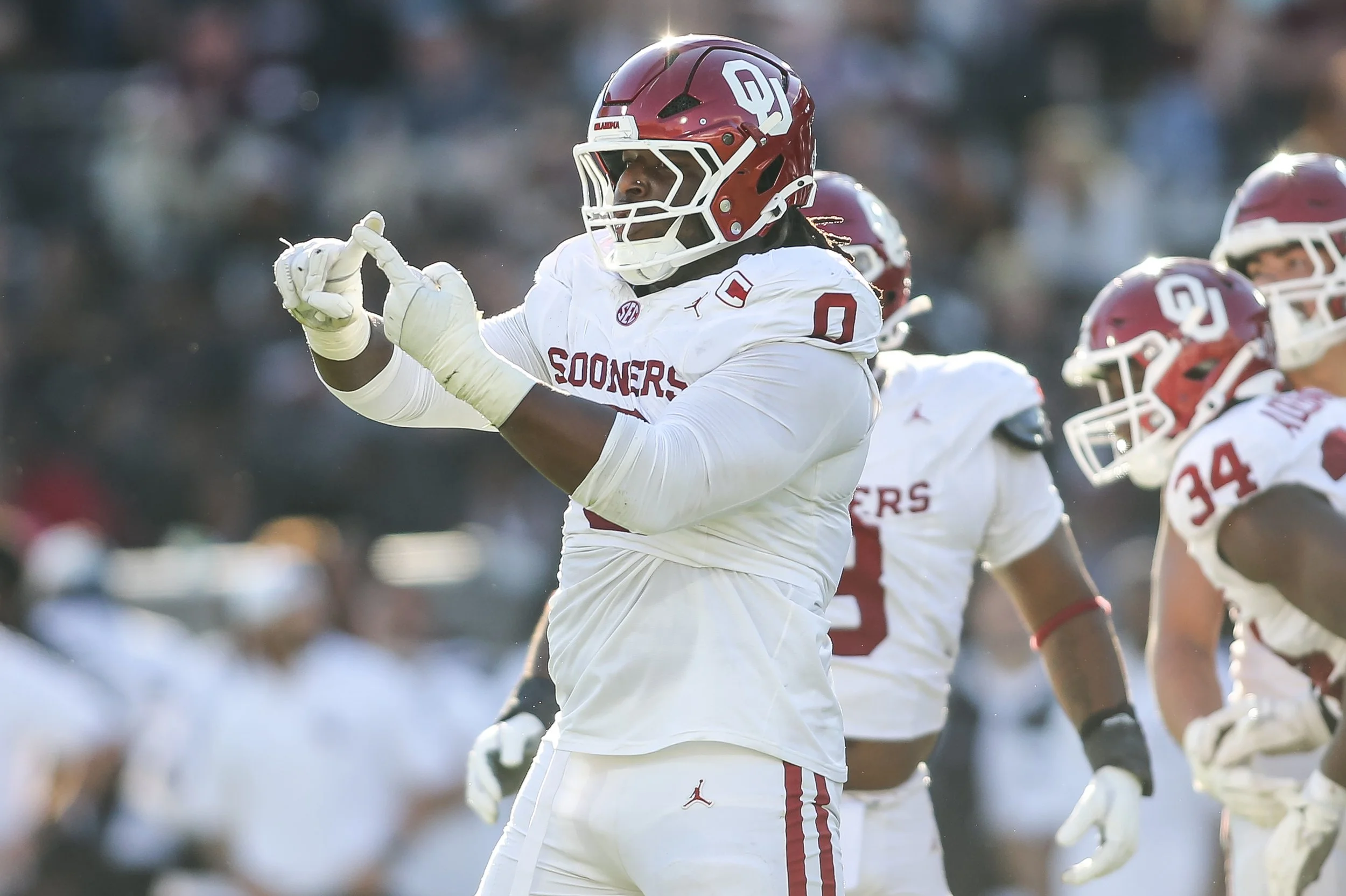
Oklahoma defensive lineman David Stone (0) reacts to a play against Mississippi State during the second half of an NCAA college football game in Starkville, Miss., Saturday, Oct. 24, 2026. (AP Photo/James Pugh)
Oklahoma has already shown what that can accomplish.
Against Mississippi State, Stone recorded three stops against the run without a missed tackle on a running play. Heinecke added six run stops without a miss.
The front made the runner change direction, and the linebacker finished before the carry became something more.
Heinecke carried that impact into Gainesville with his best performance in a Sooner uniform. He contributed 11 combined tackles on PFF’s charting, a sack and two stops against the run, helping Oklahoma hold Florida to seven points.
The Sooners need him playing downhill again, meeting the backs where Stone and Jackson force them rather than chasing them into open space.
That gives Oklahoma something to build on. If Stone and Jackson force the backs toward Heinecke, he can finish those plays before Ole Miss finds enough room to keep the possession moving.
The Sooners need that work from their front so the safeties can stay in coverage. Ole Miss has too many receiving options to give Chambliss extra space behind the linebackers.
2. Account for Chambliss before the snap and keep him contained after it.
Chambliss’ capability as a runner begins before the passing game breaks down.
Against Auburn, he rushed for 63 yards and a touchdown. Only one carry was a scramble.
Taylor Wein, Danny Okoye, PJ Adebawore and Jake Kreul must recognize the quarterback keeping the ball rather than following the back out of the play. Heinecke and Lewis can’t both commit to a handoff that never comes.
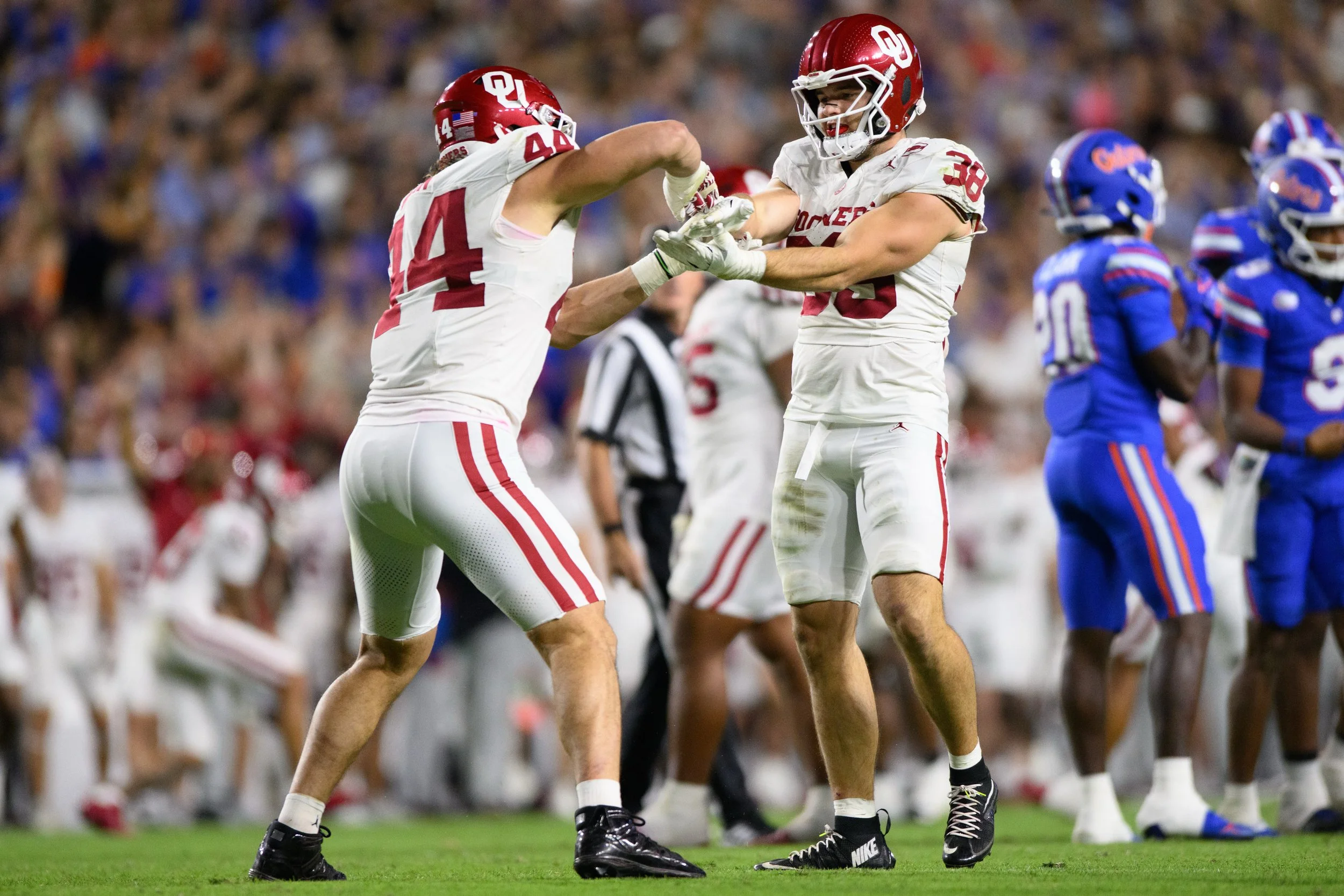
Oklahoma linebacker Owen Heinecke (38) and defensive lineman Taylor Wein (44) celebrate a stop during the first half of an NCAA college football game against Florida, Saturday, Nov. 7, 2026, in Gainesville, Fla. (AP Photo/Noah Lantor)
That discipline must carry into passing downs.
Oklahoma has faced this responsibility against Bryce Underwood, Arch Manning and LaNorris Sellers. A quarterback can replace the production his backs aren’t providing if the defense loses track of him while pursuing someone else.
Oklahoma can cover the receivers and still lose the possession if Chambliss steps through an open rush lane. Stone and Jackson must close the middle while the ends keep him from escaping outside.
The Sooners don’t need every rusher to reach him first.
They need the pocket to close effectively without leaving him somewhere else to go.
3. Take away Chambliss’ next receiver instead of building the coverage around one target.
Deuce Alexander can change a game with relatively few completions. He caught five passes for 159 yards and two touchdowns against Louisville, then produced 134 yards against Florida.
Georgia held him without a catch. Horatio Fields still caught eight passes for 96 yards.
Oklahoma can’t treat limiting Alexander as the end of the assignment.
Courtland Guillory, Eli Bowen and Trystan Haynes must handle the outside receivers without repeatedly pulling the safeties away from the middle. Fields caught both of Chambliss’ touchdown passes against Texas, giving Ole Miss another way to finish a possession outside.
Guillory allowed no completions against Mississippi State before surrendering 98 yards in coverage against South Carolina. Oklahoma needs the outside coverage to hold without making every matchup a decision about where to send safety help.
Traylon Ray and tight end Caleb Odom make that balance harder inside.
Ray worked primarily from the slot while producing 115 yards against LSU. Odom added 88.
Reggie Powers III and Jeremiah Newcombe must account for those routes without assuming every inside alignment means a short throw. Peyton Bowen and Michael Boganowski need to be assignment sound when either target continues beyond the backers.
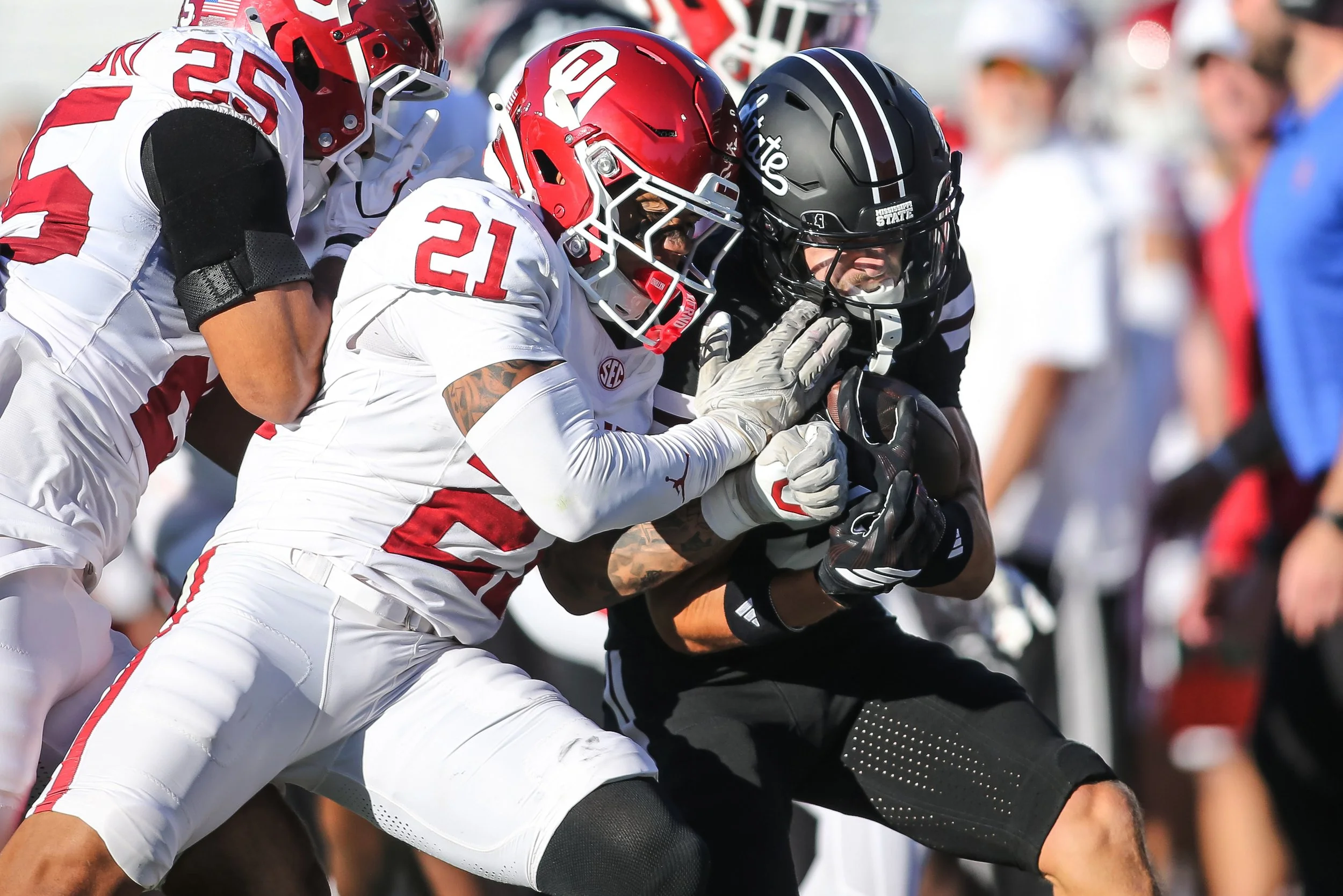
Mississippi State wide receiver Camden Capehart, right, is hit by Oklahoma defensive back Jeremiah Newcombe (21) during the second half of an NCAA college football game in Starkville, Miss., Saturday, Oct. 24, 2026. (AP Photo/James Pugh)
Chambliss produced 270 of his passing yards and both touchdowns against LSU without play action. Taking away the handoff won’t necessarily remove the throws he wants to make.
Stopping the run creates a better assignment. It doesn’t complete it.
4. Make the protection handle pressure from more than the defensive ends.
Ole Miss center Brycen Sanders went without allowing a pressure against Auburn, Missouri and Texas.
Oklahoma has places to attack around him.
Former Sooner Troy Everett has been filling in at right guard for the Rebels’ most productive lineman, Patrick Kutas.
Everett wasn’t charged with a pressure across 24 pass-blocking snaps against Georgia. His presence gives Oklahoma a familiar opponent inside, but replacing Kutas hasn’t made that assignment an automatic weakness.
The Sooners must test Everett while continuing to attack the tackles and backs whose protection broke down against the Bulldogs.
Elsewhere, the protection against Georgia was less dependable.
Left tackle Terez Davis allowed five pressures, while Tommy Kinsler IV surrendered three, including a sack. Frazier allowed four pressures on six pass-blocking snaps, showing that keeping a running back in protection didn’t necessarily give Chambliss more time.
Brent Venables can test those assignments by changing where the pressure comes from.
Heinecke generated three pressures, including a sack, against Florida. Lewis added a sack of his own.
Their ability to threaten the line before rushing or dropping into coverage gives Venables a way to complicate Chambliss’ protection and take away the first throw he expects behind it.
Georgia showed how much Chambliss can struggle when the rush leaves him without a comfortable throw. Under pressure, he completed four of 12 passes for 38 yards, threw an interception and took four sacks.
But Venables’ disguises can matter even when the protection holds. All three of Chambliss’ interceptions against Texas came from clean pockets.
Oklahoma can force him into a difficult decision by bringing the linebackers or dropping them into the passing lanes. The pressure and coverage must work together to keep either choice from leaving an easy answer.
5. Finish short completions before they give Ole Miss another first down.
Oklahoma has shown it can concede a completion without losing control of a possession.
Peyton Bowen allowed four catches for 20 yards against Mississippi State. Powers surrendered one completion for a loss.
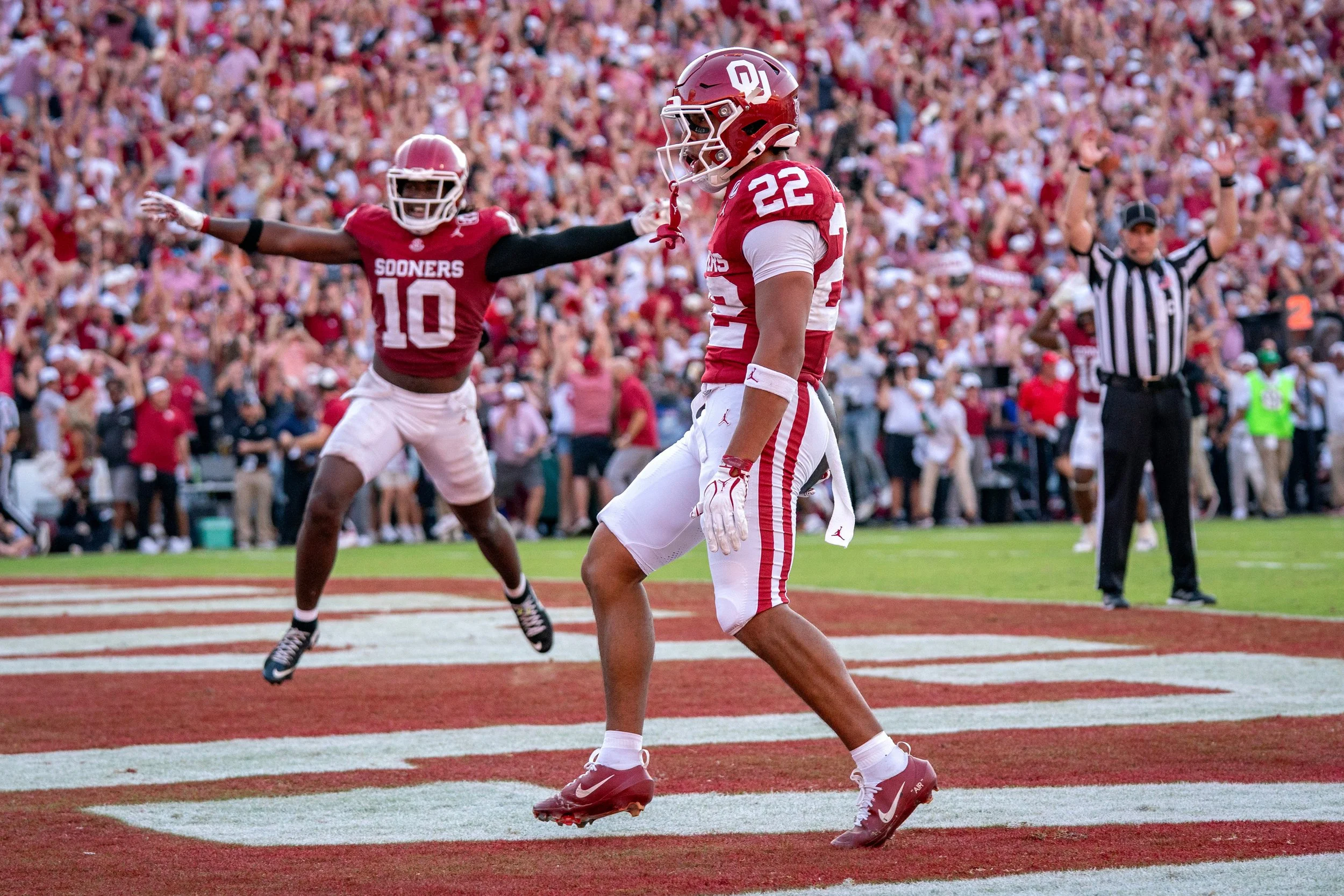
Oklahoma Sooners defensive back Peyton Bowen (22) returns an interception for a touchdown as linebacker Kip Lewis (10) celebrates during the second half of an NCAA college football game against Texas, Saturday, Oct. 10, 2026, in Dallas. (AP Photo/Jeffrey McWhorter)
Those results let the Sooners protect the deeper routes while forcing the offense to earn another down.
A covered downfield route can still leave an available throw underneath. The next defender determines whether that completion ends the possession or extends it.
Heinecke, Lewis and Powers must close under control, while the corners prevent Alexander and Fields from turning short throws into open-field opportunities.
Oklahoma doesn’t need to erase every completion.
It needs to prevent the next broken tackle, lost receiver or open running lane from undoing the difficult down it created.
Oklahoma has already shown it can stop the run, disguise the first passing lane and bring pressure from several positions.
Saturday requires those strengths to appear together, without giving Chambliss another answer when the first one disappears.